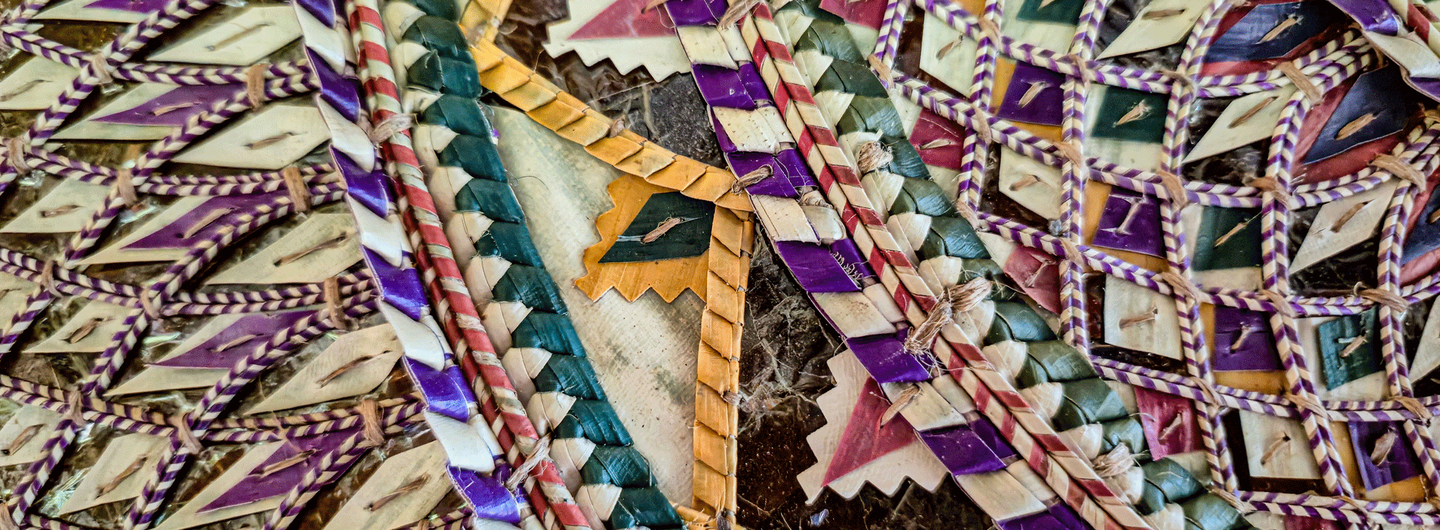
Co-created with master artisans in Sri Lanka, this project reframes two ceremonial crafts, Sesath (sunshade weaving) and Laksha (lacquer work), as living knowledge for ecological futures.
At a glance
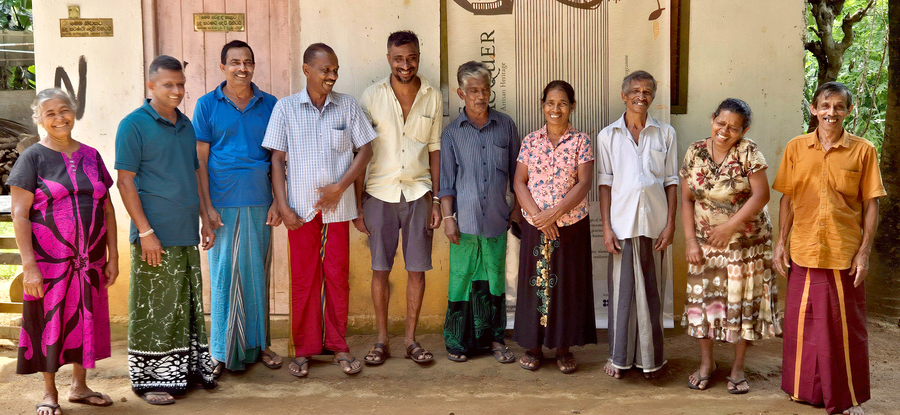
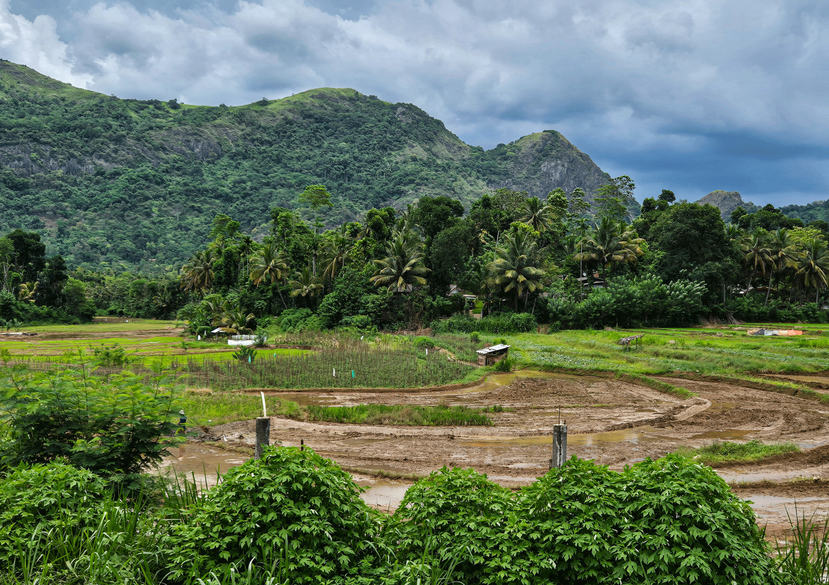
- The project focused on Sesath, the weaving of ceremonial sunshades in Unaveruwa village, and Laksha, the lacquer work of Hapuvida village: two interdependent crafts in Matale District, Sri Lanka. It examined the ecological intelligence they hold, grounded in a more-than-human worldview in which living species, non-living entities and seasonal rhythms are participants in making.
- Rather than treating these traditions as heritage in decline, the research approached them as living knowledge, relevant to sustainable making and to how design responds to biodiversity loss and climate change.
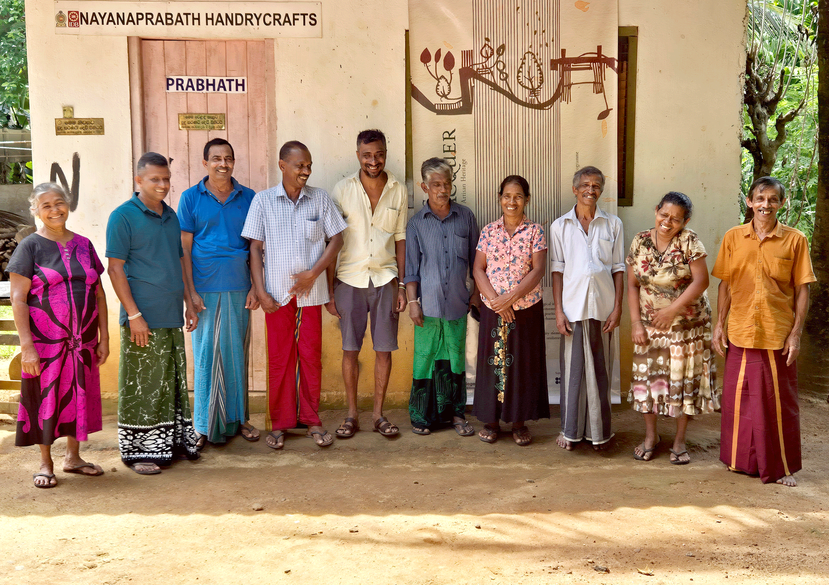
- Master artisans took part as knowledge holders and co-creators, not research subjects. Oral histories recorded during making, co-design workshops and multispecies ecological mapping were governed by tiered, revisable consent.
- The research was led by Dr Dilusha Rajapakse (Royal College of Art) in partnership with Professor Sudarshana Bandara (University of Peradeniya) and funded by the British Council's Connections Through Culture programme.
Key details
Gallery
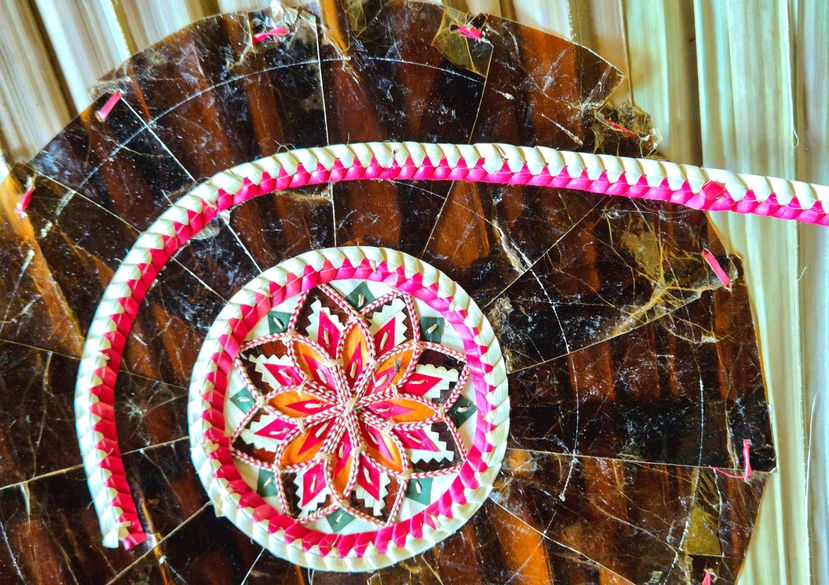
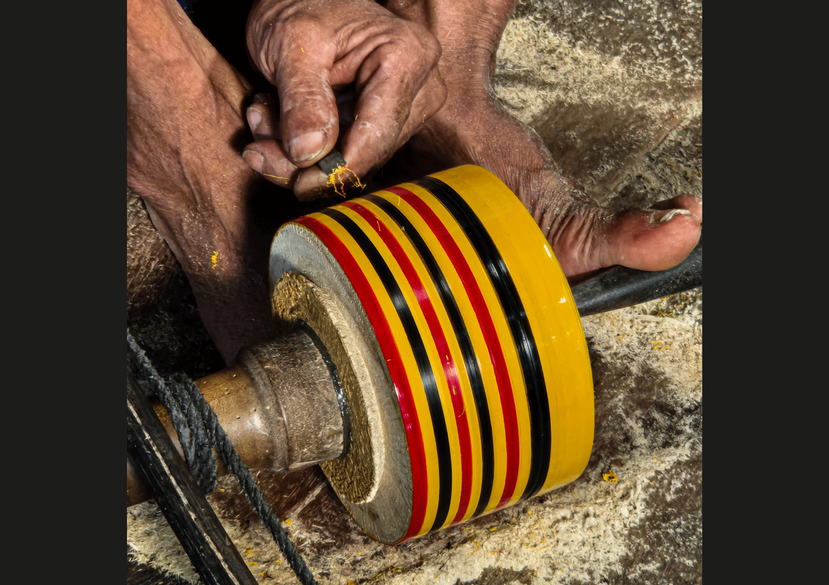
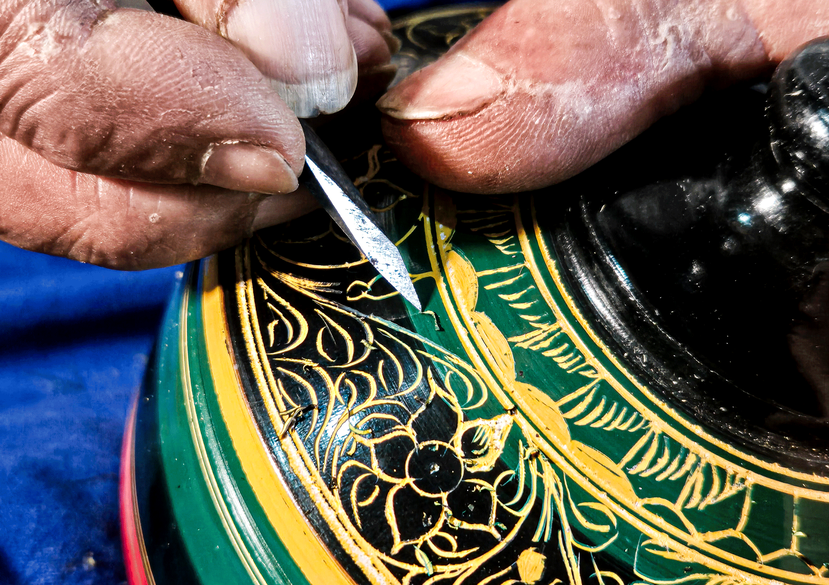
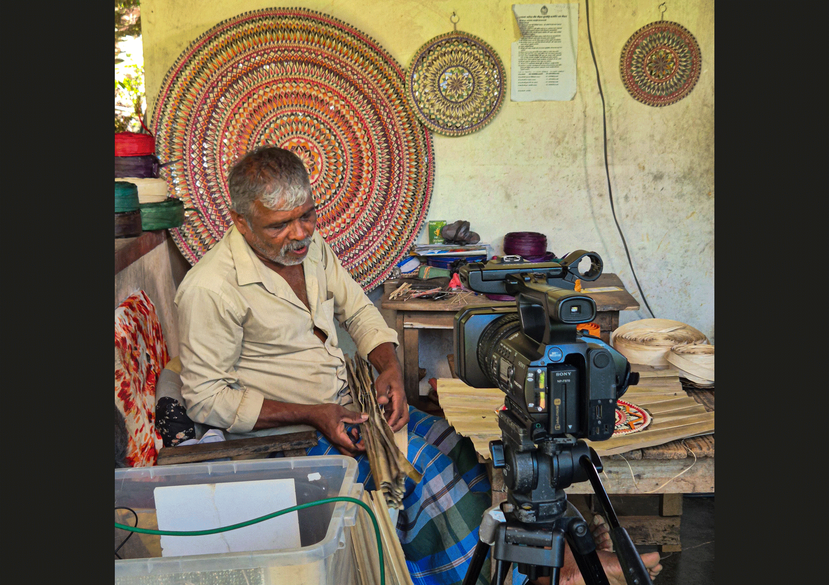
More information
The challenge
Sesath and Laksha are interdependent ceremonial crafts of Matale District, Sri Lanka. Their making rests on knowledge built up over generations: when to gather plant materials, how to extract natural colour, how to judge a surface finish. This knowledge, which the project calls ecological intelligence, reflects a more-than-human worldview: plants, insects, water, seasons and spiritual belief shape the craft, rather than serving simply as resources.
Much of it is tacit, expressed through practice and ritual rather than words, and held by a fewer elder master artisans. Industrialisation, ecological disruption and faltering transmission between generations now place it under strain. Yet it is rarely studied on its own terms: support and documentation tend to focus on finished objects and techniques, not the relationships that sustain them.
The project asked what this ecological intelligence consists of, and how co-design could help artisans articulate it, carry it into new work, and share it across generations and sectors. Approached as living epistemologies rather than heritage artefacts, these practices offer long-tested models of ecological stewardship, yet remain marginal to sustainability and design discourse. The project treated them as foundations for ecological futures, built with artisans rather than imagined for them.
Our approach
The project recognised master artisans as the primary authorities on their knowledge, including how it was interpreted and represented. Its participatory, practice-based approach, informed by more-than-human perspectives, treated making as primary research data.
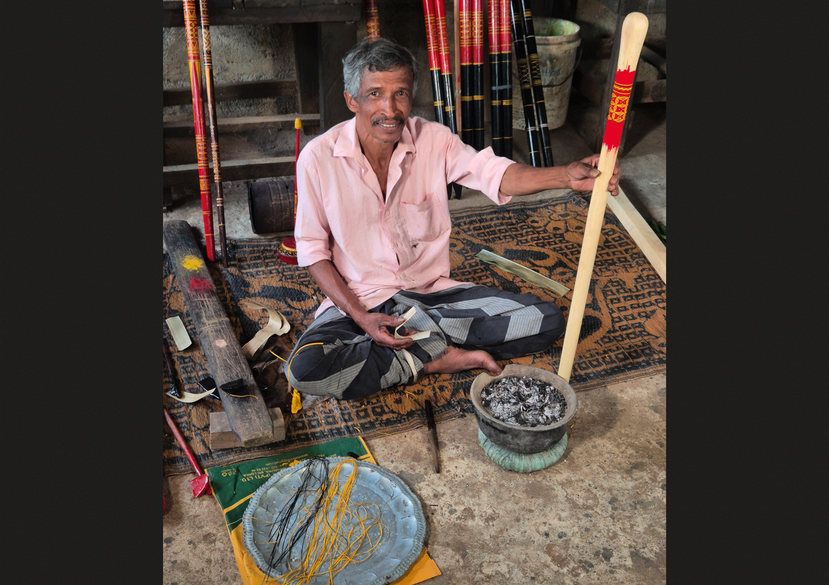
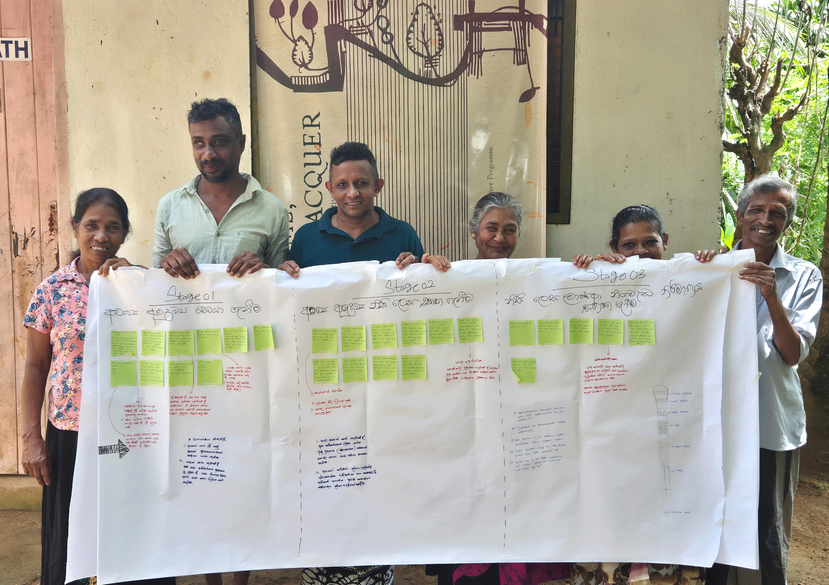
Contextual research informed a set of Non-Human Visual Personas: illustrated prompts that artisans could question and revise. In April 2026, four master artisans in Unaveruwa and Hapuvida were interviewed through 'conversations-through-making', so that knowledge held in the hands could be put into words. In two co-design workshops with twenty artisans of different generations, the personas prompted multispecies ecological mapping, which informed the co-creation of craft samples. Interpretations and maps were returned to artisans for correction and endorsement.
Following RCA ethical approval, consent was treated as an ongoing dialogue, from community consultation to review before publication. Each participant chose from five levels of visibility for each output, from full privacy to named, on-camera participation, and could revise these choices before public release. Artisans are credited throughout as knowledge holders and co-creators.
Outputs
Documentary films
Two 20-minute documentaries, one for each craft, follow the making process from the gathering and preparation of raw materials to the finished object. Filmed in artisans' workshops and in the landscapes where materials are sourced, they record techniques, rituals, personal stories and the more-than-human relationships that sustain each craft. Within the project's practice-based methodology they are research outputs in their own right: they capture knowledge that is shown rather than said, such as an artisan's judgement of a material, and keep it connected to the places it depends on. Screened at the exhibition, they are also intended as a resource for passing this knowledge to younger generations.
Co-created craft & material samples
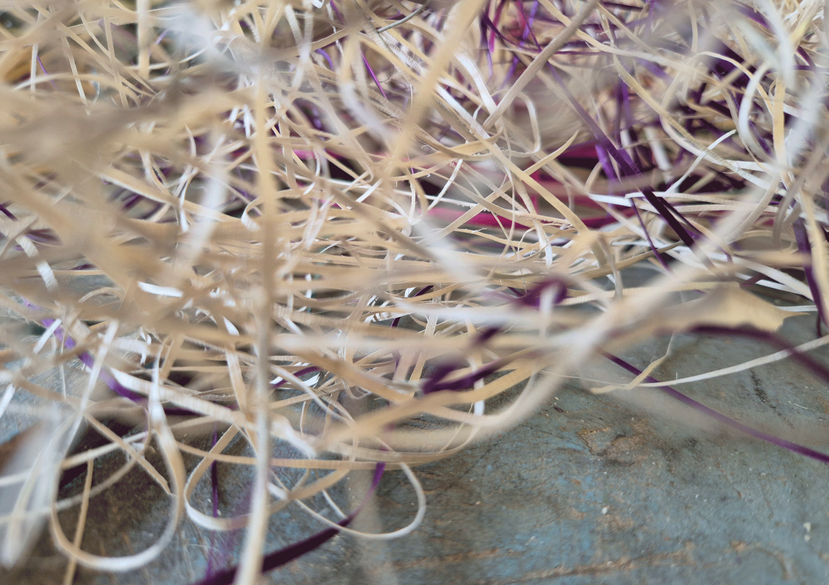
Developed by artisans during the co-design workshops, the craft and material samples carried insights from the ecological mapping into making. Using naturally derived colours, surface textures and inherited techniques, they made visible the ecological relationships each craft depends on. Each craft /material sample was paired with two accounts. The first, ‘Embodied Ecological Intelligence’, explained how artisans’ sensory judgement and material handling respond to environmental conditions. The second, ‘Multispecies Relations’, traced how making depends on other species and natural processes. Together, object and account made tacit knowledge legible
Ecological paintings
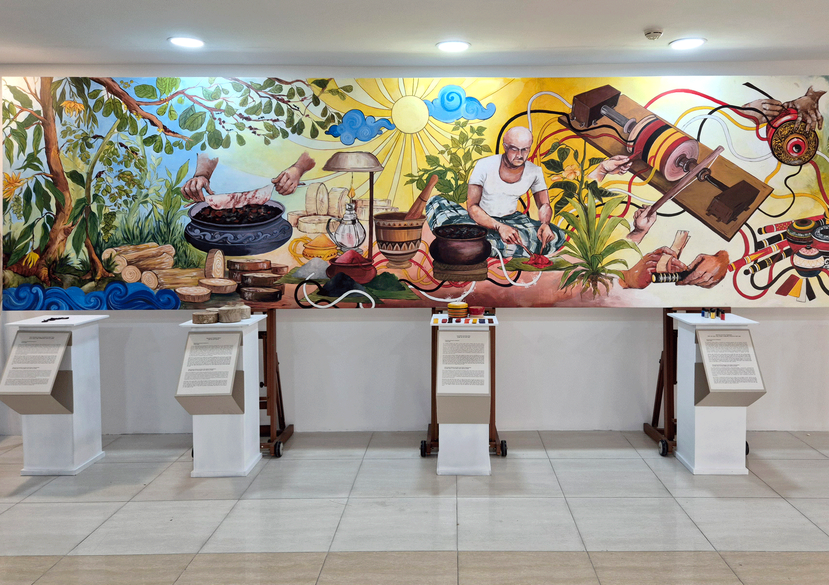
The artisans’ participatory ecological maps charted the plants, other organisms, materials and seasonal cycles each craft depended on. To give them a more tangible, human quality, graduate students of the Faculty of Arts, University of Peradeniya, translated them into large-scale ecological paintings. In doing so, the students learned the crafts’ ecological interconnectedness through their own art practice, carrying artisans’ knowledge into a new generation of creative work. The paintings also made that knowledge accessible to exhibition audiences.
Public Exhibition at Kandy City Centre, Sri Lanka
The project's final exhibition, held at Kandy City Centre on 25–26 September 2026, brought the films, craft/material samples and paintings together in a public setting. Its private view gathered master artisans with representatives of provincial government, the British Council, universities, and the craft, design and financial sectors, giving artisans a direct platform to share their knowledge with those who shape support for their crafts.
Stakeholder roundtable
Held in public at the exhibition, in front of the craft practitioners, the roundtable brought together the Governor of the Central Province, senior academics from the University of Peradeniya, the Ministry of Industries (Central Province), the National Crafts Council, the National Design Centre, the Central Bank of Sri Lanka, Kandy City Centre and a master Sesath artisan from Unaveruwa. Panellists were presented with the project's research insights, including artisans' ecological intelligence and more-than-human thinking, and asked how their sector might interpret them and take them forward.
The session opened the research to scrutiny from the sectors that shape the crafts' futures. Panellists proposed bringing living craft knowledge into Sri Lankan art and design education; treating the project as new evidence for intangible heritage within national heritage policy; exploring links with cultural tourism; researching ways to add value while preserving the core of each craft; preparing craft enterprises to access formal finance; and supporting co-development between the two villages, since Laksha decorates the Sesath handle. The participating master artisan reflected that the project had helped artisans re-evaluate the stories, beliefs and knowledge they carry, and share them with younger artisans.
Keynote presentation
The project is the subject of a keynote by Dr Rajapakse at the Design Research and Education in the Age of Generative AI: Embodied Experience, Ecological Knowledge, and Creative Practice International Academic Conference and Workshop 2026 hosted by the National Taiwan University of Arts, Taiwan (23 October 2026).
Forthcoming
- Hybrid seminar / lecture (2027). A seminar/lecture at the Royal College of Art will share the project's insights and collaborative method with an audience of academics, postgraduate students, designers and heritage practitioners. Details to be confirmed.
- Digital archive. The documentary films, digital version of the ecological maps, craft samples and their related storytelling narratives are intended to form the basis of a publicly accessible digital archive.