Overview
Artistic agency in the age of AI
Key details
MA
- 180 credits
- 1 year / 45 week programme
- Full-time study
MFA
- 300 credits
- 2 years / 90 week programme
- Full-time study
School or Centre
Current location
- Battersea
Next open event
- 2 Oct 2026
- Online Open Day
Develop the artistic and technical agency to shape how AI is imagined, made and experienced.
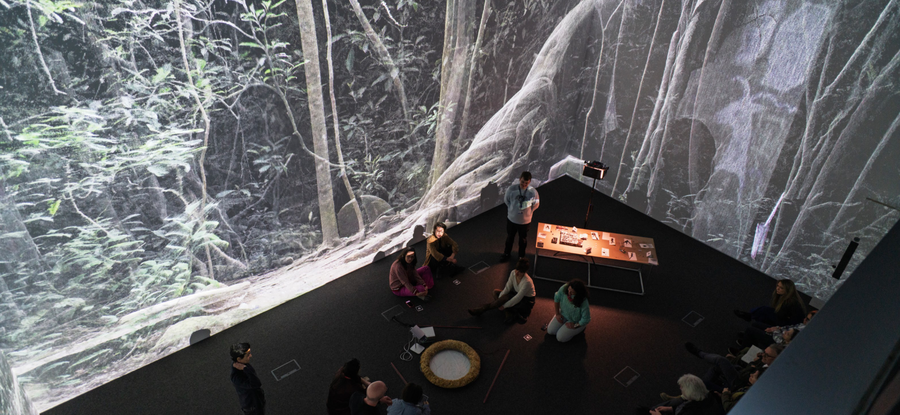
- Build the critical and computational fluency to shape AI cultures through contemporary artistic practice.
- Work in evolving experimental studio and research environments that bring people, technologies, materials, histories and forms of knowledge into relation.
- Integrate contemporary art, creative coding and systems practice, developing technical fluency through the questions and demands of artistic practice rather than technology alone.
- Develop ambitious practice-based research culminating in the RCA Show and, at MFA level, public presentation within contexts appropriate to your practice.
The first intake for this programme will be September 2027. Register your interest for programme and admissions updates. This programme is subject to validation.
Artificial Intelligence (AI) does not exist apart from culture. It is shaped by particular histories, forms of knowledge, infrastructures, labour and material resources, and is encountered differently across communities and places.
Artificial Intelligence & Digital Art (AiDA) is a research-led studio programme for artists seeking to critically engage with these relationships. Students investigate how AI is imagined through images, narratives and ideologies; how it is made through data, labour, computation and material infrastructures; and how it is experienced through bodies, environments, institutions and everyday life.
Combining contemporary art, creative coding and computational practice, AiDA develops the critical and technical agency to question these relationships, reconfigure them and propose alternatives through artistic practice.
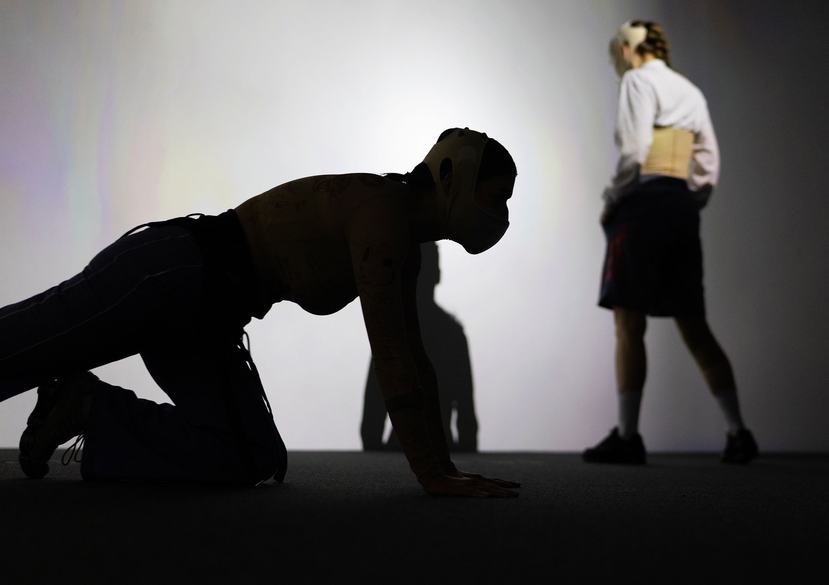
Working across photography, installation, performance, robotics, software, data, moving image and networked media, students develop practices that bring computational systems into dialogue with the social, political, material and cultural worlds in which they operate.
This programme can either be taken as a one-year MA or a two-year MFA programme. MFA students follow the MA curriculum for year one before progressing to year two of the programme.
MA
The MA is organised around three interconnected strands that run throughout the programme: Conditions, Creative Coding and Systems. Together they enable students to move between critical enquiry, artistic experimentation and technical practice, developing the agency to understand and work with computational systems while asking what relationships they establish, reproduce, obscure or transform.
These strands converge in the Independent Research Project, where students synthesise artistic enquiry, technical experimentation and critical research into a substantial body of work presented publicly as part of the RCA graduate show.
MFA
Where the MA develops agency, the MFA develops artistic leadership. Students who pursue the two-year MFA follow the MA curriculum for year 1 and in year 2 build on this through sustained artistic research, public engagement and situated practice. This enables students to develop ambitious practice-based research in dialogue, and, where appropriate, in partnership, with external organisations. The MFA programme supports artists whose work seeks not simply to respond to technological change, but to influence the cultural futures that emerge from it.
MFA students are expected to establish independent research trajectories that contribute to contemporary artistic, cultural and technological discourse. Through negotiated projects, public partnerships and advanced studio practice, they explore how contemporary art can shape public understanding of intelligent systems and their wider social, political and ecological implications.
Please make sure you apply for the programme you wish to study.
- If you wish to study for the one year programme, please apply for the MA.
- If you wish to study for the two year programme, please apply for the MFA.
- There is no guaranteed progression from the MA to MFA and changing programme length may create challenges with student visas or finances.
Student and alumni stories
Gallery
Staff
Facilities
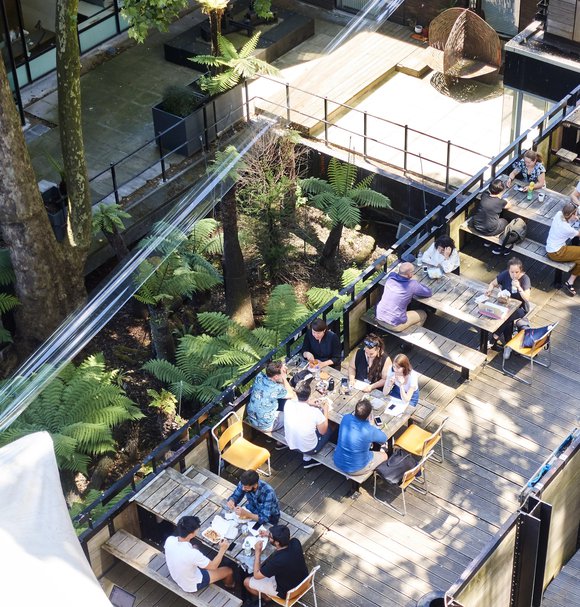
AiDA combines dedicated studio practice with experimental studio and research environments that support collective enquiry, technical experimentation and artistic production.
View College-wide facilitiesAlongside individual studio space, students have access to specialist facilities supporting AI development, robotics, physical computing, immersive media, spatial sound, digital fabrication, data visualisation and exhibition production.
More details on what you'll study.
Find out what you'll cover on this programme.
What you'll cover
How you'll learn
AiDA combines independent studio practice with collective experimentation, creative coding and critical research.
At MA level, students work through Conditions: experimental studio and research environments that bring particular relationships between AI and contemporary life into focus. Multiple Conditions operate simultaneously, allowing students to work within small research groups while developing independent artistic practices.
Rather than beginning with a particular technology, students encounter situated questions and artistic methodologies that ask them to consider how computational systems relate to bodies, environments, histories, institutions and publics. Creative Coding and Systems provide the technical and conceptual means to investigate, construct and reconfigure those relationships.
Tutorials, seminars, critiques and public engagement support the development of independent artistic research. The MA culminates in an Independent Research Project presented as part of the RCA Show. The MFA extends this model through sustained, situated artistic research and public presentation.
You will also learn from your fellow students, and they will learn from you. Each year a global cohort of students from diverse backgrounds, careers and life experiences joins our community. Peer-to-peer learning is a vital part of the RCA experience and this range of perspectives enriches students, igniting new ways of thinking and sparking innovation.
Outside of campus experience, you will have opportunities to explore London and immerse yourself in Europe's creative and cultural capital.
MA Programme structure (one-year programme)
The MA is organised around three interconnected strands that run throughout the programme: Conditions, Creative Coding and Systems.
Conditions
Conditions are AiDA’s experimental studio and research environments. Drawing on diverse traditions of experimental art education, interdisciplinary practice and collective making, Conditions also build upon a history of artists and thinkers who have understood computation, technology and systems as creative and cultural questions. From Ada Lovelace’s conception of computation as a creative and symbolic medium to Black Mountain College, Experiments in Art and Technology, Cedric Price and Joan Littlewood’s Fun Palace and Jack Burnham’s systems thinking, AiDA reconsiders these histories in relation to the circumstances in which AI operates today.
Conditions treat artistic enquiry as a set of relationships in action. Rather than beginning with a technology, each begins with a situated question about how AI is imagined, made or experienced, bringing people, technologies, materials, histories, environments and forms of knowledge into relation. Students encounter distinct artistic methodologies for navigating these relationships and develop material, spatial and experiential forms through which to articulate, question and reconfigure them. In doing so, Conditions move AI away from the screen and into dialogue with bodies, politics, environments, institutions and public life.
Multiple Conditions run simultaneously, enabling students to work in small research groups while developing independent artistic practices. Conditions change each year through new questions, practitioners and perspectives. The curriculum remains stable while the relationships through which it is explored continually change.
Creative Coding
Creative Coding develops the computational fluency to understand, construct, interrogate and reconfigure intelligent systems.
Programming is approached as an artistic methodology rather than an end in itself. Students learn how computational systems are made so that they can work critically with, and against, their assumptions, structures and limitations.
Technical learning develops in dialogue with studio practice, enabling students to work with software, machine learning, computational media and physical computing in response to the artistic questions they are pursuing.
Systems
Systems considers what happens when artistic and computational propositions enter the world.
Working across installation, robotics, physical computing, networks, performance and public space, students investigate how their artworks behave within complex social, material and technical environments – and how they are encountered by different bodies and publics.
Programme structure
The programme is delivered across three terms and includes a combination of programme, School and College units. These will include:
Term 1: Artistic Methods
Students begin the programme by establishing their studio practice within one of several Conditions. These experimental studio and research environments provide the context through which the Capture unit is explored. Capture introduces distinct artistic methodologies for observing, recording and interpreting how computational systems encounter the world, and how the world is made available to computation
Working within small research groups, students translate situated questions into material, spatial and experimental forms while developing their independent artistic practices.
Alongside this, Creative Coding units establish the computational fluency required to understand and intervene in the systems encountered through their work.
Term 2: Computational Practice
Students work within a new Condition, providing a different context through which the Stimulus–Response unit is explored.
Here the emphasis shifts towards what happens when computational systems act within the world: how they respond, interact, classify, decide and produce consequences. Students investigate relationships between technical systems, bodies, environments and publics.
The Systems units support students in developing these investigations into ambitious artistic propositions while preparing for their Independent Research Project.
Also in Term 2, a choice of elective units will allow you to shape your own learning journey. You will have the opportunity to work alongside students from other programmes, bringing your practice into dialogue with the creative approaches of your peers. A full list of elective options will be published in 2027.
Term 3: Independent Research
The MA programme culminates in the Independent Research Project, where students bring together the artistic methodologies developed through Conditions, the computational fluency established through Creative Coding and the approaches to realisation explored through Systems.
Projects are presented publicly as part of the RCA Show. Following exhibition, students focus on professional practice, documentation, preservation and the continued life of their work beyond the programme.
MFA Programme structure (two-year programme)
After completing your first year following our MA curriculum above, the MFA extends the MA through sustained artistic research, public engagement and situated practice. Units in your second year will include:
Term 4: Advanced Practice
Having learned to navigate shared Conditions during the MA, MFA students increasingly establish and transform Conditions of their own. They identify the cultural, political, material or institutional contexts within which their practice needs to operate and construct new relationships through artistic research.
Students establish an independent research programme through tutorials, critiques and seminars while working with an external cultural or research context. The focus is on defining a significant artistic question, developing an appropriate methodology and positioning the work within contemporary discourse.
Term 5: Situated Practice
Students develop long-term projects situated within contemporary cultural contexts. This may involve engagement with artists, researchers, communities, cultural organisations or technological infrastructures, but may equally take the form of critique, observation, speculation or independent intervention. External collaboration is therefore one possible mode of situated practice rather than a requirement.
Students are encouraged to consider their own position within the relationships their work constructs: whose knowledge it draws upon, which histories and assumptions it inherits, what infrastructures and resources it depends upon, whom it addresses and how it enters the world.
Through this process, students move from responding to shared Conditions towards authoring the conditions of their own long-term artistic practice.
Term 6: Public Contribution
The programme culminates in a substantial public outcome demonstrating artistic independence and research leadership. Depending on the project, this may take the form of an exhibition, installation, performance, publication or public intervention, presented within an appropriate public context or as part of the RCA Show.
Requirements
What you need to know before you apply
We are looking for artists who are curious about how Artificial Intelligence is reshaping contemporary culture. Applicants should demonstrate an independent artistic practice, intellectual curiosity and a willingness to experiment with unfamiliar methods. Previous coding experience is welcomed but not essential. We recognise that access to technical education, equipment and technologies is uneven, and applicants are assessed on the quality, criticality and potential of their artistic practice rather than their existing level of technical expertise.
What's needed from you
Portfolio requirements
Your portfolio should demonstrate an established artistic practice together with evidence of potential to develop new forms of work in response to emerging technologies and contemporary culture. We are particularly interested in applicants who demonstrate curiosity, originality and the willingness to engage critically with unfamiliar technologies and ideas.
We welcome applications from artists working across all media, including photography, moving image, installation, performance, sculpture, sound, digital media, design, architecture and interdisciplinary practice. Previous experience with Artificial Intelligence or coding is welcomed but is not required.
- You can upload up to five artworks, one in each of the spaces provided.
- The work should be made by you (if collaborative, please indicate and state your contribution), and focus on recent work where possible.
- For each work, submit either image, PDF, video, audio as appropriate, along with a short text with title, date, size, medium and brief description, outlining its context, methods and intentions.
- If you would like to include multiple files for a single artwork please combine them into a PDF as images and/or URLs (add URLs into the description box).
Personal statement
AiDA is an experimental programme. We value applicants who demonstrate openness to collaboration, curiosity about unfamiliar methods and a willingness to develop their practice through dialogue with others. Your personal statement should explain:
- Your current artistic practice and research interests.
- Why you wish to study Artificial Intelligence & Digital Art at the RCA.
- How your work engages, or might engage, with the cultural, political or artistic questions surrounding AI.
- What you hope to develop through the programme.
We're not looking for a fixed proposal. Instead, we want to understand how you think, what motivates your practice and how you see it evolving through experimentation and research.
Video requirements
Please submit a short video (up to two minutes) introducing yourself and your practice.
Rather than presenting a polished pitch, use this opportunity to discuss:
- Your current artistic practice.
- A project or idea that is particularly important to you.
- Why you are interested in studying Artificial Intelligence & Digital Art.
- A question or challenge relating to AI, technology or contemporary culture that you would like to explore during the programme.
We are interested in your ability to communicate ideas, reflect on your practice and engage critically with contemporary artistic questions.
English-language requirements
If you are not a national of a majority English-speaking country you will need the equivalent of an IELTS Academic or UKVI score of 6.5 overall (with a minimum of 5.5 in every component). Students achieving a grade of at least 6.0, with a grade of 5.5 in the Test of Written English, may be eligible to take the College’s English for Academic Purposes course to enable them to reach the required standard.
You are exempt from this requirement if you have received a 2.1 degree or above from a university in a majority English-speaking nation within the last five years.
If you need a Student Visa to study at the RCA, you will also need to meet the Home Office’s minimum requirements for entry clearance.
Fees & funding
For this programme
Fees for new students
Fees for September 2027 entry on this programme are outlined below. From 2021 onward, EU students are classified as Overseas for tuition fee purposes.
Home
Overseas and EU
Progression discount
For alumni who have completed an RCA Graduate Diploma and progress onto an RCA Master's programme, a progression discount of £1,000 is available. For alumni progressing from an RCA Master's to another RCA Master's, a progression discount of £2,000 is available (£1,000 per year for part-time programmes).
Deposit
New entrants to the College will be required to pay a non-refundable deposit in order to secure their place. This will be offset against the tuition fees. Deposits for 2027 entry can be found below.
Home
Overseas and EU
* Total cost is based on the assumption that the programme is completed in the timeframe stated in the programme details. Additional study time may incur additional charges.
Scholarships
Scholarships
Each year, the RCA scholarship programme supports hundreds of students. Scholarships and awards for 2027 entry will be confirmed shortly.
Even if you do not currently see a scholarship for which you meet the eligibility criteria, we encourage you to apply to be considered for financial support.
Unless otherwise stated, you must apply in either round 1 or 2, and have received an offer of study on an RCA programme to be invited to make a scholarship application. Therefore, we strongly recommend you apply for your programme as early as possible but no later than the round 2 deadline.
More information
Additional fees
In addition to your programme fees, please be aware that you may incur other additional costs associated with your study during your time at RCA. Additional costs can include purchases and services (without limitation): costs related to the purchase of books, paints, textiles, wood, metal, plastics and/or other materials in connection with your programme, services related to the use of printing and photocopying, lasercutting, 3D printing and CNC. Costs related to attending compulsory field trips, joining student and sport societies, and your Convocation (graduation) ceremony.
If you wish to find out more about what type of additional costs you may incur while studying on your programme, please contact the Head of your Programme to discuss or ask at an online or in person Open Day.
We provide the RCAShop online, and at our Kensington and Battersea Campuses – this is open to students and staff of the Royal College of Art only to provide paid for materials to support your studies.
We also provide support to our students who require financial assistance whilst studying, including a dedicated Materials Fund.
Postgraduate Master’s Loan
Eligible Home students can apply for a Postgraduate Master’s Loan of up to £13,206 (2026/27 amount) towards the cost of a two-year Master’s programme.
This means you would receive £6,603 in Year 1 and £6,603 in Year 2.
As the loan covers only part of the tuition fees, you will need to fund the remaining tuition fees and living costs separately.
External funding
There are many funding sources, with some students securing scholarships and others saving money from working. It is impossible to list all the potential funding sources; however, the following information could be useful.
Payments
Tuition fees are due on the first day of the academic year and students are sent an invoice prior to beginning their studies. Payments can be made in advance, on registration or in two instalments.
Experience
The social media content shown here reflects past and current student activity and is provided for illustrative purposes only. Experiences on the programme may vary and are subject to change for future students.
Ask a question
Get in touch if you’d like to find out more or have any questions.
More opportunities to study at the RCA
Related programmes