Visualising Relations to Land will test the application of 3D digital environments for visualising the unique relationships that Traditional and Indigenous Peoples have with land and territory.
At a glance
- Visualising Relations to Land employs a transdisciplinary methodology and collaborates with Traditional and Indigenous Peoples’ organisations across Norway, Portugal and Brazil, that have been affected by the expansion of renewable energy projects into their territories.
- The project will address how Environmental Impact Assessment (EIA) procedures fail to recognise Traditional and Indigenous Peoples' relations with land.
- The project will drive novel research in visual arts and in the fields concerned with the socio-environmental impacts of renewable energy production.
Key details
More information
The challenge
Visualising Relations to Land addresses how the global energy transition from fossil fuels to renewable energy sources is disproportionately impacting the territories of Traditional and Indigenous Peoples (TIPs) across the world.
Existing procedures for Environmental Impact Assessment (EIA) required for the approval of renewable energy projects fail to recognise Traditional and Indigenous Peoples' ways of life and deep relations with land, and are, therefore, unable to adequately consider potential impacts on their ways of life.
The project will address the challenge of visualising the relationships of different Traditional and Indigenous Peoples to land and territory, in ways that allow their recognition during the consultation stages of EIA procedures.
The project has the following objectives:
- To explore the use of digital environments to visualise intangible relations to land
- To explore Traditional and Indigenous Peoples approaches to developing digital environments
- To visualise relations to land across different Traditional and Indigenous Peoples cultures and geographies.
Our approach
Visualising Relations to Land will partner with Traditional and Indigenous Peoples organisations from the reindeer-herding territories of the Southern Sami in the Røros region of Norway, the agro-silvo-pastoral region of Barroso in northern Portugal, and the indigenous and ‘quilombola’ territories of the Jequitinhonha valley in Minas Gerais, Brazil.
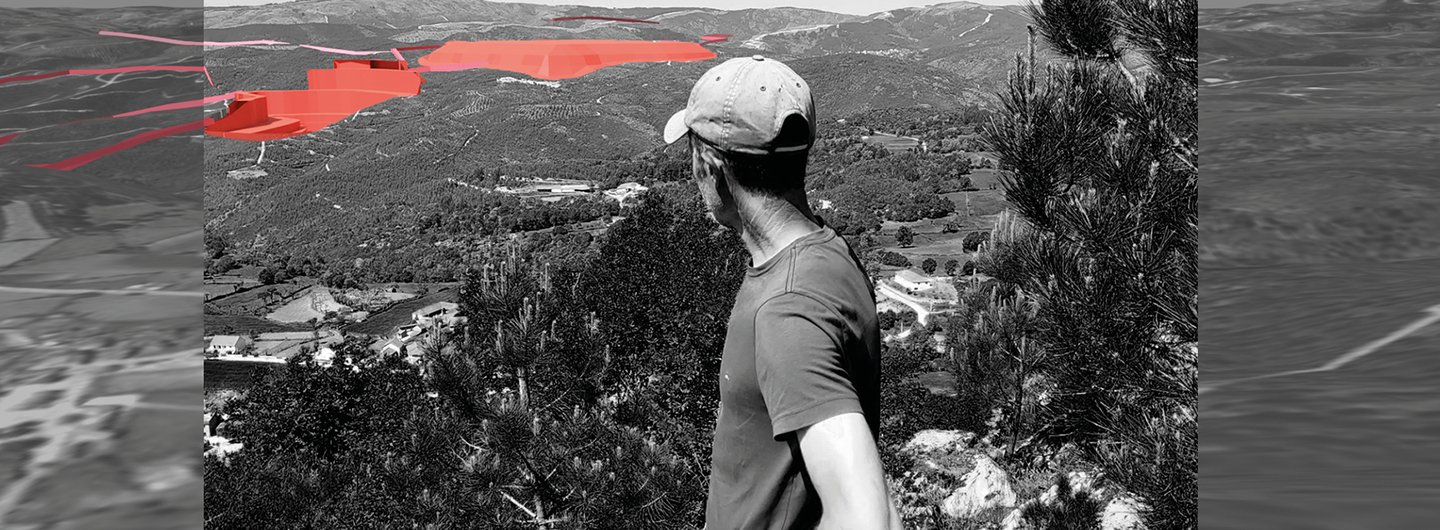
Together, we will explore the use of 3D digital environments for visualising Traditional and Indigenous Peoples' relationships with land and territories, so that these can be considered in Environmental Impact Assessments (EIA) or used to contest them. Produced with game-engine software, digital environments will enable Traditional and Indigenous Peoples to visualise their deep relations to land by allowing the spatialisation of oral histories in concrete geographical locations or the geolocation and integration of heterogenous data sources, such as historical photographs, testimony, and artefacts, and by providing immersive environments and visual cues that will aid in the recall of memories of uses and practices of land.
Outputs
Visualising Relations to Land will produce Stories of Land and a digital environments toolkit that will have a direct application in the consultation stages of Environmental Impact Assessments, allowing Traditional and Indigenous Peoples to present stronger cases of their relations to land.
Partners
Academic Partners
- Francisco Calafate-Faria Project co-lead (UK) London South Bank University
- Nabil Ahmed Project co-lead (international) Norwegian University of Science and Technolog
- Aline Weber-Sulzbacher Project co-lead (international), Universidade Federal dos Vales do Jequitinhonha e Mucuri
Project Partners
- Movimento dos Afetados pelas Barragens (MAB) Araçuaí, Minas Gerais, Brasil
- Suodji/Suaja/Suodje, Kárášjohka, Norway
- Unidos em Defesa de Covas do Barroso, Covas do Barroso, Boticas, Portugal