An interdisciplinary biotechnology, materials science and design collaboration to produce novel flexible composites for textile applications.
At a glance
- The research used agricultural by-products as a sustainable feedstock for biomaterial development.
- The project used lignin to alter the surface properties of the bacterial cellulose.
- We assessed novel flexible biomaterials for high-performance textile applications.
Key details
More information
The challenge
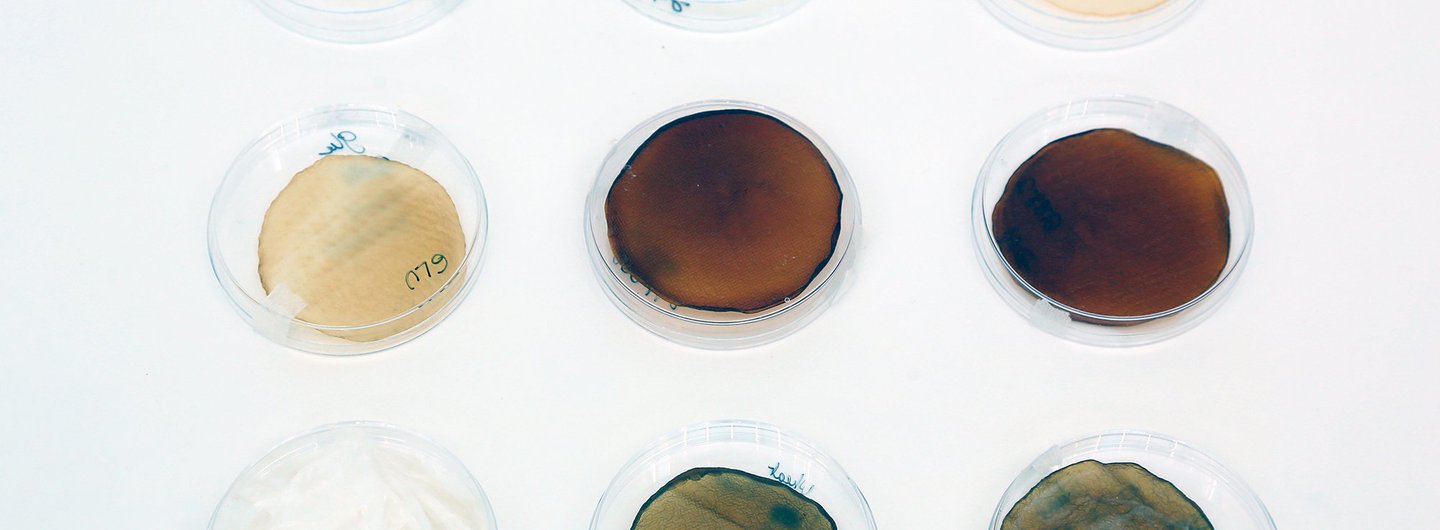
The research explored the use of straw extracts to modify the surface properties of bacterial cellulose and enable the direct synthesis of durable materials for textiles. Bacterial cellulose has been suggested as a sustainable alternative for the biomanufacturing of textiles, but it lacks the durability and hydrophobicity that are needed in apparel applications. This project investigated the use of lignin and hemicellulose, underutilised components of wheat straw, to modify the surface of the bacterial cellulose for the production of novel high-performance composites in textile applications. The team produced bacterial cellulose composites using lignin nanoparticles and wheat straw hemicellulose in situ or ex situ in order to improve textile characteristics and compare this to chemical modifications.
Planned outcomes
The Proof of Concept (PoC) project was led by Professor Simon McQueen-Mason at the University of York. The project involved the University of York, where Dr Alexandra Lanot produced the bacterial cellulose composites. Dr Yoselin Benitez-Alfonso at the University of Leeds analysed the structure of the composites and Professor Ningtao Mao tested their mechanical properties. Dr Miriam Ribul at the Royal College of Art evaluated the manufacturing processes for textile applications and engaged with designers. The research formed part of the Sustainable Future Materials theme of the Centre for Materials Science & Culture to design and develop textiles from crop residues and biowaste.
Team


Ask a question
Get in touch to find out more about our research projects.
[email protected]