superMATTER: Friction
Jump to
In 2026/27, superMATTER's provocation, Friction, turns toward the productive struggles through which matter, making, and signification shape interior experience.
Design has spent decades pursuing the smooth, the seamless, and the frictionless. Screens collapse distance and scale. Algorithms remove inconvenience. Products arrive polished, cleanable, and ready for consumption. Spaces are optimised for efficiency and comfort. In the process, many of the encounters that once connected us to matter, to one another, and to consequence have been designed away.
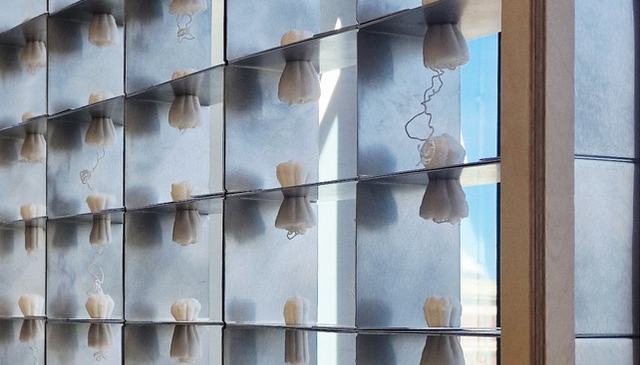
Holy Shed thesis project by Jennifer Oviedo (2026). Photo: Tania Lopez Winkler
Yet matter remains matter.
Gravity still pulls. Surfaces wear. Materials stain, deform, crack, resist, and endure. Every act of making is a negotiation with forces that exceed intention. An apple does not decide to fall. Its stem weakens, its weight exceeds its strength, and gravity does the rest. Matter performs; we interpret. From that encounter, signification emerges.
For superMATTER, friction is not an obstacle to overcome but the condition through which productive struggles take shape. Material is the site of enquiry. Through contact with resistant materials, our intentions are tested, redirected, and recalibrated. Matter refuses the role of passive recipient. It participates in the work, shaping outcomes through its own behaviours and capacities.
This provocation extends beyond material encounters. Friction operates across scales: in the resistance of a surface beneath the hand, in the encounter between conflicting ideas, in the negotiation between tools and methods, and in spatial sequences that slow, redirect, or intensify experience. Friction produces encounters. It creates the conditions for learning, negotiation, intimacy, and invention.
As social, digital, and design environments become increasingly personalised, optimised, and frictionless, opportunities for these encounters diminish. We are exposed to fewer disagreements, fewer negotiations, and fewer material constraints. Design processes unfold within environments where gravity, scale, texture, maintenance, and consequence can be temporarily suspended. Material becomes image, simulation, and preference. Friction returns attention to consequence. It reconnects speculation to making, and making to matter.
This year, superMATTER turns toward moments where materials push back, where systems resist optimisation, and where contact generates signification.
Friction is not the problem. Friction is the story.
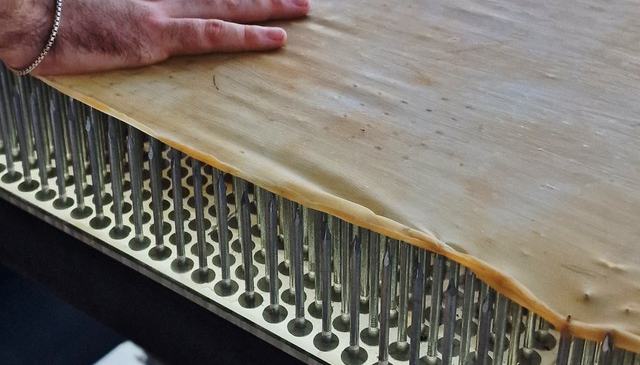
Ouroboros thesis project by McConnel Quinn (2026). Photo: Tania Lopez Winkler
About superMATTER
superMATTER articulates the intimacy of making in interior design positioning matter as both co-creator and site. By engaging with material legacies, sensory experience, and integrating technologies in spatial production, we aim to recalibrate design’s relationship with resources and behaviours. Here, material is not a passive outcome or a surface applied at the end of a process, but reimagined as a catalyst for sustainability and design accountability. Through this lens, making becomes more than production. It becomes a form of inquiry.
Our design approach operates through an iterative cycle of reflection, making, speculation, and realisation—continually examining how spatial identities emerge from material considerations, and always bridging the gap between speculation and tangible application. We fabulate, speculate, negotiate with reality, and articulate in it.
All in all, we make interior experiences.
Platform tutors



Jim Eyre
Tutor