ADS6: Friction – The Material of Resistance
Jump to
`
Tutors: Guan Lee, Kate Darby & Marco Campardo
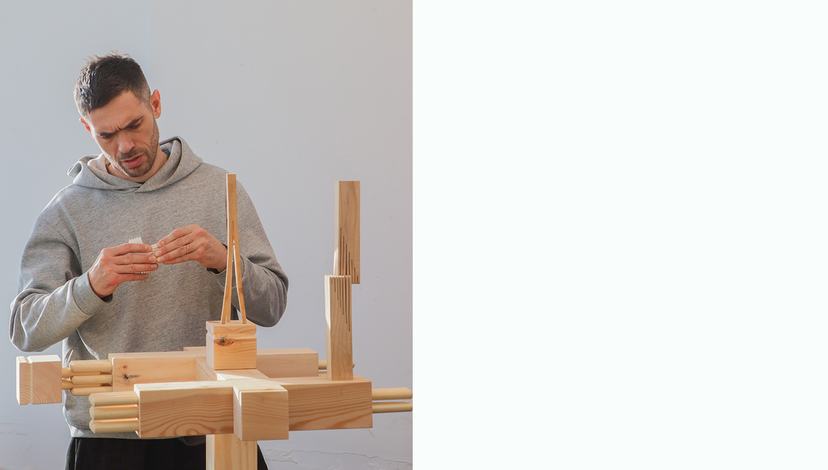
Guest critic with Friction Fix Joinery , Keir Booton, ADS6 2025/26
“Maybe this is an opportunity to think more clearly than we ever have about what is interesting and essential about being human’.”
Friction-Maxxing
Friction-Maxxing is the intentional practice of choosing less convenient, more hands-on options in our daily life to resist ultra-convenience, build tolerance for discomfort, and create more meaningful experiences. The term was coined by the columnist Kathryn Jezer-Morton in a January 2026 essay for The Cut. It pushes back against a tech-driven world that works to eliminate boredom, effort, and pause; instead argueing that it is the consequence of moments of friction which gives our life meaning.
This idea builds on the work of Hartmut Rosa, a German Sociologist whose entire body of work critiques late-modernity’s obsession with optimization and speed, arguing that when we eliminate all friction, we accidentally alienate ourselves from the world. This provocation chiefly applies to technologies that enable us to have a frictionless life. While creating the illusion of immediate help, these technologies are arguably harming us in the long term. What skills, knowledge, and autonomy might we be giving up as a consequence of our ever–greater use of these tools?
ADS6 have long been interested in the use of a hybrid of traditional and digital tools for fabrication, analysis, and extending our bodily experiences. The use of AI is no exception to this interest, however we are more interested in critiquing the use of these tools; exploring how we might instruct them not do our thinking for us and how speculative acts of resistance might lead to new kinds of architecture.
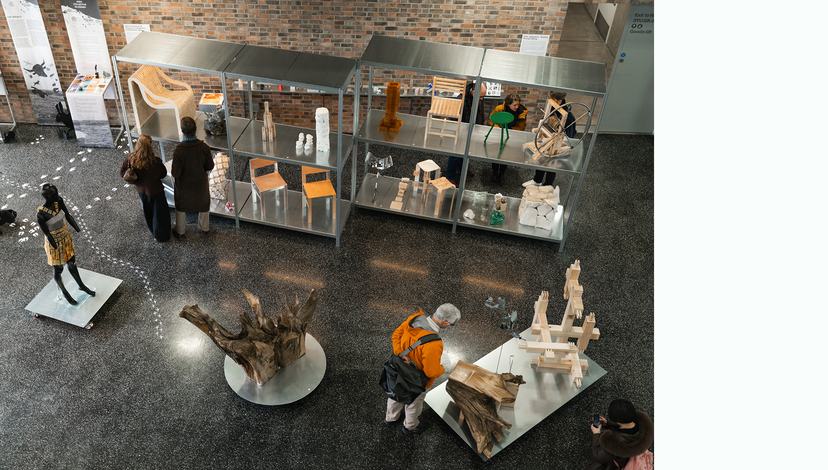
ADS6 exhibit at RCA WIP Show 2026
Resistance
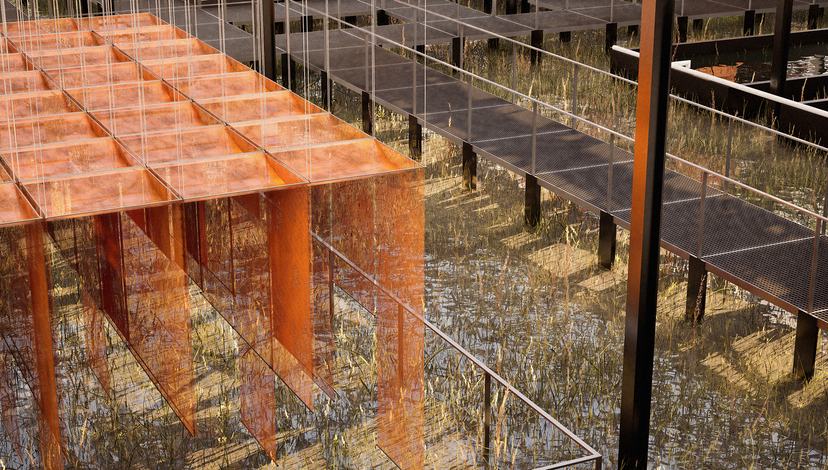
Borrowed Atmospheres, Shellac lacquered screens, Sofia Viudez Sole ADS6 25-26
Material friction can be understood as the resistance, tension, or negotiation between materials. Rather than treating friction as a problem to eliminate, it can be a characteristic to encourage, and might even be considered fundamental to a form, space, or structure. Social friction occurs when there is interaction between people. Psychological friction can shape emotions and behaviour. How might architecture play a role in bringing different people, activities, or cultures into contact?
Friction Maxxing works on this level. But we also wonder how architecture might also contribute to phenomena that slows people down, creates tension, curiosity, or reflection? Economic friction is a force that capitalist economies work hard to reduce so materials, goods, capital, and labour can flow with as little resistance as possible. Yet this frictionless efficiency often conceals the costs it produces. Environmental degradation, carbon emissions, resource depletion, social inequality, and the collapse of natural ecosystems become externalized: removed from the immediate calculation of economic value. What if friction could be deliberately reintroduced into these systems? What forms of resistance might slow, interrupt, or complicate processes enough to make their hidden consequences visible and accountable? Construction and sustainability exist in an uneasy relationship. To build is inevitably to consume material, energy, and land. Therefore the act of construction can contribute to the environmental damage that sustainable design seeks to address.
Yet we continue to need buildings, infrastructure, and new forms of habitation. The question is not simply how to build sustainably, but how to work within the contradiction between the desire to build and the need to sustain? Rather than trying to eliminate this friction, perhaps it can become a productive condition for rethinking what we build, how much we build, and what building itself might mean.
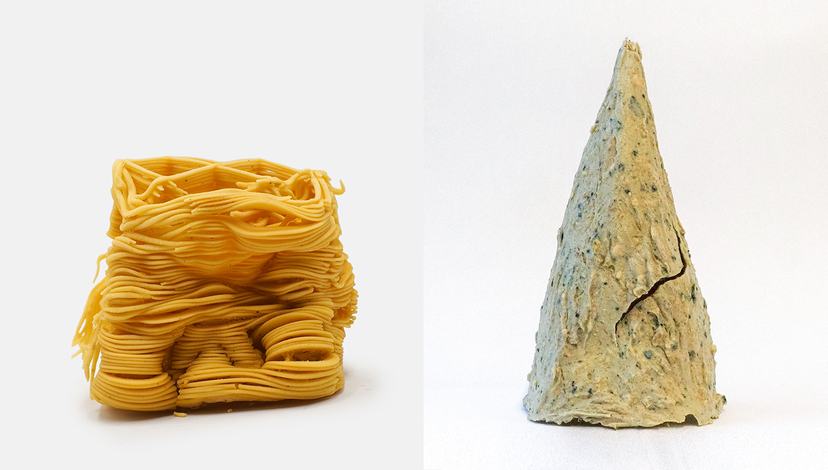
Cube, 3-d printed mashed potato material test and Cone, cast mashed potato material test. Rianna Man, ADS6 25-26
Method
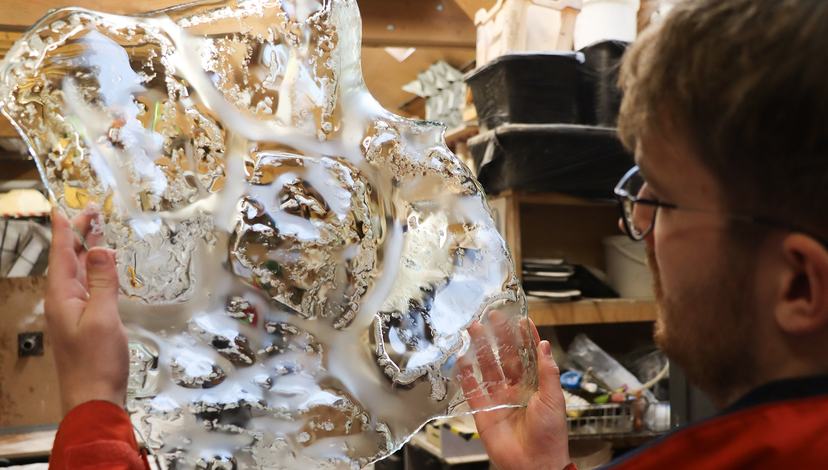
Glass cast on chalk, Dan Kimber ADS6 25-26
ADS6 is a materials and making-based studio. We believe that making is where thought begins. We ask our students to discover their projects through firsthand material engagement and research. Our work is process driven and the design evolution is highly iterative.
We make extensive use of the workshops at both the RCA and our collaboration with Grysmdyke Farm, a Digital Fabrication Facility in Buckinghamshire run by Guan Lee. Using these facilities, we can support casting, 3d printing, CNC machining, and kiln work, amongst many other forms of making.
Binder
In Term 1, students begin the work of the studio by selecting two materials. They explore the inherent and transformational properties of these materials by engaging with a variety of techniques and processes that revolve around the theme of friction. What is a binder, connection, tension, pressure, or resistance? These experiments will culminate in the design of a fragment that encapsulates an architectural idea. The scale of these fragments will not be predetermined, but all fragments will be large, body–sized objects.
For students interested in parametric scripting to predict or mimic a material performance at scale, Grasshopper tutorials will be available during Terms 1 and 2. ADS6 will be involved in the RCA’s collaboration with the City of London Corporation on the redevelopment of Smithfield Market in the context of their City Plan 2040. We will engage in site visits, stakeholder meetings, workshops, and presentations. For Year 1 students this will be their site for the year, exploring the theme of friction in this context. Students will seek out resistance within the city and at different scales of the urban grain. This collaboration brings with it the possibility of staging live interventions or testing ideas at scale in a way that may help shape the future identity of this place.
Resistance
In Terms 2 and 3, our focus moves from binding to resistance. The fragments uncovered in Term 1 will be expanded, questioned, reworked, and contextualised to demonstrate how an act of making can generate architecture. Final proposals will emerge from exploring acts of resistance across all scales and typologies.
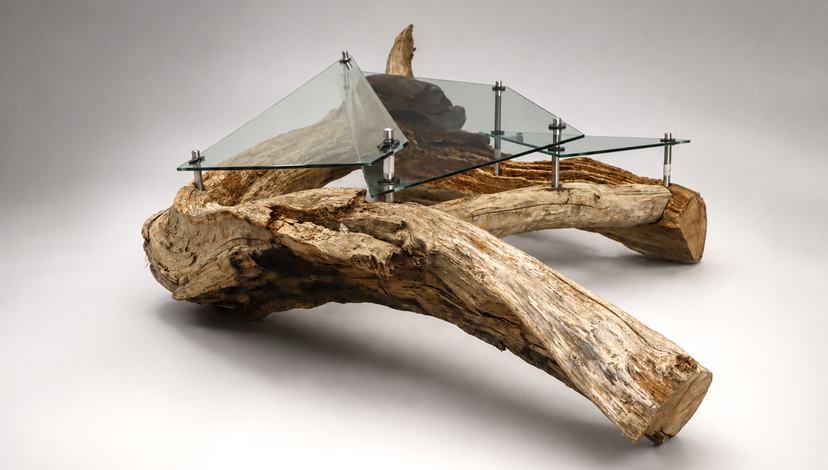
Good Pile Bad Pile, 1-1 detail, Ben Staveley Parker, ADS6 25-26
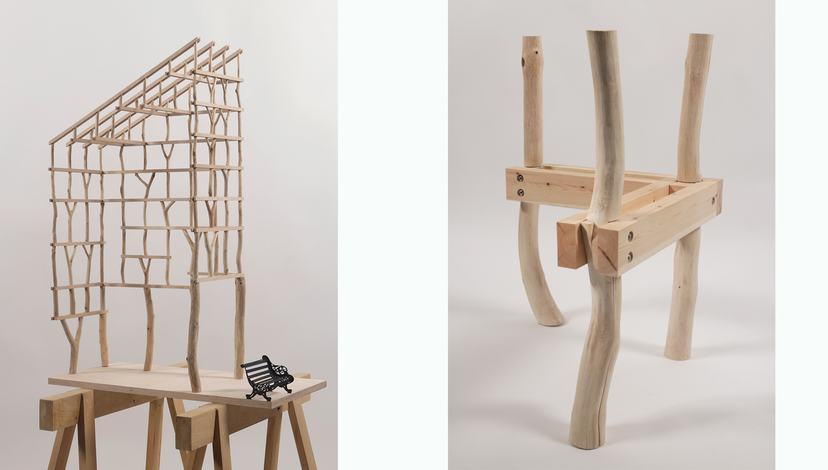
One tree pavilion and Construction Detail, Ruben Greyson, ADS6 25-26
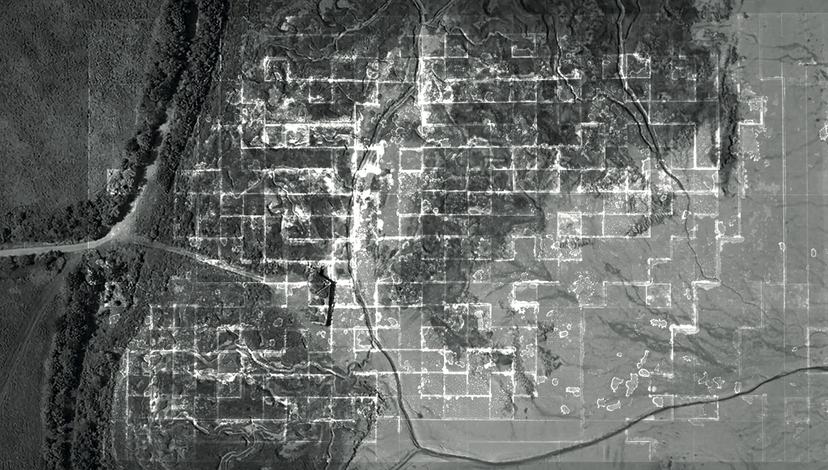
Salt Lines, Osea Island, Libby Sturgeon, ADS6 24-25
Field Trip & Live Project
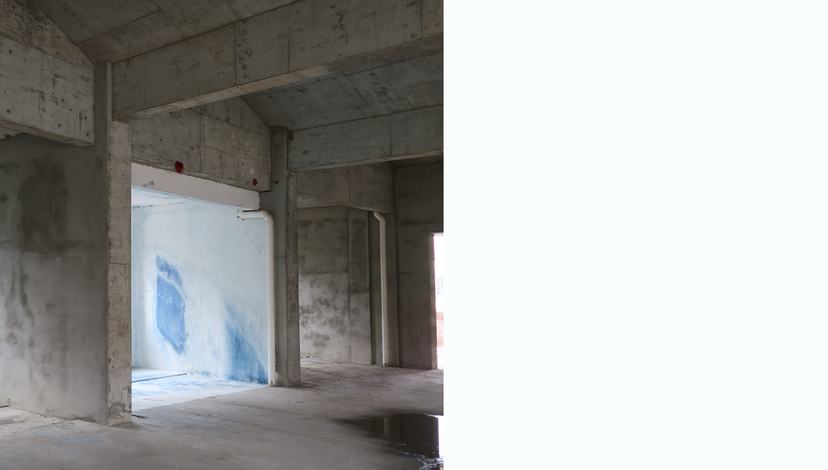
Live Project, Chikan, China, Serena Walker ADS6 24-25
In 2026, Guan Lee was appointed lead curator and designer for the British Pavilion at the Venice Architecture Biennale 2027, the 20th International Architecture Exhibition that is curated by Wang Shu and Lu Wenyu. The ADS6 Live Project will focus on the design and making of a piece that will be installed in the Central Pavilion at the Venice Architecture Biennale 2027. This work will respond to the Biennale theme ‘Do Architecture: For the Possibility of Coexistence Facing a Real Reality’.
The project will be developed as a collaboration between ADS6 and IED in Milan, working with Enrica Cavarzan and Marco Zavagno of Zaven. Students from London and Milan will work together through a process of design, experimentation, and making, developing a collective architectural piece for Venice. The project will begin with a week-long workshop at Grymsdyke Farm in Term 1. The workshop will establish the material, design, and fabrication processes through which the final work for the Central Pavilion will be developed. ADS6 will also explore opportunities to exhibit the work in London as part of the City of London Corporation’s Smithfield Market collaboration.
Our field trip this year will be to Venice, where we will work closely with Zaven, who are based in the city, and Marco, who has practised in Venice for more than a decade. Together, we will explore the industrial areas surrounding Venice, visiting factories, workshops, and ateliers to understand the contemporary ecologies of making that exist alongside the city’s long traditions of craft and production. The trip will also provide an opportunity to follow the installation of our own piece in the Central Pavilion of the Venice Architecture Biennale 2027, connecting the work developed through the Live Project directly to its final context in Venice. The field trip will take place during Term 2 and we will return in May to attend the opening of the Biennale.
Tutors:
Guan Lee
Guan Lee is a practicing architect, lecturer and director of Grymsdyke Farm. He undertook his architectural studies at McGill University, Montreal, the Architectural Association, London, and Bartlett School of Architecture, where he completed his PhD on the relationship between architectural craft, making and site. In addition to his extensive experience as an educator, his own practice explores digital fabrication in relation to hands- on building processes in a range of materials, including clay, concrete and plaster.
Kate Darby
Kate Darby is an Architect and principal of Kate Darby Architects. She is co-founder of the collaborative workshop, Studio in the Woods. She studied architecture at the Bartlett and the Architectural Association where she later taught on the Design and Make programme at Hooke Park. She has previously led design units at the Bartlett and the Welsh School of Architecture. She is a recipient of the AJ Small Project Award and RIBA awards. Her work has been featured in the Beazley Designs of the Year and Waste Age exhibitions at the Design Museum, and has been widely published, including in Detail magazine and Dezeen.
Marco Campardo
Marco Campardo is a London-based, process-driven designer working across production, research and teaching. His practice explores making and material experimentation as a form of critical practice, questioning established models of industrial production and the relationship between process and form. He received the Designers of Tomorrow Prize from Apple and Design Miami (2025), the Ralph Saltzman Prize from the Design Museum (2023), and the Wallpaper* Design Award (2020). His work has been featured internationally among others in The New York Times, Financial Times, Wallpaper*, Architectural Digest and Dezeen, and he is internationally represented by Galerie kreo.