Key details
Date
- 8 October 2026
Author
- Jessie Bond
Read time
- 5 minutes
Lukman Ipese (Visual Communication MA, 2025) is a graphic designer and visual communicator based in London. He works across editorial design, photography, digital media, and participatory workshops.
Lukman came to the Royal College of Art (RCA) to professionalise his graphic design practice and take it to the next level. He left with a whole new approach to design, positioning it as something relational and shared. We discussed this transformation, the motivation behind his graduate project and what he has been up to since leaving the RCA.
“The facilities and tutors were fantastic, I just tried to make the most of every opportunity.”
Visual Communication MA alumni
What were you doing before coming to the RCA, and what made you want to study Visual Communication MA here?
After completing an undergraduate degree in history, I worked as an account executive at an advertising agency. That was my first real exposure to graphic design in a professional context, and I was fascinated. When COVID happened I lost my job, so I started taking online graphic design courses and watching YouTube tutorials. This led to me taking a postgraduate diploma in Visual Communication at UAL while working as a marketing manager at Caravan Restaurants.
While doing the diploma, I kept questioning whether I was a “real” designer since I hadn’t worked full-time in the industry yet. I wanted that credential and validation to officially establish myself as a graphic designer.
Two key things motivated me to apply to the RCA: hearing a talk by lecturer Giulia Garbin about how much she grew as a designer during her time at the College, and receiving the Sir Frank Bowling Scholarship. With the offer of that support I couldn’t say no.
How was your experience at the RCA? Did it meet or exceed your expectations?
It completely exceeded my expectations. Being 29 when I started my Master’s made a huge difference. Because I had workplace experience, I was comfortable with self-directed study and took an ambitious approach to my projects – even securing company sponsorships to fund my work. The facilities and tutors were fantastic, I just tried to make the most of every opportunity.
How did you find transitioning into the programme coming from a history undergraduate?
I definitely experienced imposter syndrome, especially during the first month. However, once you get stuck into the work, that feeling fades. The Visual Communication studios created a supportive peer environment where we constantly helped each other with research, software skills like After Effects, and constructive feedback. The College also offered helpful technical workshops for software skills.
Participation and collaboration are key elements of your current practice. How did those develop during your time at the RCA?
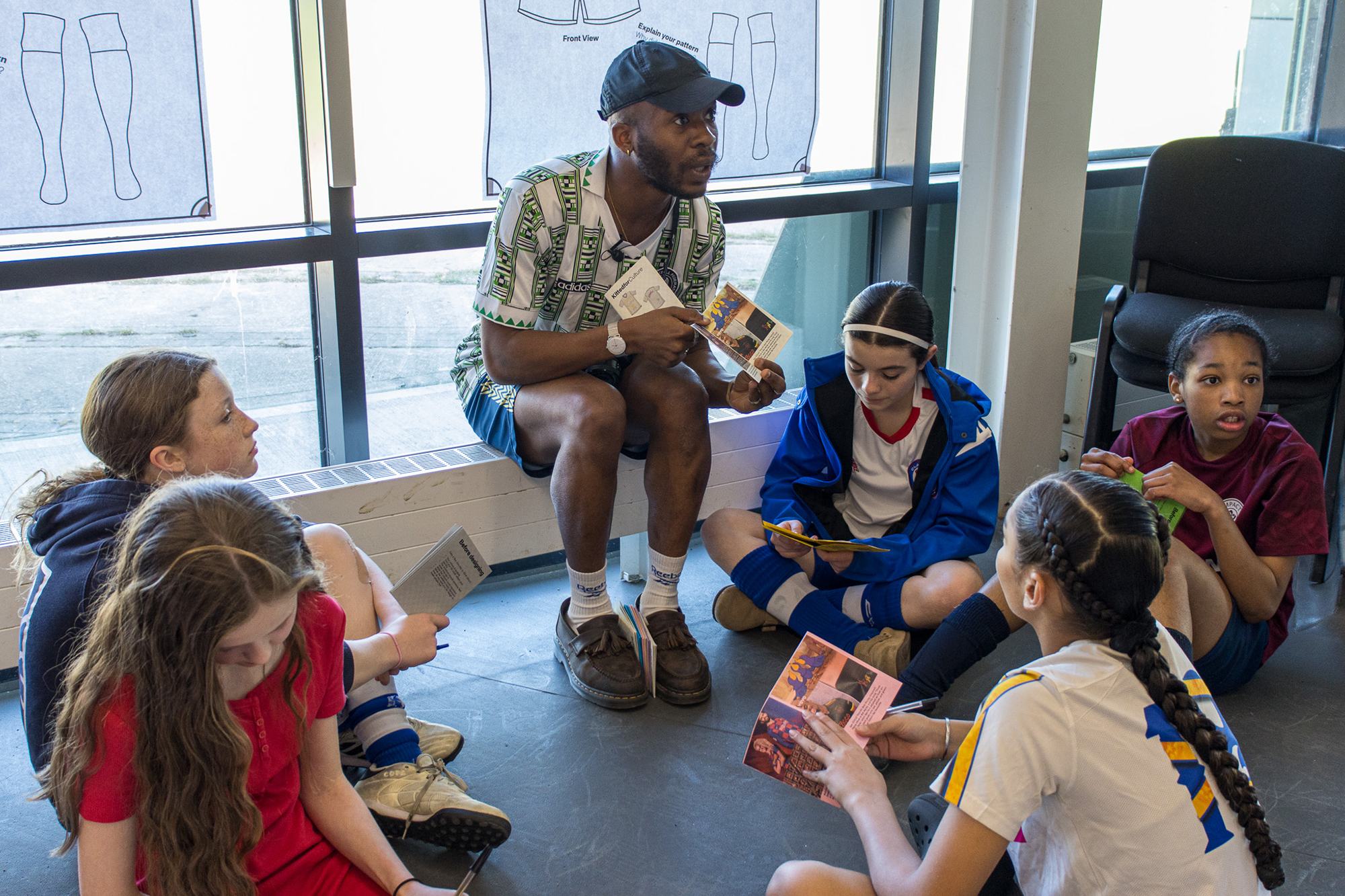
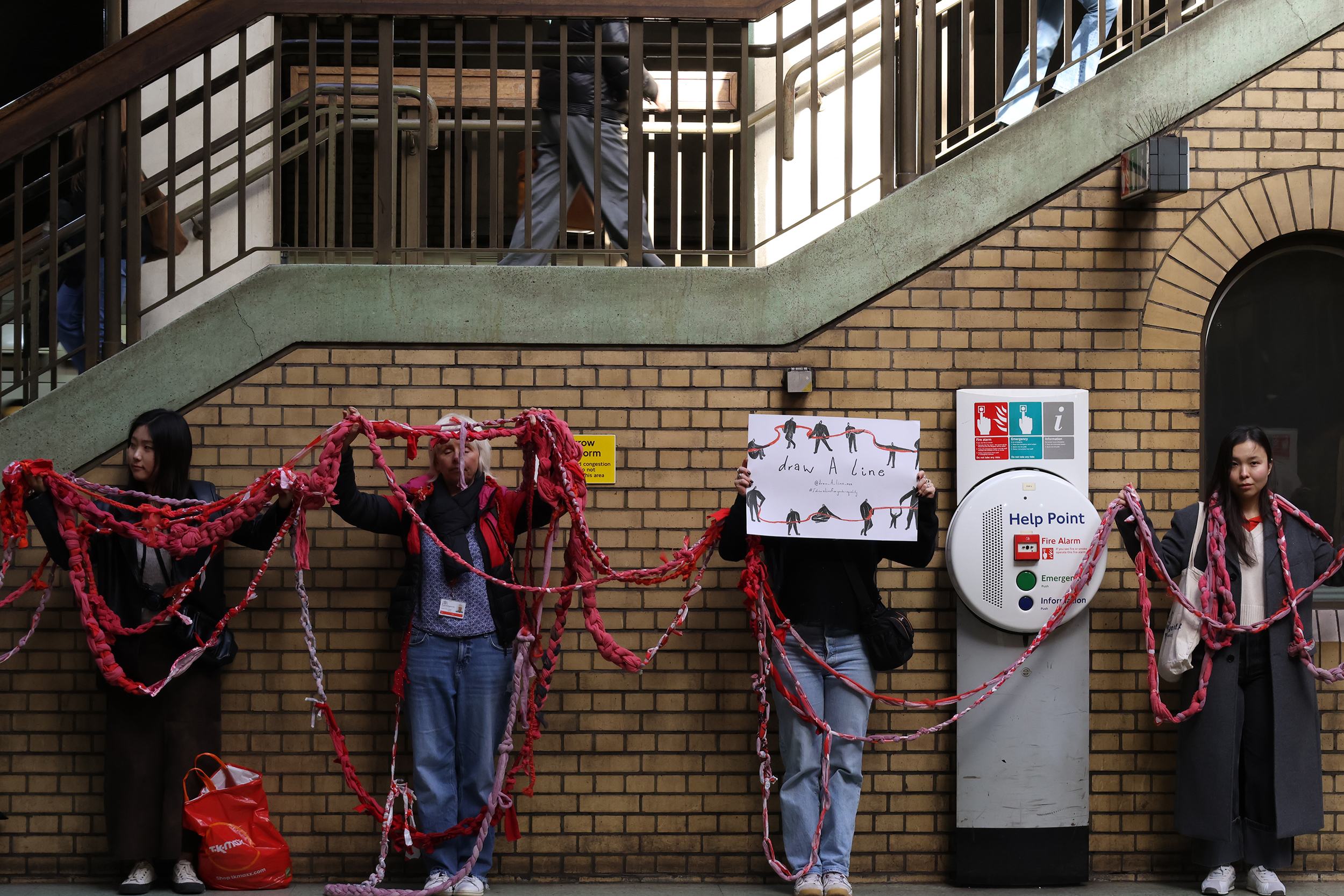
That was actually the biggest surprise for me. During a module called “Making Worlds with Others” I worked with a group of school students on a workshop. Although I was initially hesitant because I couldn’t see how working with school children connected to my design goals, their creativity and enthusiasm transformed my practice. It taught me the value of mutual exchange within a community. As a result, I invited young people aged 12 to 14 to collaborate on my final project.
“My aim was to show young people that football encompasses broader creative careers like design, videography, and photography, and to give back to the community.”
Visual Communication MA alumni
Could you tell us more about your final project, Kitted for Culture?
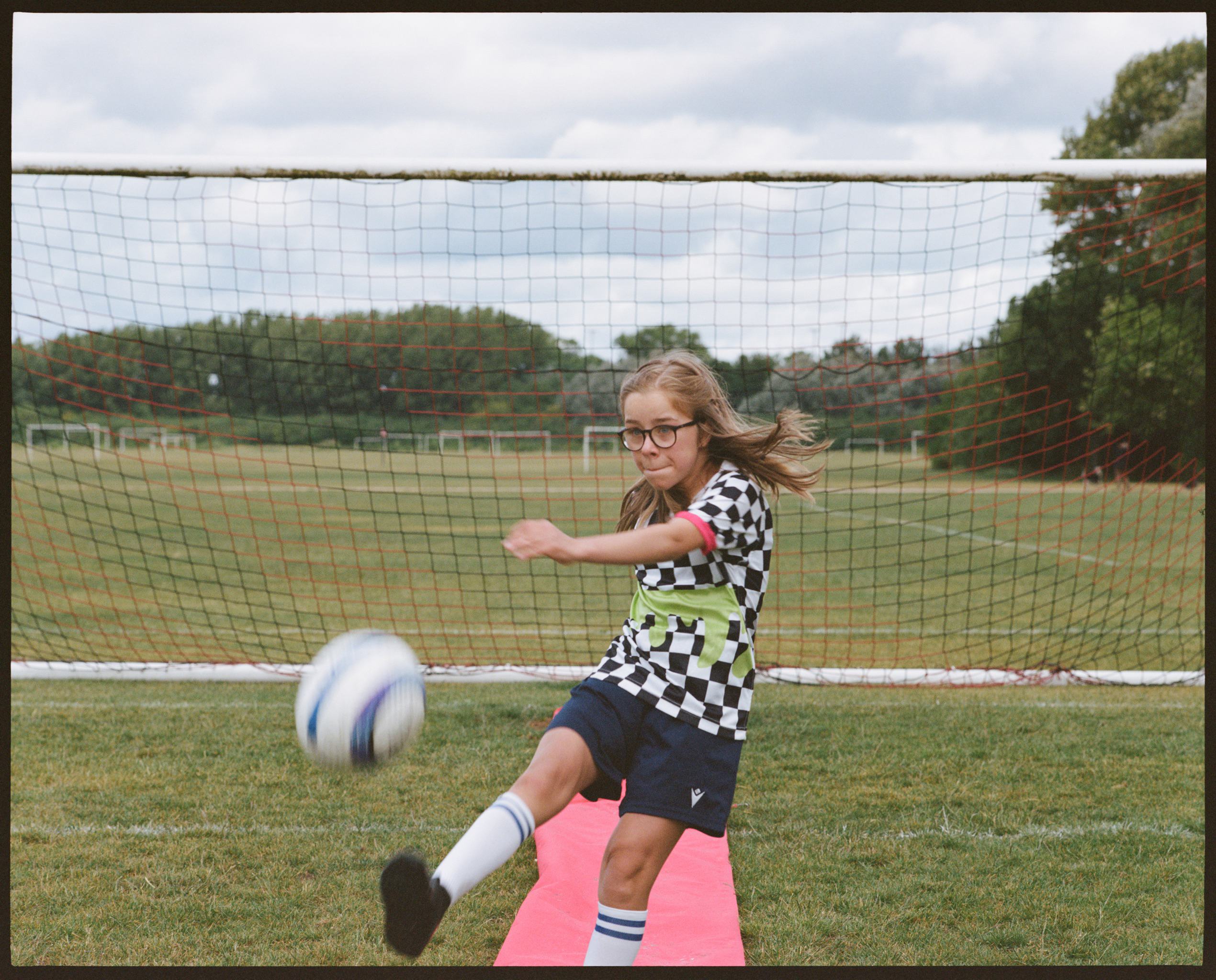
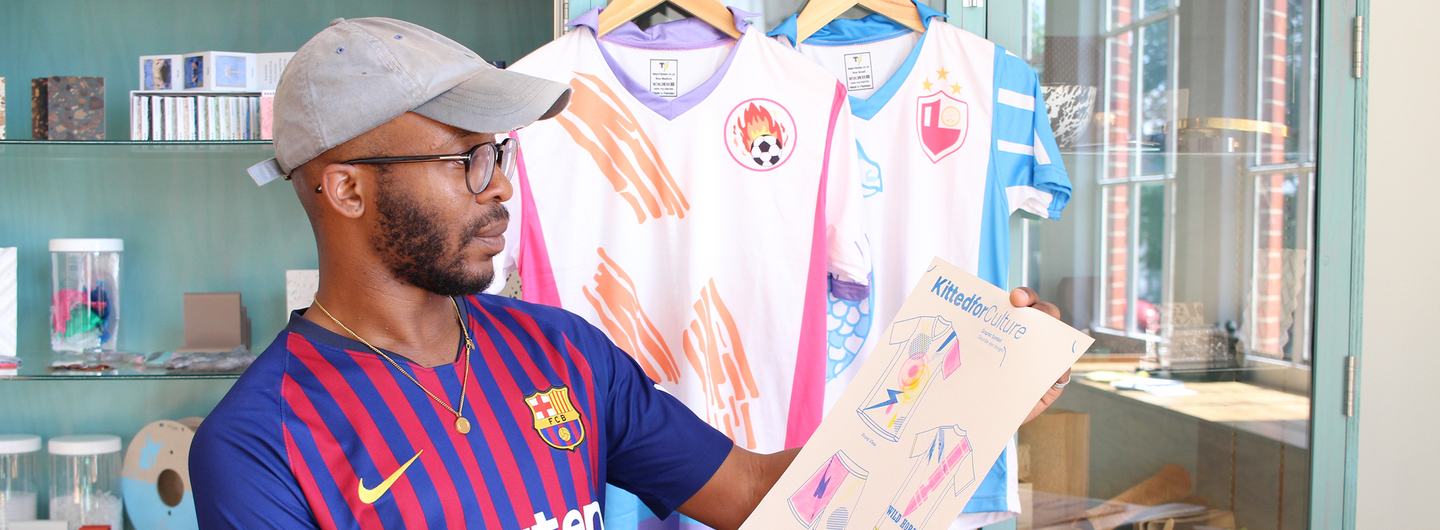
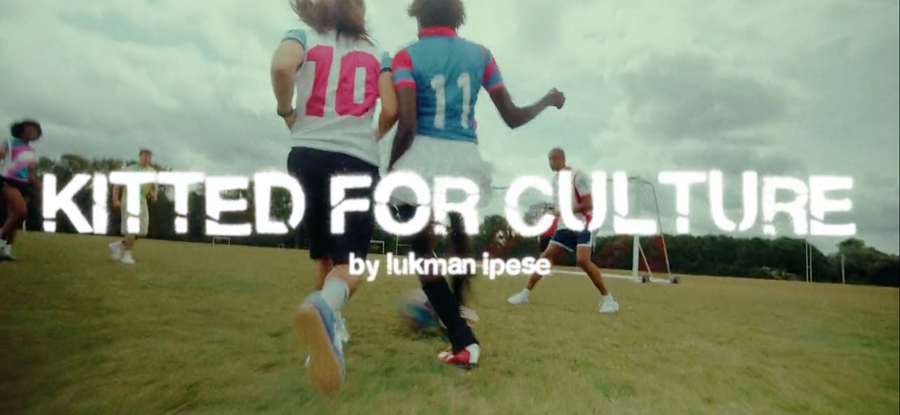
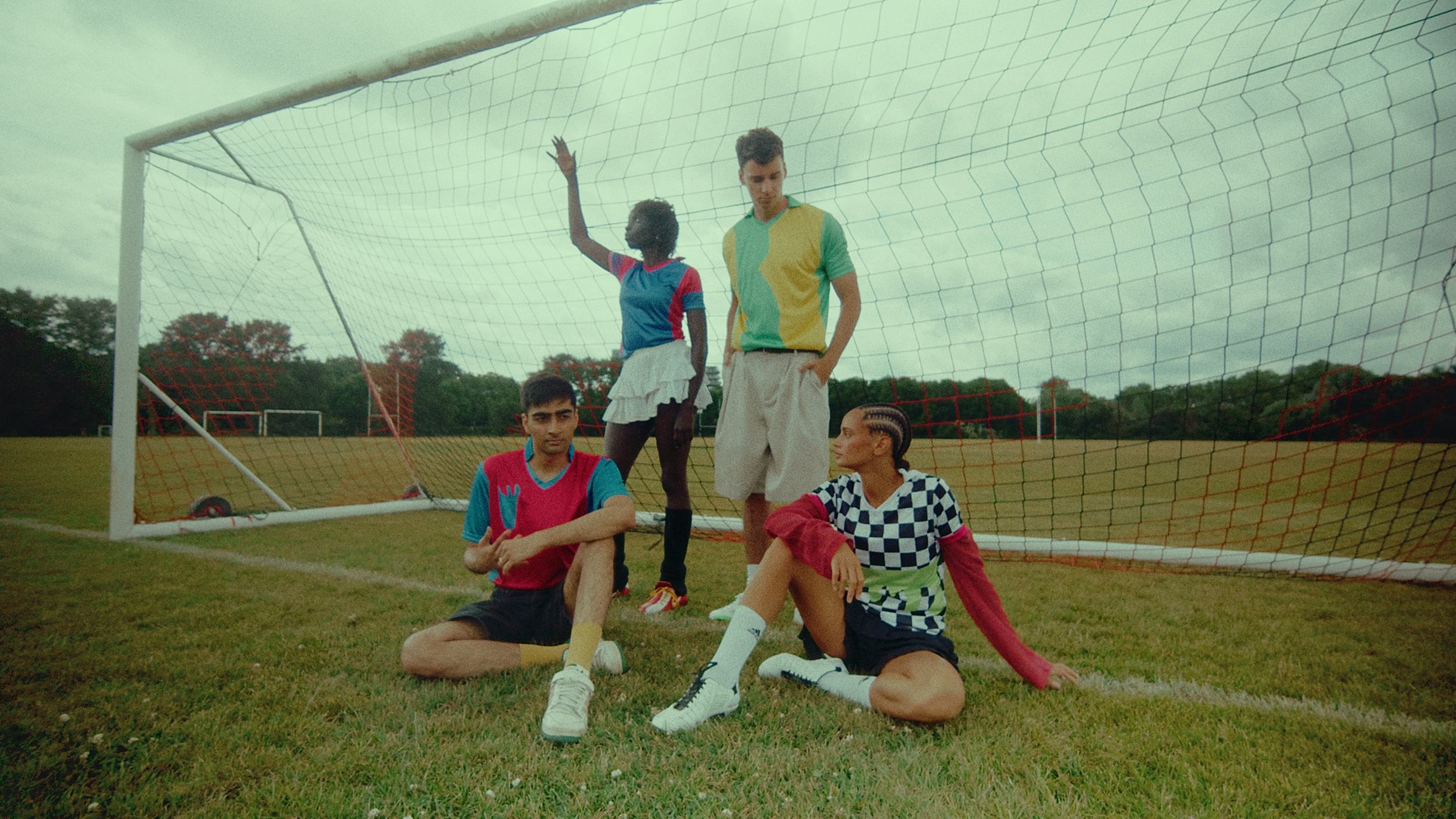
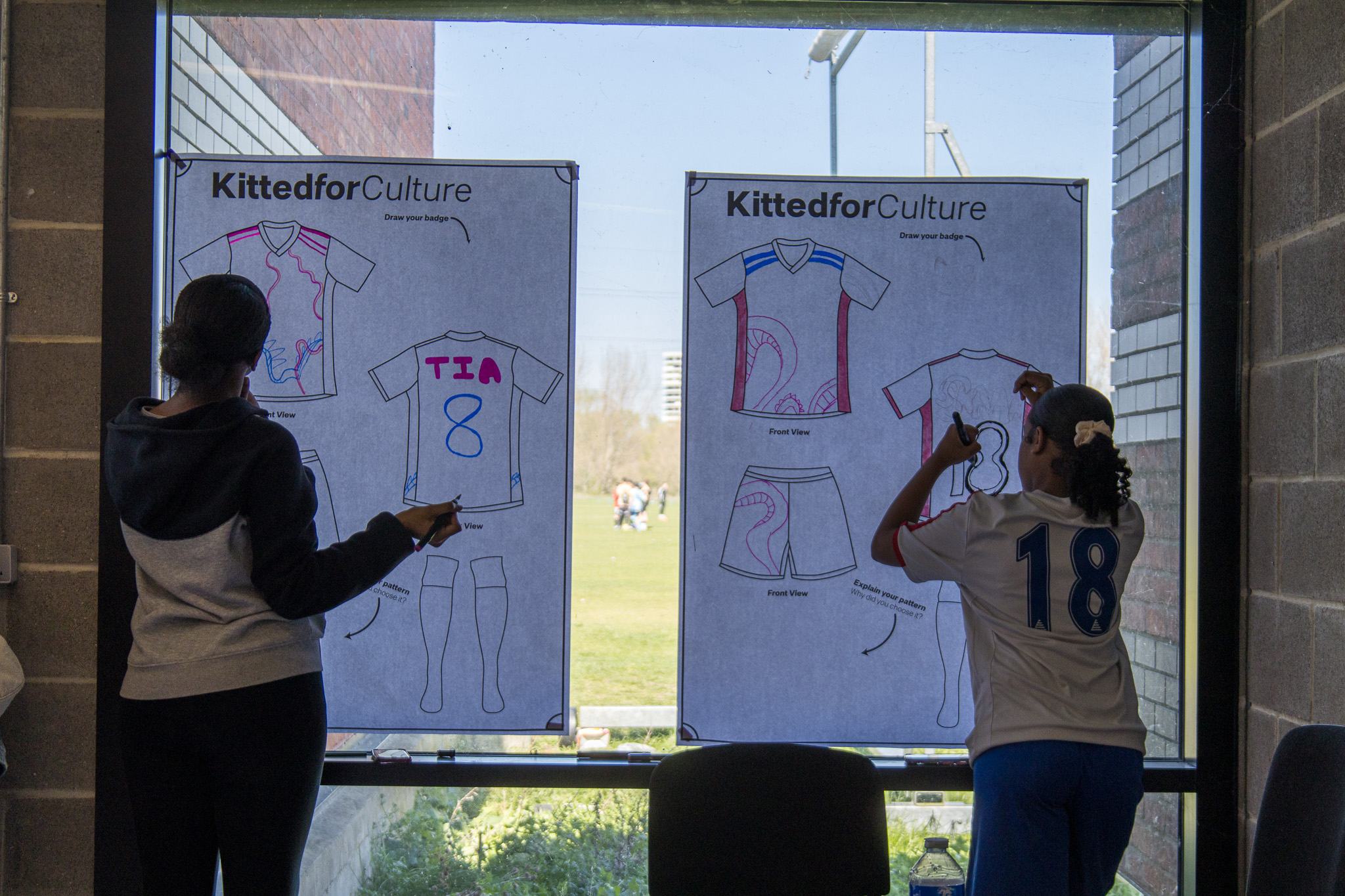
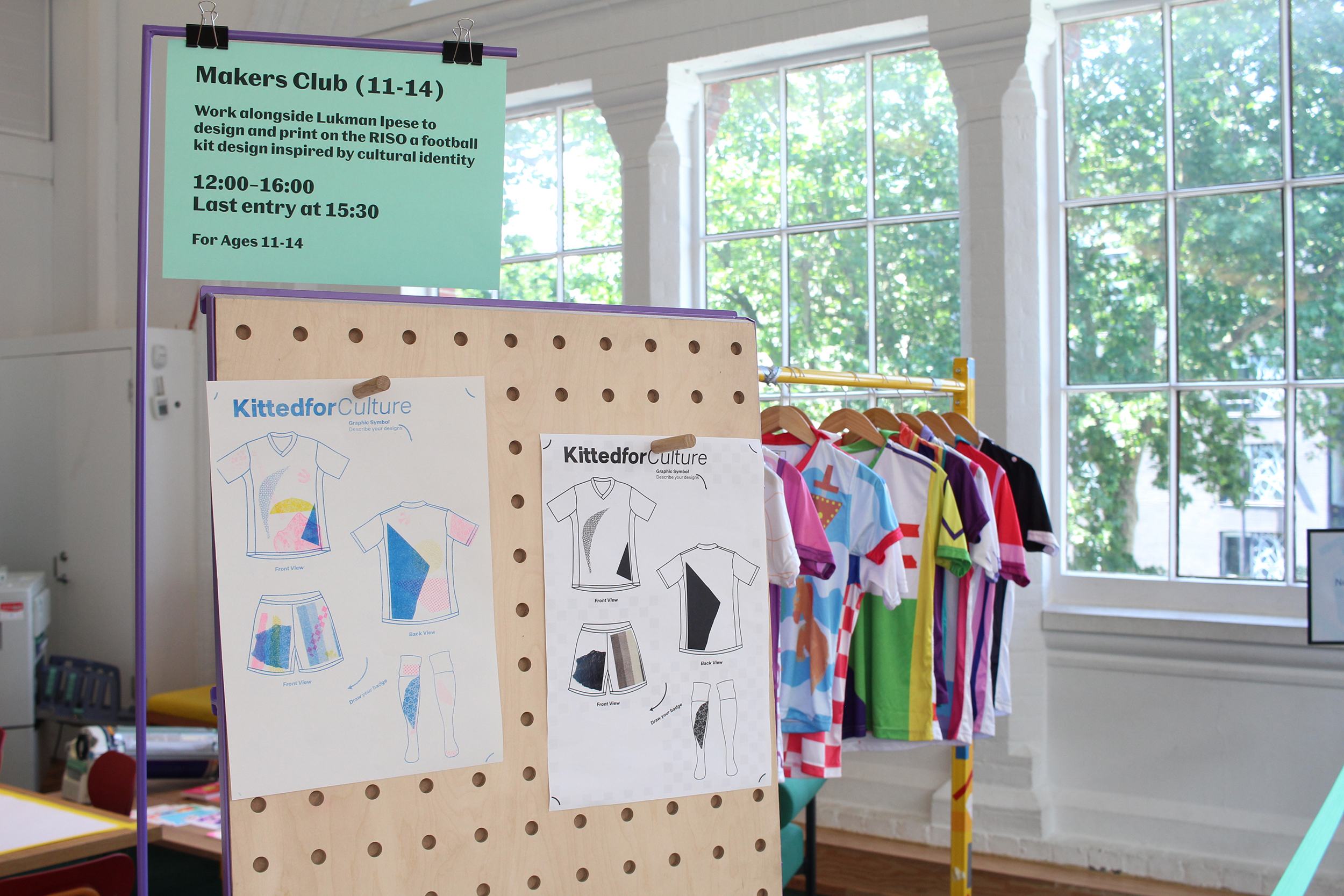
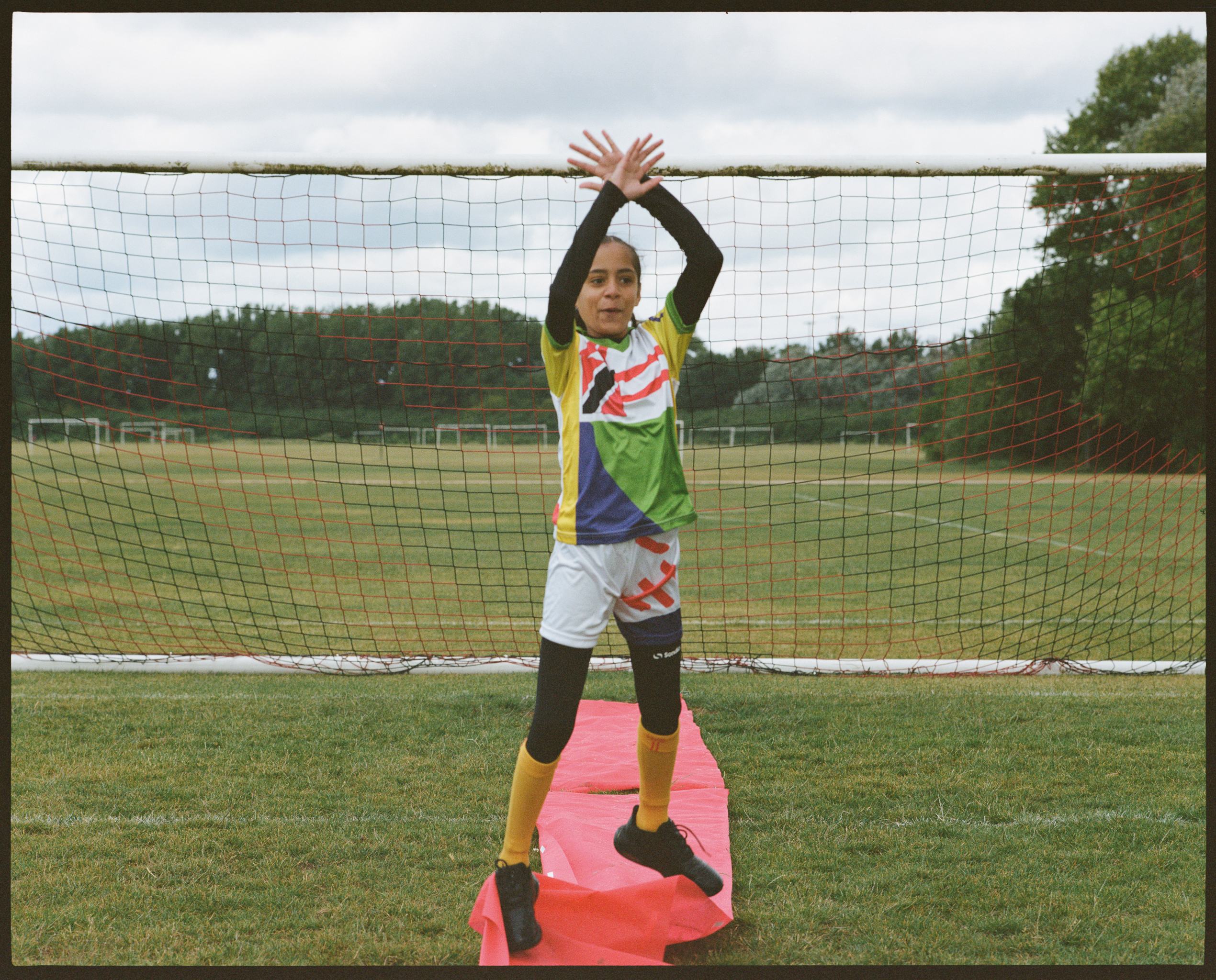
The project began when I came across research by RunRepeat showing how football commentators describe Black players using terms like “fast, powerful, strong” versus white players as “technical, skillful, graceful.” I wanted to explore this visually. Drawing on Stuart Hall's theories on community and race, as well as the intersection of fashion and football culture, I designed workshops where young people created custom football shirt designs based on their personal surroundings and stories.
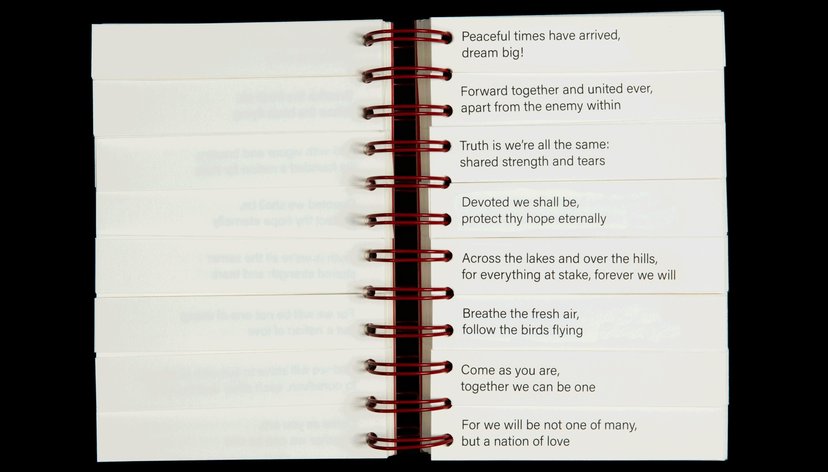
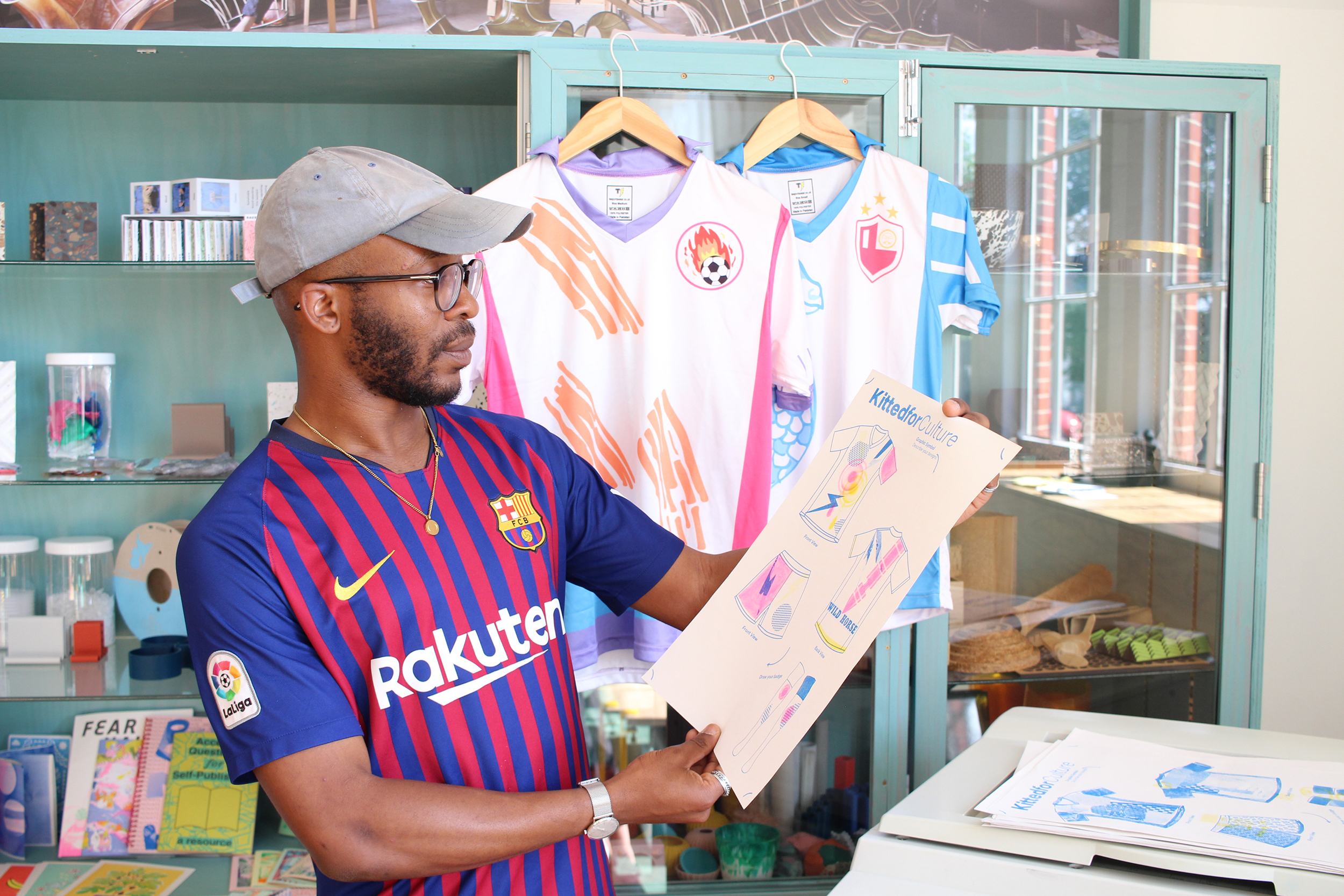
We raised funds with support from the V&A to print their designs and produce a publication. My aim was to show young people that football encompasses broader creative careers like design, videography, and photography, and to give back to the community.
Why football and football shirts?
I'm a huge football fan. Originally, I started by hand-stitching footballs using Ankara fabric from Nigeria and photographing people wearing football shirts around London. In interviews, I realised people wore shirts not always for the sport itself, but because the shirts represented home or identity. Football culture has a massive presence in design that I wanted to highlight.
“Football culture has a massive presence in design that I wanted to highlight.”
Visual Communication MA alumni
You won both a Helen Hamlyn Award and the Varley Memorial Prize for Kitted for Culture. What did winning those awards mean to you?
It was a huge honour, though humbling. I felt the project succeeded because of the collaborative effort – over 20 friends and many young participants contributed to it. It was incredible to see a project focused on football win top arts university prizes.

Since graduating, you completed a residency at the GAS Foundation in Nigeria. What was that experience like?
As a British-Nigerian who hadn’t returned to Nigeria since age 12 or 13, it was an incredible experience; diving into research in Lagos was deeply fulfilling.
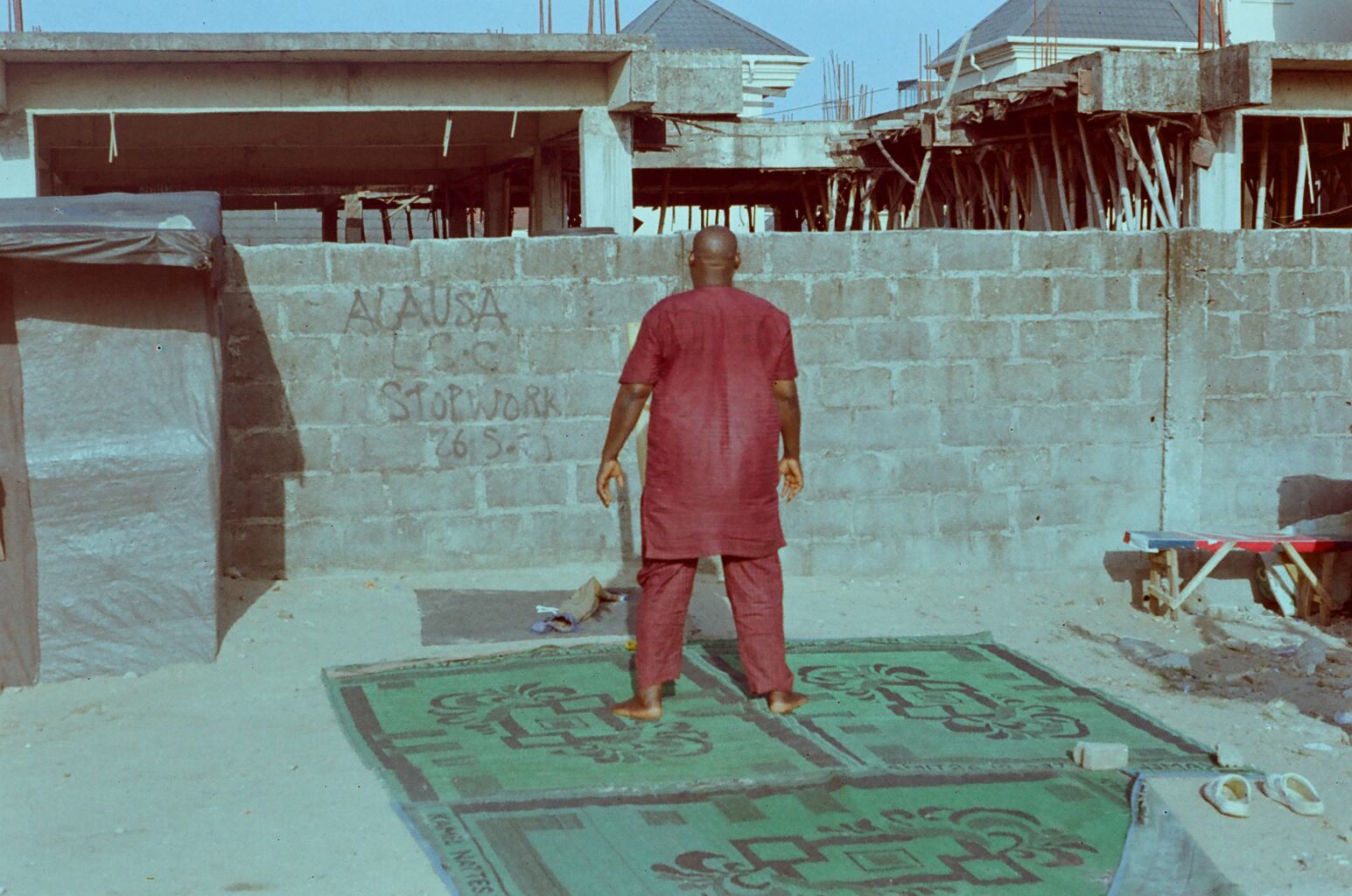
Predominantly it was a photographic research project looking at religious symbols and objects. In Nigeria and across Africa, history and traditions aren’t archived in the same way as in the West, they’re held by people. So I interviewed different community members, artists, and religious leaders.
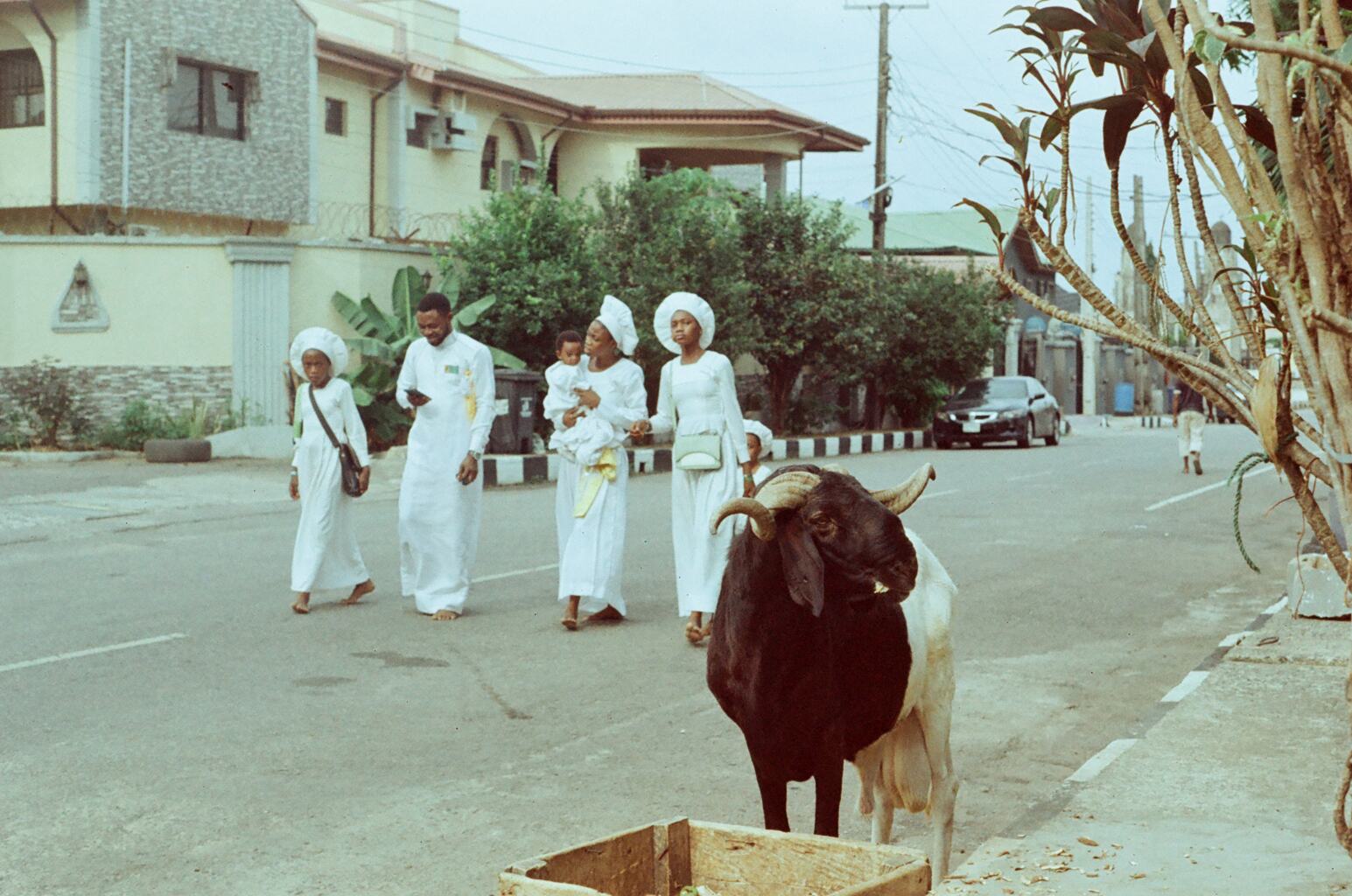
I discovered that many people view the sea and beach as deeply spiritual spaces for worship, regardless of their specific faith. I visited the beach daily to capture people singing and praying. I met three men who went to the beach four times a day to praise their gods through song, which reflected a fascinating, distinct form of secular Christianity.
Exploring the intersection of my background, religion, and culture in Lagos provided rich inspiration that I hope to continue developing in future work.
What are you working on currently?
I’m working full-time as a graphic designer for commercial brands, but as I settle into the routine, I’m actively making time for my independent practice. Over the past year, I ran another iteration of Kitted for Culture with a charity in South London. I also worked on a project with youth members for Holloway Council surrounding the campaign against the privatisation of the local former prison. The young people led the initiative, and I helped create an editorial report of their findings. Managing time and energy is challenging, but maintaining my practice is a priority.
What’s next for you long-term?
I’m really inspired by studios like POoR Collective, which was also founded by RCA alumni. After gaining a few years of industry experience in agency roles, my long-term goal is to start my own studio focused on community-led design projects.
What was the best thing about studying at the RCA?
The facilities were definitely the highlight.
What was the most surprising aspect of the experience?
The sheer number of extra opportunities available outside the curriculum – like special projects, retreats with RCA BLK, and cross-disciplinary collaborations. There was always something happening.
“Don’t be afraid to fail – what you make isn’t a reflection of your worth, and making mistakes along the way is part of the process.”
Visual Communication MA alumni
What learnings from your time at the RCA do you draw on day-to-day?
At the RCA, we were encouraged to walk around London and observe. The city is filled with rich history, and learning to uncover the stories behind places and use them to communicate a message is something I continually bring into my design work.
Do you have any advice for prospective RCA students?
Listen to your tutors, but trust your own intuition as well. Don’t be afraid to fail – what you make isn’t a reflection of your worth, and making mistakes along the way is part of the process.