Environmental Performance
Jump to
Data from the College's environmental data audit, including greenhouse gas emissions and electricity, gas, water travel and waste data.
Greenhouse gas emissions
The Royal College of Art calculates its full carbon footprint on an annual basis. This exercise was first carried out for the academic year 2022/23, which acts as our baseline for achieving net zero by 2035.
The carbon footprint was developed in line with the Greenhouse Gas Protocol and Standardise Carbon Emissions Framework. Further detail on the carbon footprint is found in the "Environmental Data" section below.
The RCA greenhouse emissions in 2024/25 were 25,868 tCO2e, which was a 6% decrease from 2022/23.
A carbon footprint is split into three scopes:
- Scope 1 (direct energy use): 3%
- Scope 2 (indirect energy use): 4%
- Scope 3 (indirect upstream and downstream activities): 93%
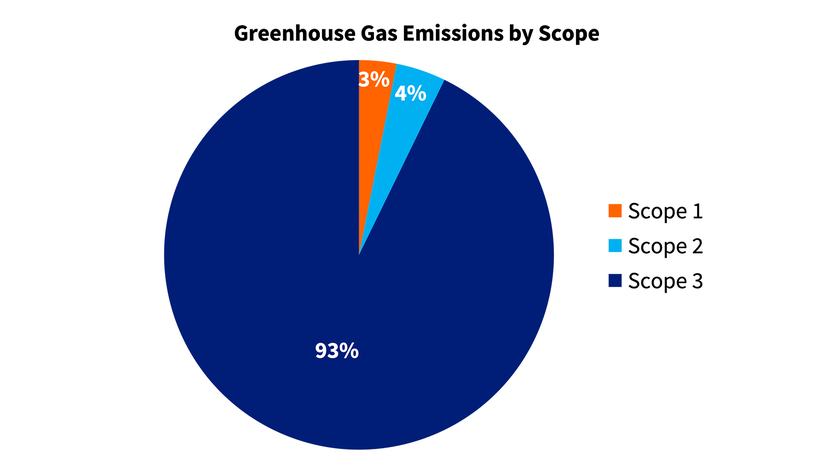
Greenhouse gas emissions split by scope
Five hotspots make up 99% of emissions:
- Procurement: 60%
- Student relocation and commuting: 22%
- Energy: 9%
- Investments: 5%
- Staff business travel: 3%
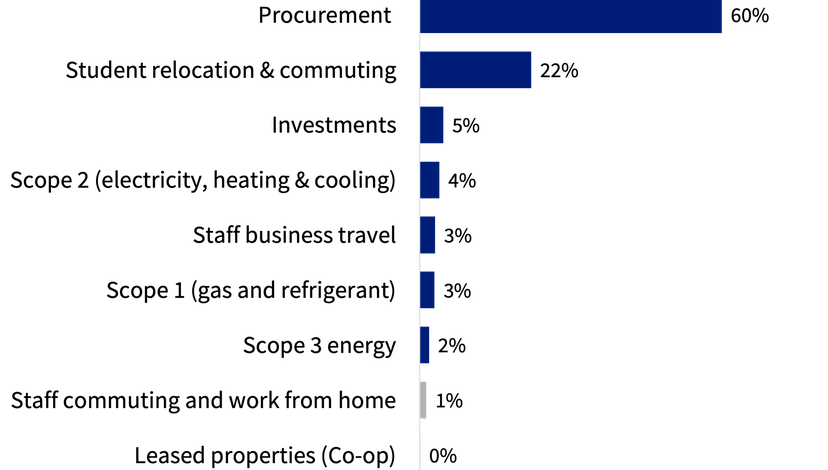
Greenhouse gas emissions split by category
Environmental Management
The RCA is committed to establishing an environmental management systems. In May 2026, the RCA achieved the EcoCampus Silver Award, recognising our efforts to date to manage our environmental risks and improve our environmental impact.
Improvement initiatives
The RCA is constantly seeking opportunities to improve our environmental performance and raise awareness of sustainability, as seen in our Staff & Student Engagement Strategy. Examples of improvement initiatives include:
- Data: continued monitoring of environmental data and greenhouse gas emissions
- Environmental Management: achieving EcoCampus Silver Award in May 2026.
- Decarbonisation: complete of RCA Decarbonisation Plan with support from the Greater London Authority’s Zero Carbon Accelerator.
- Climate Adaptation: ongoing development of RCA Climate Adaptation Plan.
- RCA Together: embedding sustainability requirements in major refurbishments.
- Reuse: introduced additional Reuse Stations across campus and hosting regular Swap Shops to support students to reuse and share materials.
- Food: our caterers, BaxterStorey, achieved Food For Life Bronze in 2026. View our Food For Life Bronze Certificate (PDF).
- Waste: introduced food waste bins across all tea points and rolled out new signage across all bins to support segregation.
- Energy: adopted Energy Policy and analysis of energy procurement options.
- Travel: updated our Sustainable Travel, Expenses and Entertainment Policy to prioritise emissions in decision making, promoting low-carbon travel modes.
- Responsible Procurement: inclusion of environmental criteria in key tenders and engagement with key suppliers on their emissions and net zero targets.
- Green Space: continuing to increase provision of space on campus for staff and students to grow food, herbs and dye plants.
- Growing Colour Garden: collaborating with the Design Museum to create a dye garden for students and staff.
- Supply Chains: The RCA is a member of the London Universities Purchasing Consortium (LUPC), which is affiliated with Electronics Watch. Electronics Watch is an independent monitoring organisation working to achieve respect for labour rights in the global electronics industry through socially responsible public purchasing in Europe. It combines its affiliates' collective ITC purchasing power to reform public sector supply chains.
- Carbon Literacy Training: piloting Carbon Literacy Training with 35 staff members certified in the first year.
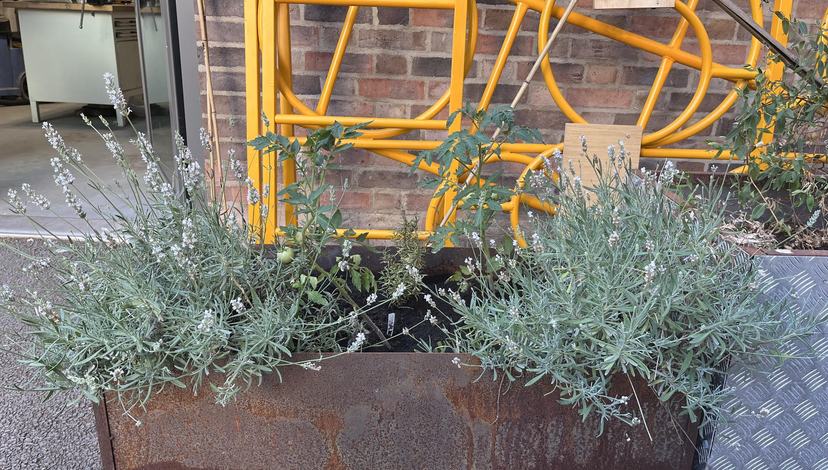
A staff-led gardening project has created containers in our Battersea campus, featuring tomatoes, herbs and lavender grown in June-July 2026.
Responsible investment
With the RCA's investment portfolio representing 5% of our total carbon footprint in 24/25, this is a key focus area. The College's Responsible Investment Policy was introduced in 2022 and is reviewed on an annual basis. The Responsible Investment Policy sets out the approach that the College aims to follow in considering environmental, social and governance (ESG) issues with regards to its investments, including our commitment to exclude investments in fossil fuel companies.
The RCA's investment portfolio is free of fossil fuel investments across all asset classes. Our external fund manager also confirms the College's fossil fuel free status.
Digital sustainability
Managing the environmental impact of technology is a key part of our sustainability efforts. We have implemented the following process and policies and constantly seek additional ways to minimise our environmental impact of technology.
- We apply the Responsible Procurement Policy to all Technology tenders over £50,000, which requires suppliers to have sustainability accreditations such as ISO 14001.
- We have minimised our physical server estate and all physical servers are now on RCA campuses. As such, we don’t use any external data centres however we make use of a range of SaaS platforms to support the delivery of technology services to our student and staff community.
- All digital infrastructure at the RCA is managed centrally which enables the Technology team to manage the impact of energy consumption and emissions directly. Our Financial Regulations outline our policy on centralised infrastructure purchases, whereby IT infrastructure can only be purchased through the Technology department.
- Guidance on AI usage is published on the RCA Intranet. A copy of the content can be downloaded here: Using Generative AI at the RCA [PDF].
- We minimise e-waste from hardware through our partnership with Converge. IT waste is collected centrally at the RCA and collected by Converge, who reuse as many components as possible and recycle what cannot be reused. Where possible, Converge refurbish devices and supply to schools, charities and community groups.
Environmental data audit
Greenhouse gas emissions is just one environmental data point that the College measures and monitors. We audit the following areas on at least an annual basis (bi-annually for travel surveys): energy, waste, water, travel, procurement, biodiversity. See below for the detail of these audits.