SuperREUSE: Buildings that remember and make
Jump to
In 2026/27, superREUSE investigates how existing buildings, archaeology, materials and histories can become the starting point for new forms of architecture and civic life.
Working principally at Convoys Wharf, a 16.6-hectare former Royal Dockyard on the Thames, superREUSE will explore how the memory of a place can be transformed into new spaces for making, working, learning and community.
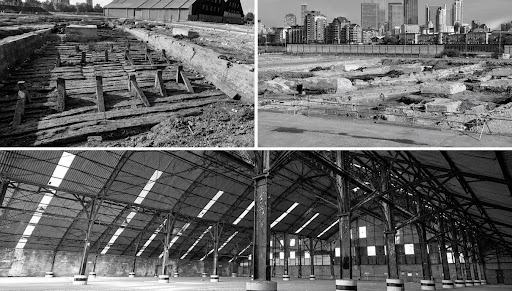
Olympic building, archeology and dockside warehouses.
Students will have the opportunity to choose where they work within this extensive and varied site. The possibilities range from buried archaeological remains and protected historic buildings and structures to industrial buildings dating from the 1950s, 1960s and 1990s. Opportunities also extend along the Thames waterfront, including its river walls, historic infrastructure and recently partially completed jetty construction. Each offers different architectural, material and historical conditions, allowing students to identify a particular fragment of the site that interests them and investigate its potential for adaptation, transformation and new forms of occupation. The intention is not simply to preserve what exists, but to understand how these different layers of history, including more recent and unfinished interventions, can inform what happens next.
The project is informed by four ideas:
- The Hollow City – reconnecting buildings with productive and civic life.
- Buildings that Make, not Take – architecture that gives something back to the city.
- Slow and Fast Architecture – permanent structures supporting changing activities and occupations.
- AI Resilience – combining hand-making, material knowledge, digital tools and human judgement.
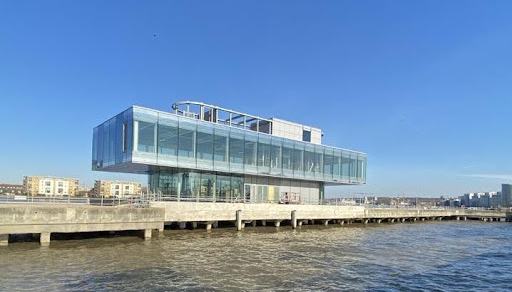
Convoys Wharf riverfront condition
About superREUSE
superREUSE proposes reuse as a critical design methodology for a finite world.
It replaces the pursuit of novelty with the re-designation of the existing. Depredation becomes research; transformation becomes design.
The platform teaches through direct engagement with found material, structure, and space.
Reuse is not preservation but a civic act – an ethical and imaginative response to the conditions we inherit, redefining architecture and the interior as instruments of collective renewal.
Platform tutors



Rachel Foster
Tutor