ADS7: Alternative Rountineers
Jump to
ADS7 deploys conviviality as a tool of gentle, socio-political resistance. We reject passive interactions in favour of active bodily engagement, exuberant performances, and nuanced everyday rituals. For us, conviviality is connected to subtle quotidian practices; existing in a balance between daily habits and creative acts of improvisation.
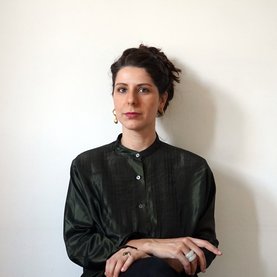
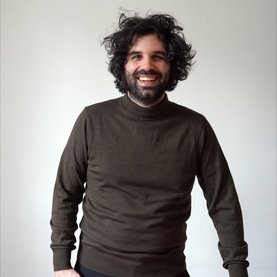
Tutors: Sabrina Morreale & Lorenzo Perri (Lemonot)
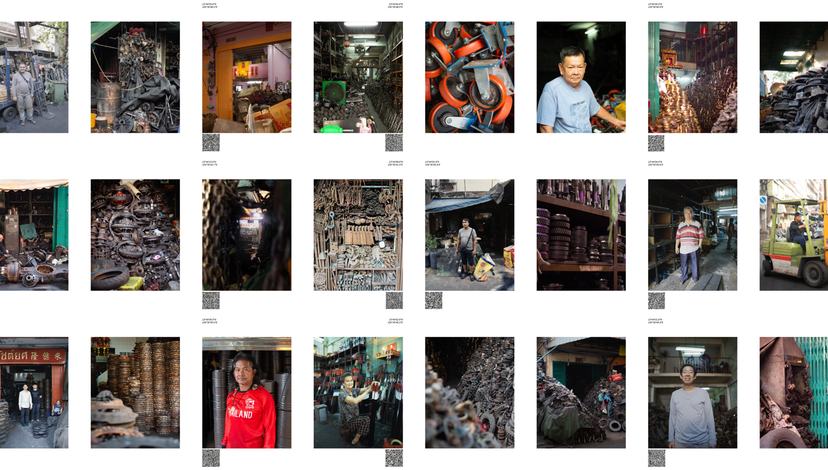
Lemonot, ‘Monumentally Automatic’. Human and mechanical characters, an anthropological site survey or Sieng Gong in Talad Noi. Commissioned by the Bangkok Design Week 2020
This correspondence with the everyday is exactly what makes the convivial politically relevant: when addressed convivially, daily encounters not only become privileged moments to perform processes of debate, translation, and consensus building, but also sites of possible, constructive tensions. We are interested in joyful exchanges and celebratory moments. But we also understand it is equally important to consider irritation, dissatisfaction, disagreement, and frustration as modes of human togetherness.
Building on last year’s exploration of conviviality in the context of journeys and routes, in 2026/27 we now become Routine-ers: active handlers and agents of change, who sample specific acts of daily life to reinvent them as specialised crafts, performative pieces, and spatial assemblages. This will allow us to rewrite the mundane choreographies of cohabitation, labour, and leisure to form new spaces of playful activism.
By starting with the ordinary, and subverting everyday protocols and routines, we believe will find exceptional alternatives that also investigate fringe, counter-cultural, non-normative ways of operating within urban or domestic, public or private environments.
ADS7 emphasizes the value of tangible artifacts as embodied forms of knowledge. We will describe gestures through objects and instruments, portraying habits through the spaces that make them possible, and produce new architectural realities by redesigning the habits that occupy them. Ultimately, we will design buildings as places of convivial, habitual engagement. Architectures where people spend a significant amount of time – together and with others – conceiving, performing, and challenging alternative routines.
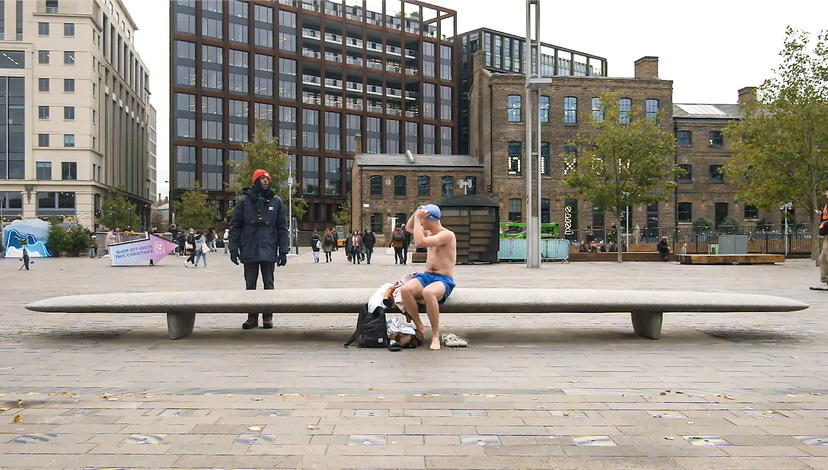
Grant Donaldson, ‘Changing Rooms’. Testing the boundaries of acceptable behaviour within privatised public space, performance in Granary Square, London ADS7 2022/23: Convivial-ism
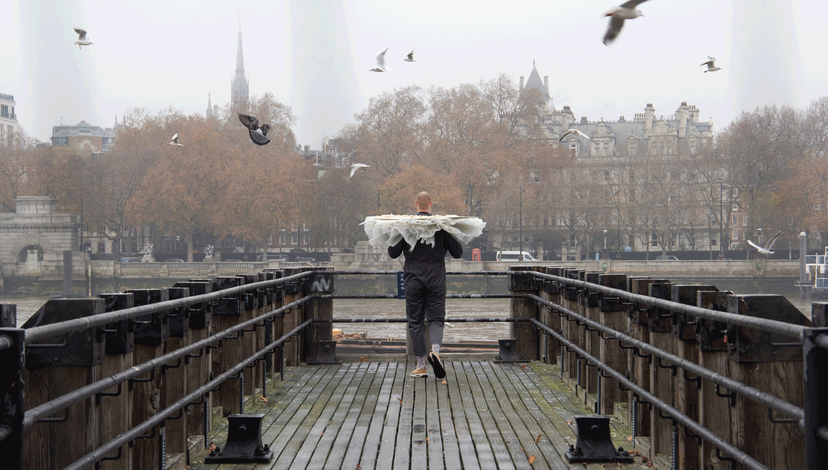
Matthew Hearn, ‘Forms of Remoteness: The Pigeon’s Ruff’. ADS7 2022/23: Convivial-ism
A Tool in the Open
We start the year in Term 1 by asking students to select and explore a specific alternative routine; identifying the subjects, behavioural patterns, and audience(s) that it relates to. What garments and props does it require? And what spaces does it involve? In order to frame, synthesize, and subvert these routines, students will construct a new convivial, 1:1 tool that allows them to perform these routines within a specific open space.
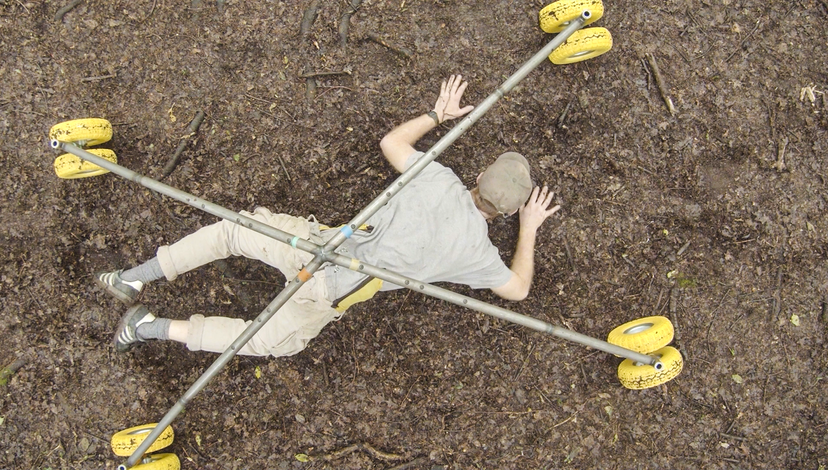
Kevin Adorni, ‘Periferico: the London Orbital and its Body of Performative Relations’. The LinkBoys, potato battery drive LED in the forest. ADS7 2023/24: Being Within
The scale of this tool should be capable of stimulating our senses, sensibility, emotions, and psycho-physical equilibrium. The result needs to be ordinary, yet transgressive. Practicality must coexist with forms of provocation, evocation, and disturbance.
Students can use their bodies as sites to build new forms of subjectivity and cooperation. We need to imagine tools, devices, and prostheses that not only consider our own needs, desires, and reactions, but also the needs, desires, and reactions of others. How can we interrogate the way we deal, physically and symbolically, with our surroundings?
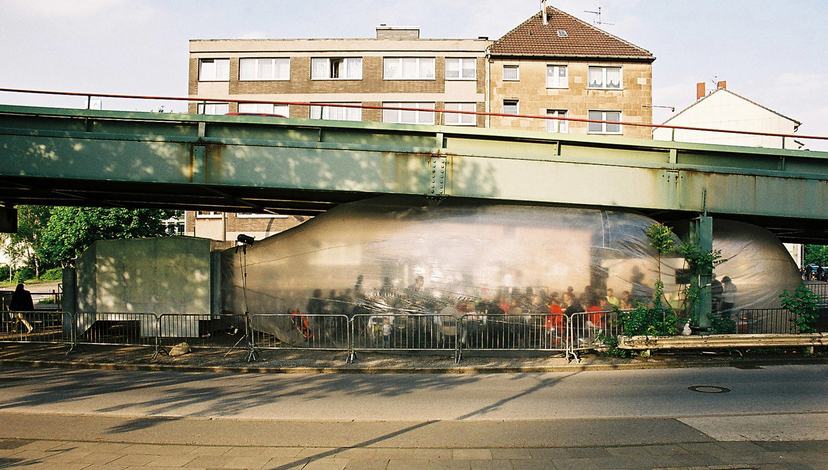
raumlaborberlin & Plastique Fantastique, ‘The Kitchen Monument.’ Duisburg, 2006. Photo: Marco Canevacci
Micropublics
ADS7 will test routines within open spaces; we believe such spaces are essential for public life, especially by providing room for multiple spontaneous activities. They might promote more passive, fleeting encounters, however, which are characterised by a certain ‘thrown togetherness’ that allows an accidental coexistence across large, diverse groups of people.
We will gradually shift to the construction of Micropublics: localised, small-scale everyday environments that are ‘spaces of habitual engagement, interdependence and prosaic negotiation’, as the urban theorist Ash Amin defined them in his article ‘Ethnicity and the Multicultural City: Living with Diversity’ (2002). Students will be required to envision these micropublics as enclosed rooms, where people spend time together regularly, build mutual understanding, and learn the difference between co-presence and collaboration. We’ll question the nature of these enclosures in the hope of defining prototypical single rooms, where convivial, routinary tools can perform differently.
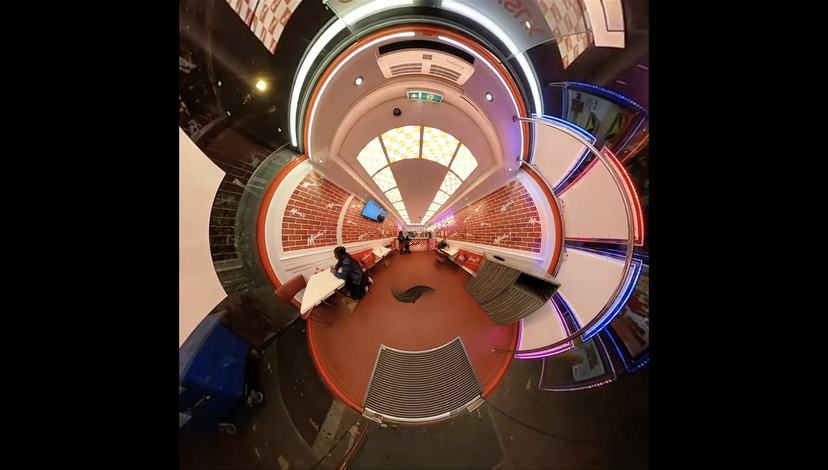
Cassandra Adjei, ‘How do U call It?’. Exploring the relations between Grime music culture and Morley’s chicken shops in Newham, London. ADS7 2022/23: Convivial-ism
As we are interested in active routines, the focus will be on the relationship-building interactions that can be found within these single rooms. The scale these interactions has to be at the micro for people to become active participants, rather than passive observers in a large crowd. We have long been concerned with how ‘being within’ particular sites can affect the occupant’s ‘being’ as a person. Belonging is not an abstract concept, but something to be cultivated through inhabiting and experiencing.
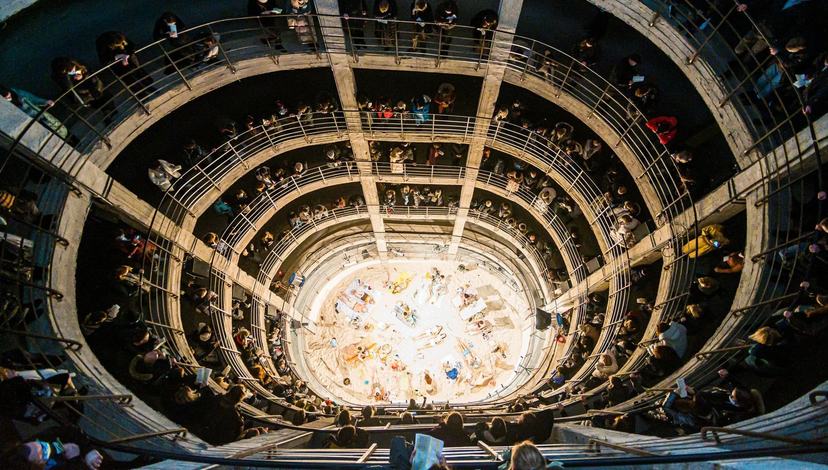
'Sun & Sea'. Performance directed by Rugilė Barzdžiukaitė in a former taxi park with eight cascading floors - Vilnius (Lithuania), 2021. Photo: Gabrielius Jauniškis
Exceptionally Ordinary Architectures
In Terms 2 and 3, students will develop their single-room Micropublics into site-specific building proposals that have a clear spatial articulation. These designs will be spatial devices for the collective, allowing the performance of shared alternative routines that will clarify the specific, spatial, and ritualistic relations between objects, bodies, and architectural elements. In particular, an emphasis will be placed on the thresholds between exteriors and interiors, and on creating sophisticated connections among multiple rooms.
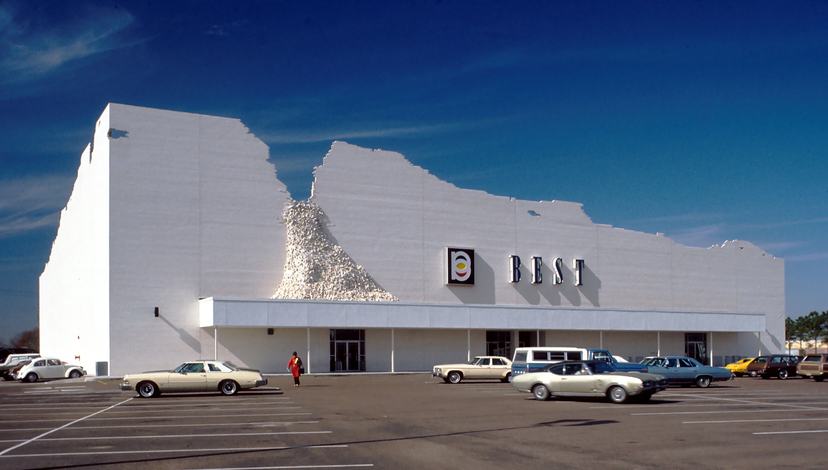
SITE: BEST Products ‘Indeterminate Façade’ Showroom, Houston, Texas, built in 1975 and demolished in 2003. Image courtesy of SITE
By examining the dichotomy between spontaneous behaviours and regulatory policies, habitual norms and constructed expectations, students will design buildings as stage-sets for (extra)ordinary convivial rituals, which might be experienced regularly with others over hours, days, weeks, or months. This will allow us to dismantle and re-assemble material notions related to the core-meaning of routine(s) and routineer(s): repetition, automaticity, and structure. These projects will operate precise architectural activities involving porousness, accessibility, and interconnectedness.
Bodily Close–Ups
ADS7 consider architecture as a form of action, in which buildings become realities where no single component, system, or space exists in isolation. For us, these architectures function less like collections of static parts, than as dynamic living organisms where every element is linked to, and impacted upon, by other elements.
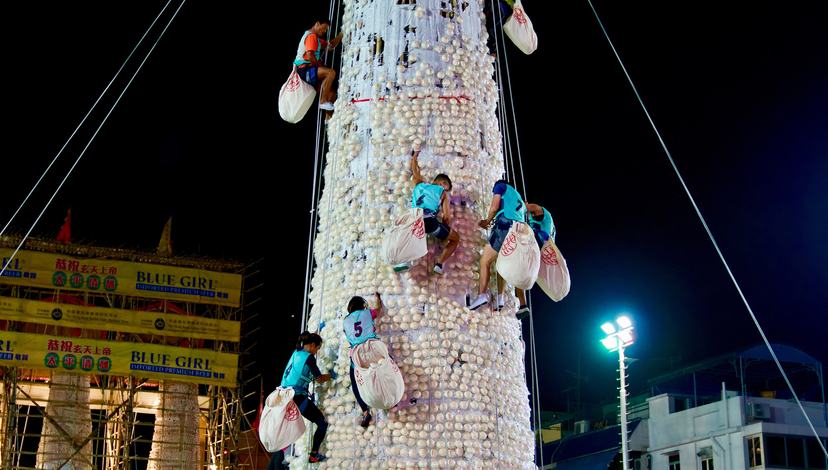
Competitors in ‘Bun Scrambling Competition’ climb bamboo towers and try to collect as many ‘lucky’ buns as possible, Cheung Chau (Hong Kong), 22 May 2018. Photo: Wang Sing
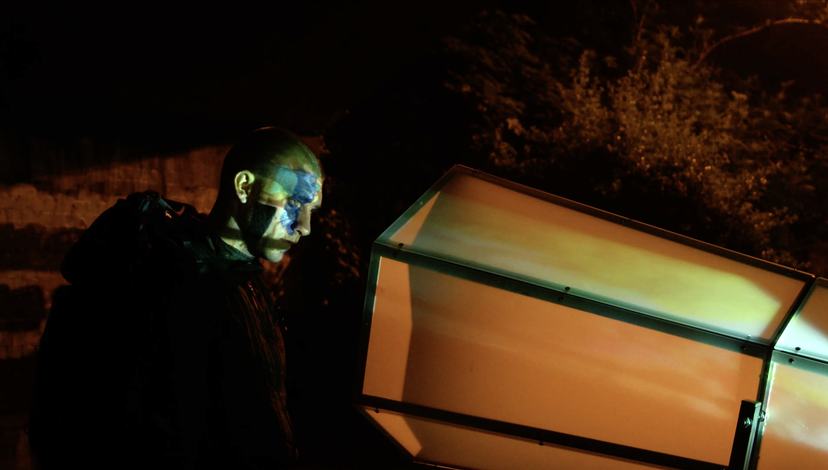
Tom Kerr Bell, ‘Film as Site: The Projectionist’. Portable device to record and simultaneously project footage during mobile protests in London. ADS7 2023/24: The Fifth C
As routineers, we must take part in these layered mechanisms, redefining the context and agencies of our alternative routines as something entangled with the physicality of the buildings we inhabit. Our bodies will collide with architectural components, digital overlays might interfere with the conventional flow of matter, and buildings can become entities that need to be constantly reconfigured and readjusted to our bodies.
Field Trip & Live Project
In 2026/27 we will travel to region of Alentejo, Portugal. Lemonot has been selected for the 2027 Évora European Capital of Culture, which involve a cultural program that is centered around the local philosophy of Vagar. Within this context, students will be involved in ‘Making Bread’; a collaborative, performative, and culinary installation that Lemonot is developing alongside the prominent Portuguese architects Diogo Aguiar Studio and Architectural Affairs.
Tutors:
Lemonot is a London and Italy–based duo that combines spatial and relational practices. Sabrina Morreale and Lorenzo Perri explore the multiform dynamics of public space through architecture and performative arts; using them as tools to detect, celebrate and trigger the spontaneous theatre of everyday life. They create objects and short films, scenographies, performances, convivial architectures, and party machines.
They regularly collaborate with several cultural institutions, including: BASE Milano; Scuola Piccola Zattere; Architecture at the Edge (West Ireland); Three Rivers Bexley (London); DPR Barcelona; and LINA European Architecture Platform. Their projects have been exhibited and awarded internationally, including: La Biennale di Venezia; Concéntrico, Logroño; the Milan, Bangkok, and Vienna Design Weeks; MEXTROPOLI, Mexico City; and at CAFx Copenhagen Architecture Film Festival.