ADS13: Entangled City: Phase Change
Jump to
ADS13 is a studio that investigates adaptation to the climate crisis through scenario making. This year, we turn our attention to the cities and their edgelands: looking for sites on the cusp of phase change. At these urgent junctures, shifts to how and why we design are needed to help steer these changes into futures we want, rather than futures that happen to us.
Tutors: Bethany Edgoose & Nathan Su (Inferstudio)
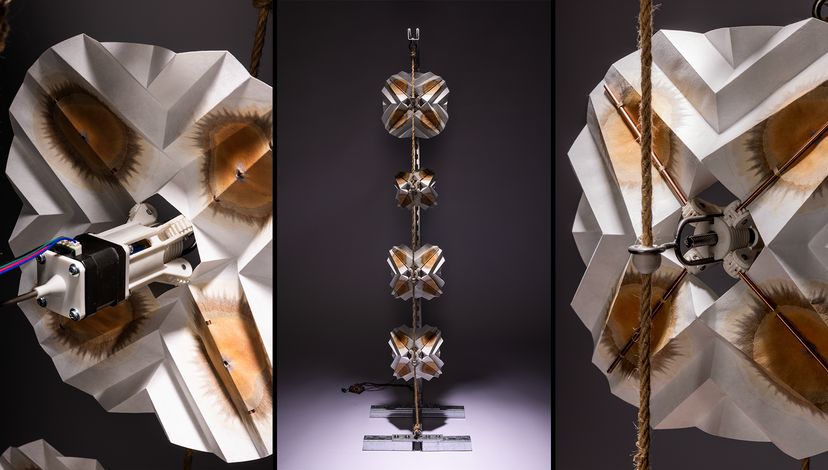
DIY Forensics, Joe Horgan (ADS13 2026, Y2) Kinetic facade prototype with soil chromatography
“Her breakthrough comes as breakthroughs often do: by long and prepared accident.”
We wake up and wonder when the world changed. What changed exactly? It’s hard to put a finger on it, but maybe it’s got something to do with less bees and more data centres. The threat of AI is switching from sci-fi plot to everyday existential foreboding. A brutal summer in a city famous for its gloomy, rainy skies. We’re living through an age of phase changes: sudden shifts in our world resulting from slow background changes that finally tip the scales. They are critical moments that define a ‘before’ and an ‘after’. In chemistry, a phase change describes the moment when a material transitions from one state to another. From solid to liquid, liquid to gas, etc. These transitions are the result of gradual build ups of heat and pressure but often occur all together. Once they occur, these metamorphoses are difficult to reverse.
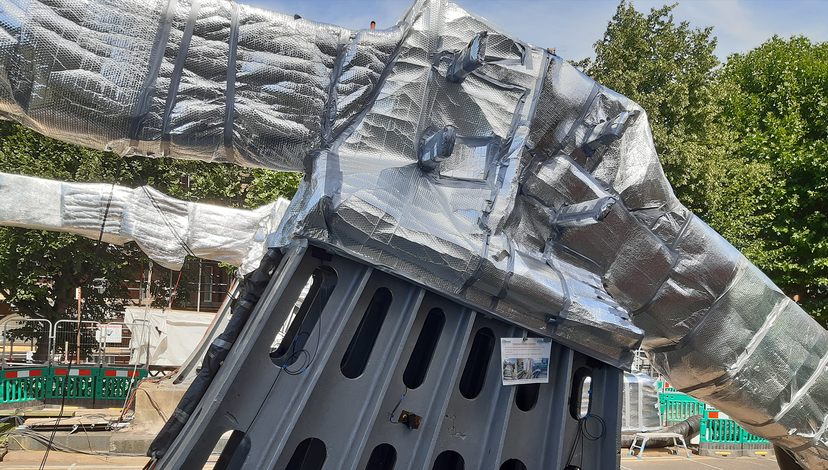
Hammersmith Bridge footing and chains wrapped in foil to prevent cracking during heatwave, Photo by Ian Alexander (Wikimedia Commons), 2022
One only needs to have experienced the recent European summer, to have witnessed suddenly bleaching reefs, or to have heard news of catastrophic urban floods to see why phase change is an intuitive metaphor for our perception of the climate crisis. We know what is coming, but somehow, it still surprises us. One of the characteristics of phase change, the ‘Tipping Point’, has become part of the scientific vocabulary for describing our planet’s vulnerability to anthropogenic change. In 2009, scientist Johan Rockström proposed nine planetary boundaries: ‘Tipping Points’ that if crossed risk irreversible damage to Earth’s ability to sustain human (and more-than-human) life. As of 2025, seven out of nine have been passed.
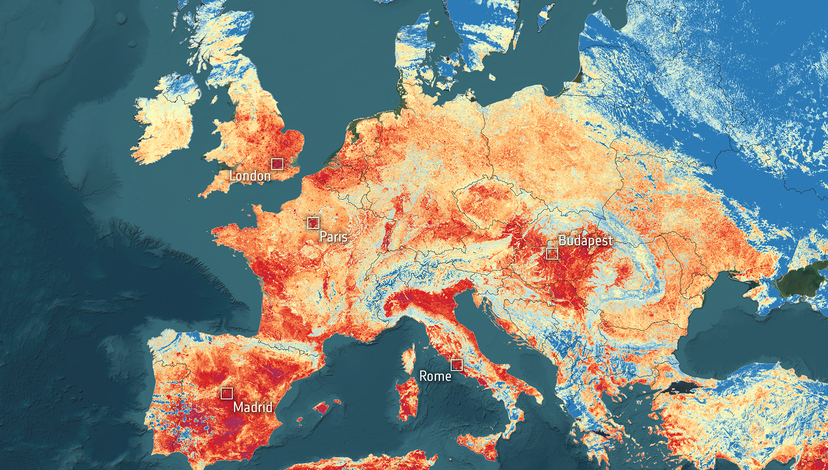
Daytime land surface temperatures in May 2026 during a record breaking European heatwave, captured by the Copernicus Sentinel-3 satelite, European Space Agency, 2026
Against the narrative backdrop of acidifying oceans and a contaminated biosphere, the planetary agency of design at the scale of human experience can feel uneven at best, futile at worst. It is at the architectural scale of human experience, however, that cultural values are constructed and enacted. Edmund Husserl’s concept of the lifeworld describes the set of direct experiences that comprise ‘everyday life’, which in turn define the collective common ground for setting cultural values and norms. How we eat, harvest, work, rest, love, and mourn in turn motivate the enormous infrastructures we build to scaffold these practices. If we are to shape our planet differently, perhaps it makes sense to start at reimagining our Lifeworlds? What does daily experience look like in a world with different norms? What if accumulation, profit and growth were no longer assumed objectives, but were instead replaced by desires for communion, multiplicity and wildness? How might Lifeworlds shift when the concept of ‘who’ expands to a wider range of more-than-human entities? What happens when the lifespan of a material includes its rebirth?
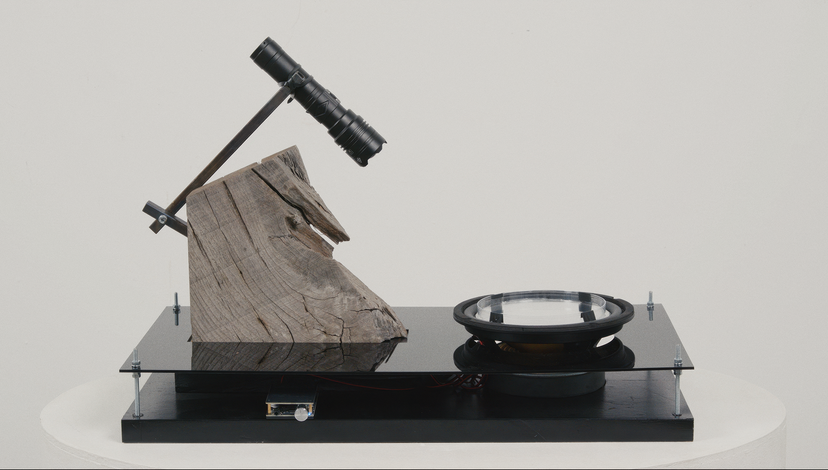
Phantoming Waves, Riichiro Yamamoto (ADS13 2026, Y2) The Tectosonic Renderer - a device for visualising seismic data remotely gathered in Kochi through sound and light (Term 1 ‘Operative Model’)
The Tectosonic Renderer - a device for visualising seismic data remotely gathered in Kochi through sound and light (Term 1 ‘Operative Model’)
ADS13 oscillates between documentary research and narrative fiction. We heavily prioritise on-site fieldwork, construction of working prototypes, and collaborations with existing communities. These grounded worlds inform our design speculations. In our projects, we deploy time-based media (film, temporal drawings, operative models) to imagine not only novel spaces, but the rituals, relationships and values that emerge within them. These oscillations are not intended to reinforce dialectic realities, but rather to gradually dismantle the idea that big and small, documentary and fiction, ecology and technology are opposites. Instead, they are all deeply entangled.
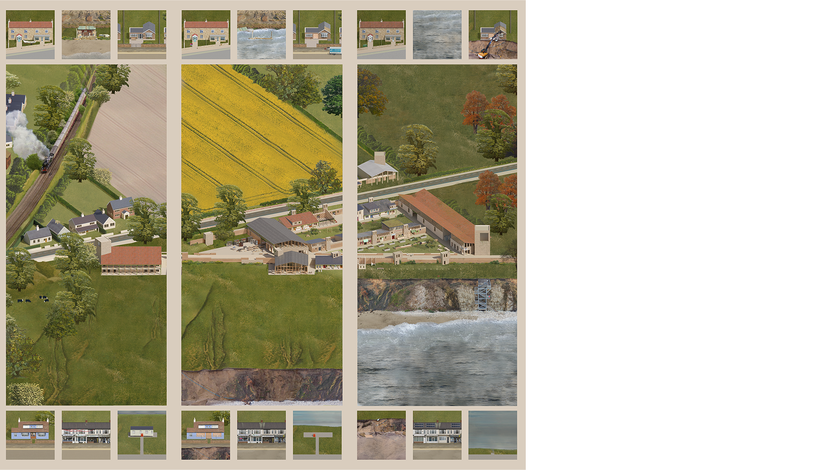
Holding Ground, Beth Sprigg (ADS13 2026, Y2) Triptych isometric drawing depicting three phases of a proposed settlement that responds to the loss of villages on the Yorkshire Coast to erosion
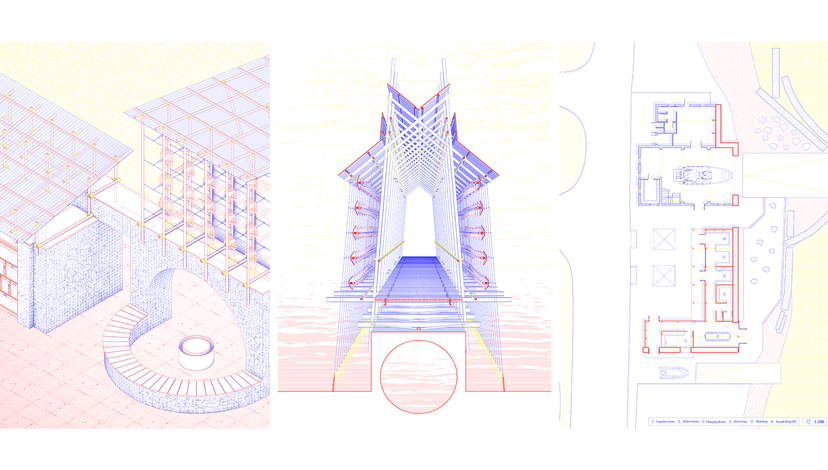
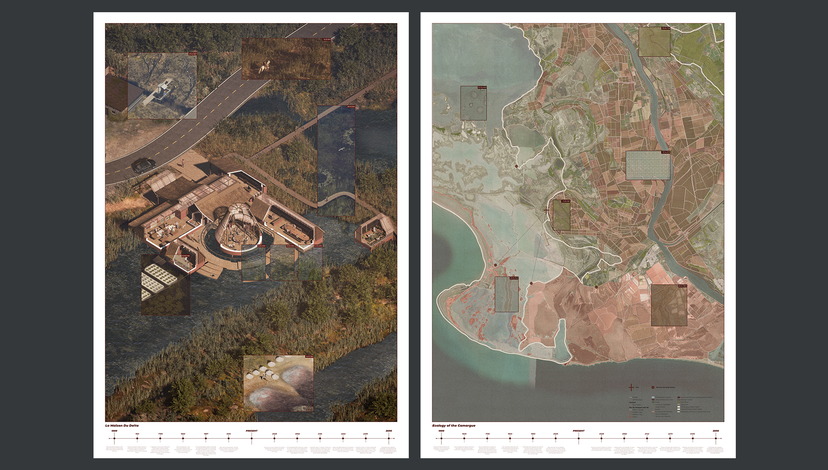
DIY Forensics, Joe Horgan (ADS13 2026, Y2) Drawings of a public network of architectural installations facilitating citizen led monitoring of contaminated waters on England’s south coast
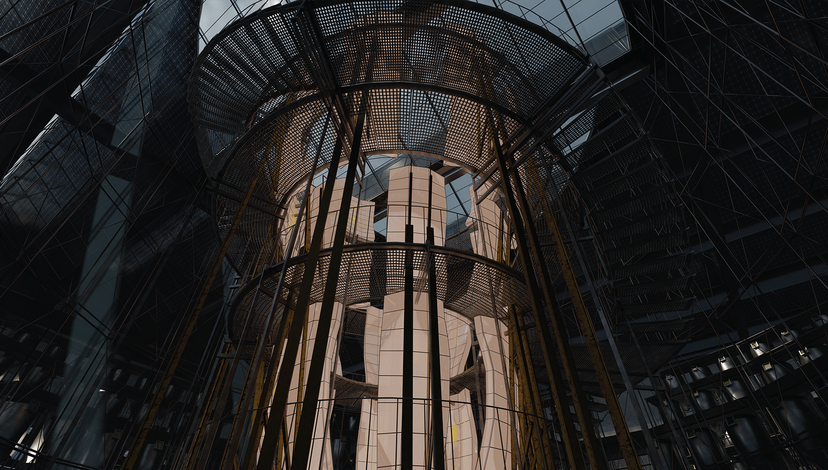
Pastoral Pollination, James Fan (ADS13 2025, Y2) Film Still - the interior chamber of an industrial pollen bank and sorting facility - James’ film speculates on national approaches to ‘assisted ecology‘, and acts as critical commentary on planetary infrastructures
Field Trip & Live Project: Shenzhen/Hong Kong
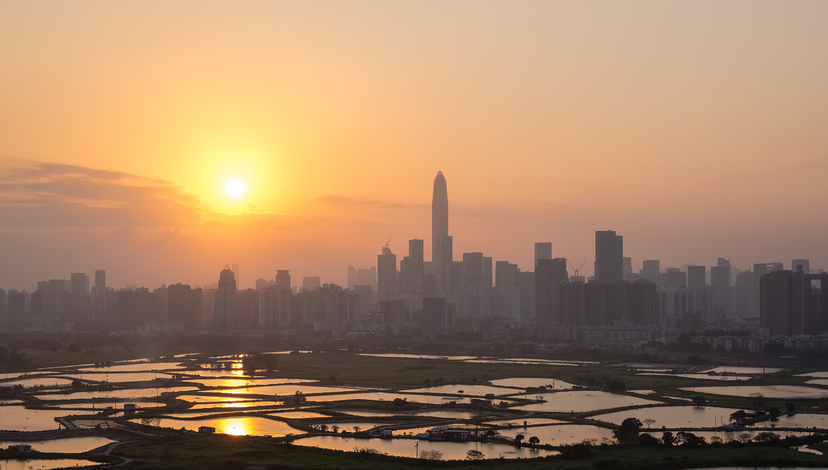
Shenzhen skyline viewed from Ma Tso Lung overlooking the Hoo Hok Wai wetlands in Hong Kong, Photo by Benhui31 (Wikimedia Commons), 2017
This year ADS13 will embark on a journey to Shenzhen, PR China. In less than 50 years, Shenzhen has transformed from a largely rural wetland district into one of the world’s technology capitals. It is also home to urban scale adaptive countermeasures for the changing climate: from its planning as a ‘sponge-city’; to its urban mangrove reserves; to the world’s largest waste-to-energy facility. At the same time, the city’s rapid development has created vulnerabilities to flooding and contamination from storm runoff and river pollution, together with the mass displacement of low-income communities amid rapid urban growth.
The neighbouring city of Hong Kong exists in a critical moment of friction and uncertainty as it grapples with its legacy as a British colonial outpost and its future consolidation with Chinese authority. It is a city with a rich and international cultural identity and has historically served as a major bridge between East and West. Beyond the city’s unique political and cultural divides, Hong Kong faces rising income inequality, an ageing population, and atmospheric pollution captured within the city’s dense vertical environment.
For the Live Project, we will approach the field trip as a documentary film crew to assemble a cinematic portrait of these two entangled cities. We will visit places that represent possible futures: from robotics factories to wetland restoration sites, to waste-incineration facilities ,and hyper-dense housing projects. Our expedition will be facilitated by collaborations with local organisations, including a workshop with the Digital Commons Lab at the University of Hong Kong.
Tutors:
ADS13 is led by Bethany Edgoose and Nathan Su, co-founders of Inferstudio, a multidisciplinary studio working through worldbuilding and investigative design. Inferstudio works through digital production design,with projects that span from CGI-narrative films to navigable research platforms that visualise complex data.
Bethany Edgoose
Bethany is an editor and writer with a background in anthropology and international studies. She has worked as a cyber-security analyst and a nuclear security researcher, and has taught multiple studios within the AA Visiting School programme in Melbourne. She graduated with distinction from the M.Sc in Anthropology and Development at the London School of Economics.
Nathan Su
Nathan is a production designer and technologist with a background in architecture. He has worked extensively with Forensic Architecture, and has taught in architecture schools internationally, including at UCLA, the Architectural Association (AA), and Strelka Institute. He studied architecture at the University of Melbourne and at the AA, where he received Diploma Honours.