ADS11: Geopoetics: Planetary Medium for Speculative Architecture
ADS11 challenges how architecture can respond to the deep geological, ecological, metabolic, social, and political systems to reflect and situate intergenerational stewardship of the environment we live in.
Tutors: Francisco Lobo & Romea Muryń (LOCUMENT)
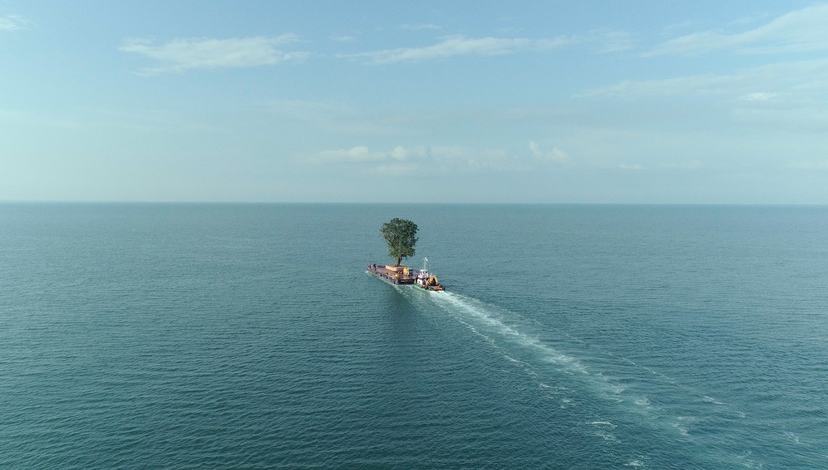
Taming The Garden, Salome Jashi, 2021
Geopoetics: Planetary Medium for Speculative Architecture is an array of imaginative stories about the Earth as the broadest system that encompasses the ecological, political, and technological complexities on our planet. It will confront planetary-scale transformation through three lenses, each operating at a different scale. The immediate scale will investigate the material world that is shaped by geological and biological systems in the subterranean zone, including how life-forms behave. The infrastructural scale will study underground and highly specialised architecture that creates boundaries to manage, isolate, and control hazardous materials, activities, or environmental conditions. The planetary scale will examine landscape transformation through long temporal processes in which planetary environments are continuously formed, altered, and reproduced. ADS11challenges how architecture can respond to the deep geological, ecological, metabolic, social and political systems to reflect and situate intergenerational stewardship of the environment we live in.
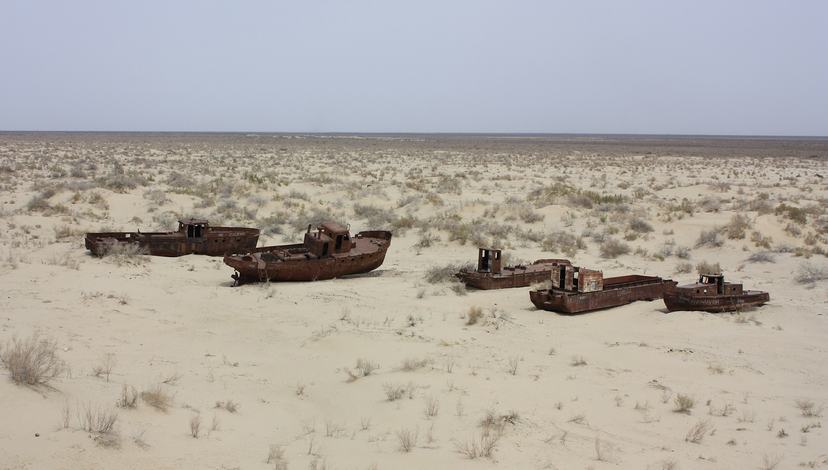
Aral Sea, Moynaq, 2008
In the early pages of The Pulse of Earth, Johannes Umbgrove notes that the galaxy rotates roughly every 250 million years. This correlated with the ‘epochs of compression’ of Earth´s crust, which are in turn defined by increases in the complexity of geological and biological systems. Compression enabled mountain building, increased volcanism, lowering of the ocean floors, and complementary movements that catalysed environmental warming and sped up biological differentiation and diversification. These rhythms pointed to a ‘common deep-seated’ cause in the interior of the earth that remained mysterious. Umbgrove formulated this force as ‘Geopoetry’; a method that connected the smallest entities with the largest, and the swiftest temporal events in Earth history within the expanse of geological time. It also enabled the development of 'New Earth Narratives' in the context of geological theory that embraced speculative ideas.
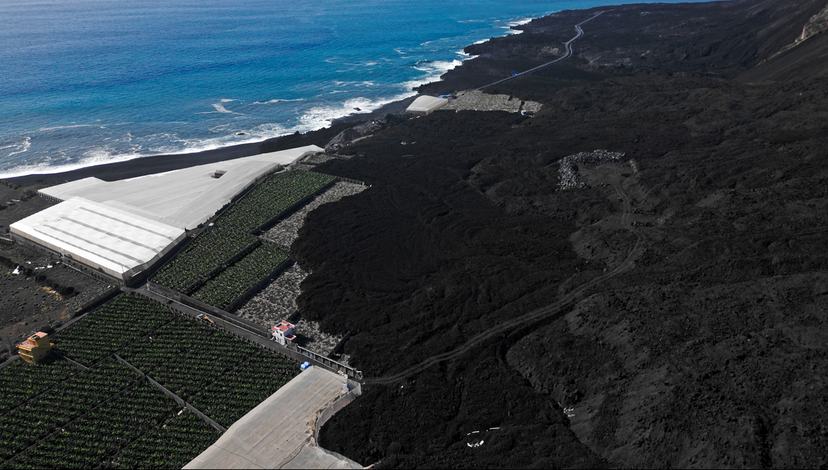
Strata Incognita, Grandeza Studio + LOCUMENT, 2023
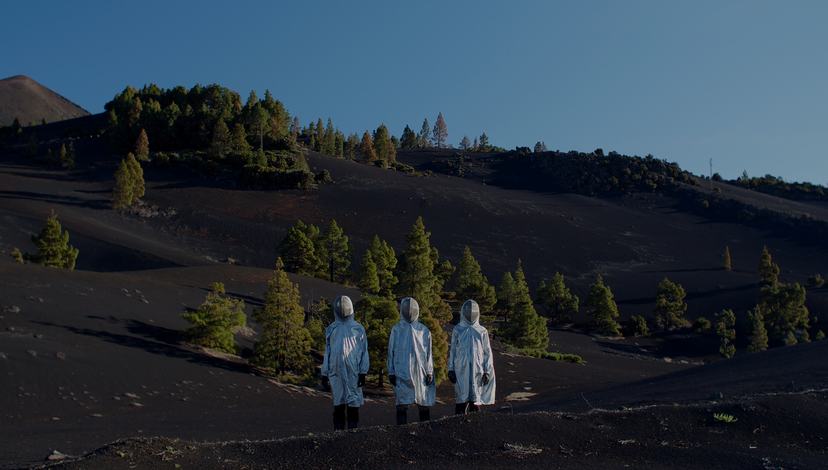
Strata Incognita, Grandeza Studio + LOCUMENT, 2023
Rather than viewing land as a static ‘landscape’, or a passive backdrop, Geopoetics treats the terrestrial territory as an active, lived experience: allowing for a ‘Territorial Consciousness’. Asking what it means to live on a planet whose landscapes are becoming something else is to name the ecological condition in which architecture now operates. This is a world that can no longer for understood as a stable background to human activity, but rather as a dynamic and entangled field of planetary transformation. Instead of treating environmental change as an external crisis to which architecture must respond, Timothy Morton’s ecological thought encourages an understanding of humans, buildings, landscapes, and climatic processes as deeply entangled within complex ecological systems. His concept of the ‘hyperobject’ challenges conventional spatial and temporal scales by revealing phenomena such as climate change as conditions that are distributed across places and generations. In this context, architecture must become an adaptive practice capable of responding to ecological conditions that are uncertain, dynamic, and continually transforming.
Architecture might therefore operate as an instrument of planetary adaptation: anticipating shifting climates, changing landscapes, emerging ecological relations, heat, erosion, and ecological disruption. On a transforming planet, architecture can therefore be understood not as an attempt to resist planetary change, but as a practice of inhabiting and participating in this change. It can create conditions for coexistence with emerging ecological realities, rather than reproducing the illusion of environmental stability.
Cristina Parreño Alonso proposes a ‘Deep-Time Architecture’ that understands buildings less as static objects, than as material events embedded within geological and planetary processes. As she stated: ‘Reorienting architecture toward the “material-event” renders the building not as an isolated object-instance in a human timeline, but rather as a moment of convergence of material and energy that flows across deep temporal scales’. Such a formulation connects architectural and geological tectonics, asking architects to work across political, technological, human, and ecological timescales. The building is not the endpoint of material transformation. It is one temporary phase within a geological and biological cycle. ‘The built’, which can be defined as the result of all the processes of construction and deconstruction for which humans are collectively responsible, has acquired planetary dimensions. If architecture has become a geological force through its capacity to extract, reorganise, and redistribute planetary matter, it is also a multi–special and political force whose effects extend across territories and temporalities.
Geopoetics: Planetary Medium for Speculative Architecture turns the studio into an Earth section within the planetary scale, making visible the subterranean processes and forms of life usually hidden beneath its surface. We will challenge our perception and understanding of the earth and spatial system, considering buildings not simply as objects in space, but rather as events in time. We will link architecture with planetary transformation narratives to challenge how to maintain and nurture a delicate balance. When we, as architects, engage in territories or built materials, do we consider the prehistoric water flow that broke stone into the granular particles we call sand? Or the bats and owls nesting in the crevices between geological layers? How can architecture take geological and ecosystemic processes as a design parameter? How can we, as architects, shift from static constructed objects to dynamic processes? How can design prolong or improve these habitability conditions in contrast to destroying them? Will this questioning allow us to look differently at how life-forms have created habitable condition for other entities?
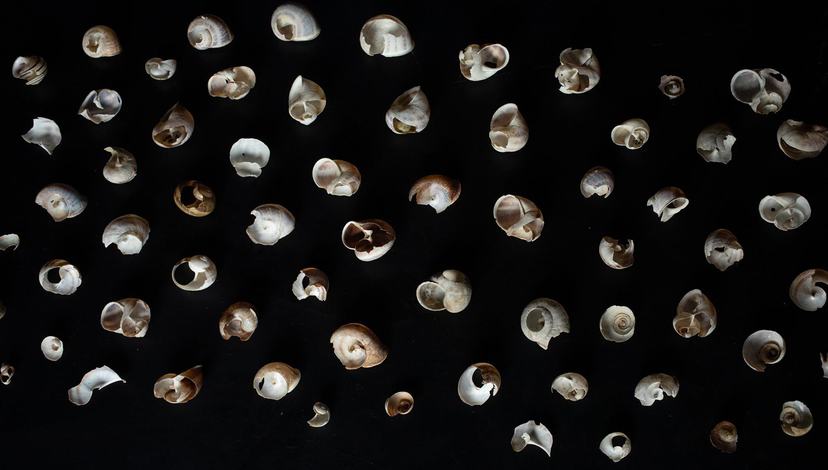
Embodying Colour, Lara Campos, 2025
ADS 11 expands the understanding of architecture by questioning the boundaries between the built environment, ecological systems, multiple species, and material agents that constitute planetary life. Rather than conceiving architecture as an autonomous object produced for human occupation, the studio approaches it as a relational and political apparatus in which human and non-human bodies, technologies, infrastructures, organisms, resources, and territories become interconnected. The studio constitutes architecture not only as the production of objects in space, but also as a medium for reading interdependencies between planetary processes: geology, climate, ecological systems, erosion, atmosphere, tides, energy, infrastructures, economies, political dynamics, migration patterns, labour, species, and memory. We ask how architecture can respond to the deep geological, ecological, metabolic, social, and political systems to reflect and situate intergenerational stewardship of the environment we live in?
Students will become geomorphic agents, spatial practitioners, researchers, and filmmakers. Short-term environmental urgencies coexist with deep long term planetary concerns. We operate between the timescales of the ‘urgent now’, of those currently living on this planet, and the timescales of the ‘deep future’, of future generations to come. Students will pursue the premise that, as the geological, ecological and political actors, architects must develop deep-time literacy to engage in a system of intergenerational care. Thinking about architecture in relation to the radical long term of the planet has become a pressing ethical imperative, which should change the way we design in the short term. Students are asked: how do we narrate and tackle twenty–first century tales of the New Extraterrestrial Scale? Especially as deep earth transformations and expanded timescales are invisible. How can this become an opportunity for a planetary medium that can construct speculative narratives and go beyond existing epistemologies?
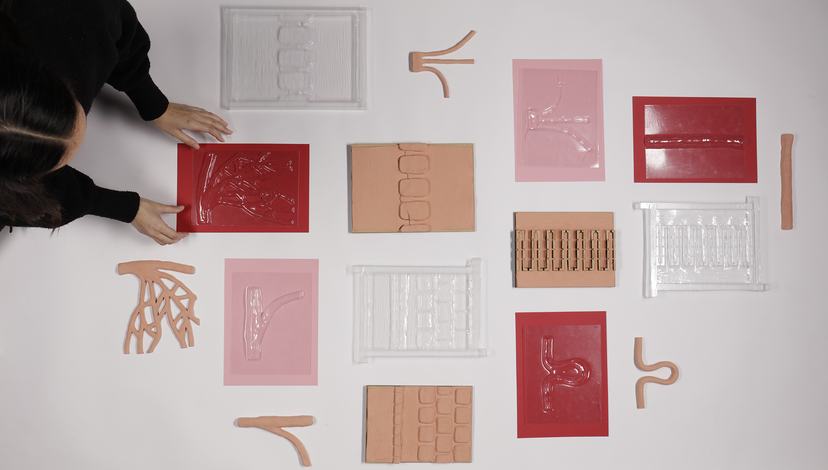
A Body of Water, Beccy Waite, 2024/2025
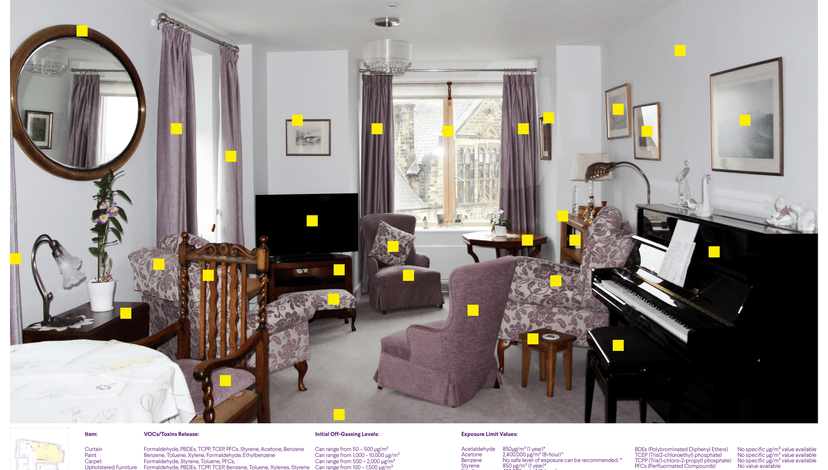
Where My Grandparents Live, Beccy Waite, 2024/25
Methodology
The studio uses film and architectural narrative to propose aesthetic forms of environmental engagement. Students will explore tools and methodologies for thinking critically about design. They will approach questions and problems through a research driven interdisciplinary perspective that encompasses multiple scales, engages interdisciplinary conversations, and encourages criticism as part of the necessary understanding and exploration of emerging scenarios in need of architectural responses. It provides students with the knowledge to explore the following research and design strategies:
- Research-driven investigation: to challenge unidirectional research decision-making processes and favour a non-linear approach;
- Interdisciplinary approach: to apply social, economical, and cultural parameters to the discipline by positioning research and design within a broader social context;
- Multiscalar implementations: to reveal complexity of the spatial design role as a ‘solution’ and enable comprehensive understanding and impact on multiple scales.
Students are encouraged to understand these processes as a multi-layered methodology of design, anthropological principles, and film technology that can be put into practice. Students immerse themselves into communities and environments that define these geographies/locations to present them through the different stages of the projects. These different stages and their translation into knowledge, tools, and steps for action will allow us to predict their dangers or/and reverse their consequences.
ADS11 works with storytelling in the form of filmmaking and the visual arts as a framework for building and creating nonfiction and fictional narratives. By connecting those two methodologies and tools, it allows for the questioning and dismantling of official narratives. Each student’s project will comprise a document, report, and chronicle, as well as a proposal, speculative scenario, and an imaginary future.
Tutors
Francisco Lobo and Romea Muryń are the founders of LOCUMENT – a research studio that combines filmmaking with architecture research. They use architecture and film as analytical, critical and subversive tools to emphasise contemporary issues and dissect their resolutions. They see the importance of observing rapidly changing social conditions through the influential factors of technology, economy, politics and urban environment. Drawing from contemporary scenarios, LOCUMENT travels to unique locations to base their research topics, finding in them situations that, while site-specific, reflect problematics that resonate throughout the globe. Bringing out these underlying stories, their work focuses on recreating the complex storyline hidden under the surface of the visible spectrum.
LOCUMENT movies have been screened internationally at exhibitions and film festivals such as – the 15th and 18th International Architecture Exhibition of La Biennale di Venezia (Venice, Italy); the 25th Biennial of Design Ljubljana (Slovenia); Arquiteturas Film Festival Lisbon (Portugal); Tbilisi Architecture Biennial & In-Between Conditions Media Art Festival (Georgia); Commiserate Chicago Media Art Festival (US), MAXXI The National Museum of XXI Century Arts in Rome (Italy), the Lisbon Architecture Triennale (Portugal), Tabakalera - International Centre for Contemporary Culture (Spain), International Architecture Biennale Rotterdam and Rotterdam Architecture Film Festival (Netherlands). They have collaborated with academic institutions such as MIT Architecture Department (Cambridge, US), Amsterdam University of Arts, Academy of Architecture (Netherlands), The Bartlett School of Architecture (Netherlands), Bartlett Prospective – UCL The Bartlett School of Architecture (United Kingdom), INDA - Chulalongkorn University Faculty of Architecture (Thailand) and FAVUT Faculty of Architecture in Brno (Czech Republic).