ADS10: Savage Architecture: Forms for Baroque Ecologies
Jump to
Architecture domesticates. It divides land, organises labour, assigns value, and normalises life. Yet it can also emerge from the collective intelligence that Claude Lévi-Strauss called la pensée sauvage. Here, savage names neither primitivism nor otherness, but rather the capacities and shared knowledge through which societies reproduce and transform themselves. Savage Architecture challenges this history of domestication and seeks to reclaim the discipline’s instruments for collective life.
Tutors: Davide Sacconi, Gianfranco Bombaci, & Olivia Neves Marra with Marco Galofaro (modelab)
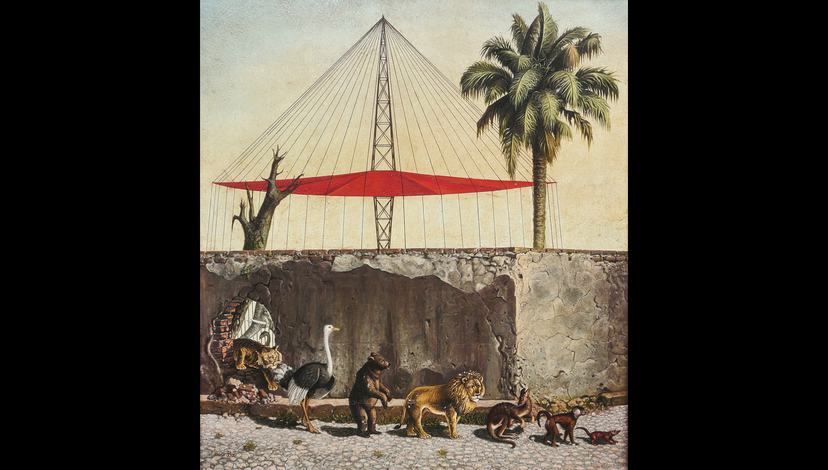
Escape from Circus. Enrico Bo, 1943. Source: Instituto Lina Bo and Pietro Maria Bardi
Attitude
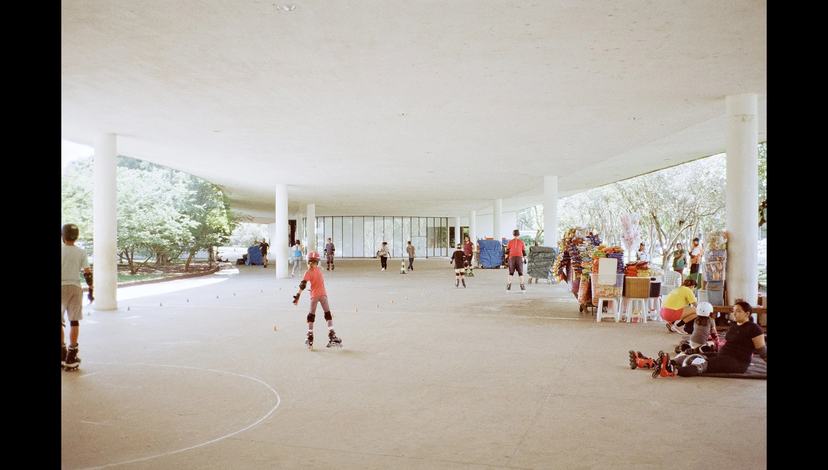
Canopy in the Ibirapuera Park, São Paulo. Ciro Miguel, 2019
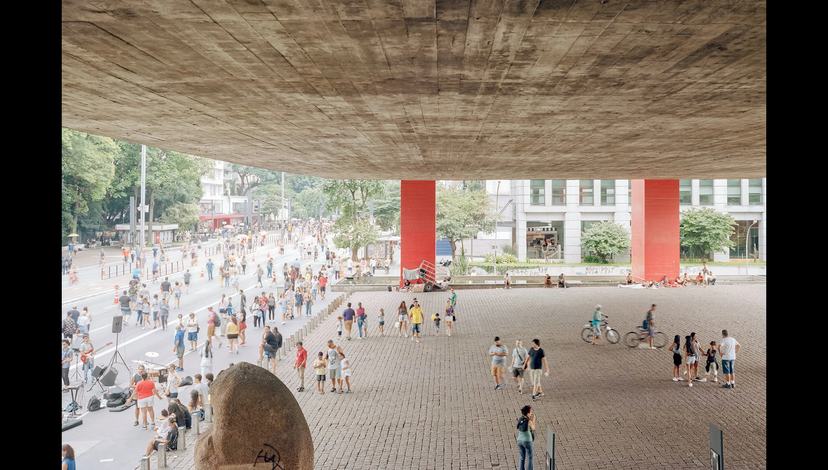
MASP’s Free span, São Paulo. Ciro Miguel, 2019
The Baroque is not a Style
Within and against a world that extracts economic value from every thought, gesture, and relation, collective subjects – such as workers’ cooperatives, indigenous communities, collaborative organisations – are not passive victims. Popular, irregular, agile and pragmatic, their practices gather what is at hand – knowledge, materials, infrastructures – and combine logics that dominant categories keep apart. They appropriate the instruments of capital and bend them towards survival, use, and collective meaning. This is the baroque ethos described by the philosopher Bolivar Echeverría as the art of inhabiting contradiction, which is neither outside capital nor obedient to it. The activist Veronica Gago locates this ethos in the baroque economies of the contemporary city, within which collective life is sustained through the very systems that exploit it.
ADS10 extends this baroque condition from economy to ecology. Every act of production rearranges bodies, resources, soils, waters, infrastructures, species, and climates. Every form of cooperation depends on a material world that it transforms. Baroque Ecologies are plural, impure, and contested. They are fields in which capitalist and non-capitalist logics, human, and more-than-human lives, extraction, and care remain entangled without reconciliation.
Architecture inhabits these uneven fields. It gives form to resources and labour, organises relationships, concentrates power, and produces subjectivities. Yet for collective subjects struggling to preserve and develop their common knowledge, it can also become a means of regaining control over labour and its products.
Working across design and curation, anthropology and politics, ecological strategies and construction techniques, ADS10 asks how buildings might cease to domesticate life and become savage: holding open spaces for solidarity, collective action, and other ways of inhabiting the world. For ADS10, the baroque is not a style but an attitude that expresses the struggle to turn architecture from an instrument of control into a platform of emancipation.
Context
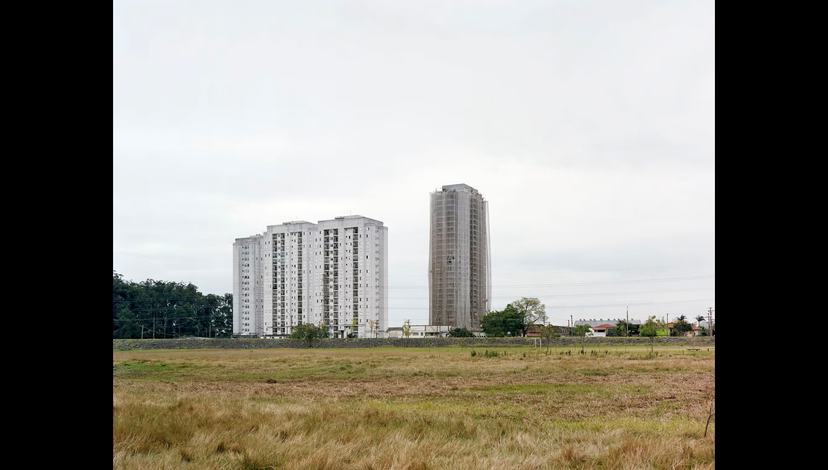
124 Socorro, São Paulo. Tuca Vieira, 2016
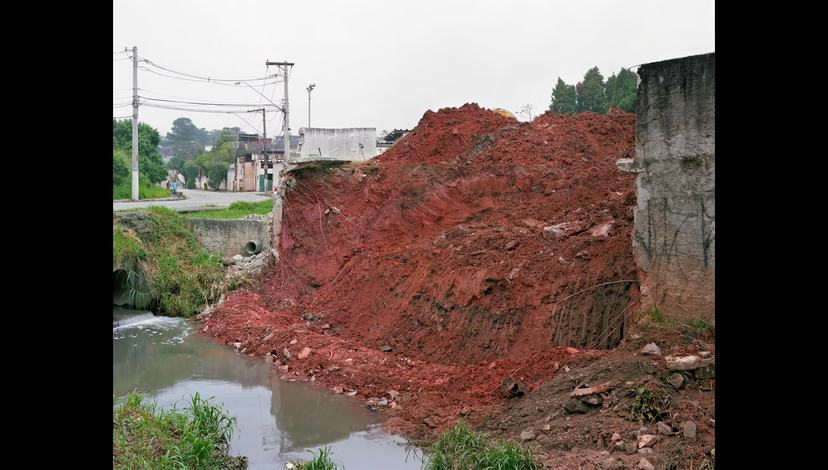
188 Jardim Ipanema. Tuca Vieira, 2016
São Paulo: Voids in the Incommensurate Metropolis
To explore how architecture might sustain an archipelago of Baroque Ecologies, ADS10 will work in São Paulo: Latin America’s financial, commercial and industrial capital, and one of the planet’s largest urban agglomerations. Over the last century, ‘the city that can’t stop’ has spread like a shifting grey cloud across a bewildering expanse, continuously enlarging, demolishing, and reconstructing itself. Here the quantitative abstractions of capital – value, growth, and exchange – take finite material form through land, concrete, infrastructure, and labour. At the scale of São Paulo, however, this finite materiality appears incalculable, unstable, and resistant to any totalising account. Despite sophisticated systems of planning and monitoring, São Paulo remains fundamentally unknowable.
The city embodies the destructive logic of capitalist growth. The more it grows and the more wealth it produces, the more the basic conditions of inhabitation in São Paulo collapse. Flooding, overheating, pollution, congestion, water scarcity, failing waste systems, and chronic housing shortages all expose the paradox of an urbanisation whose expansion is both engine and failure.
Yet São Paulo is not continuous. Within its apparently totality, voids exist. Abandoned plots, infrastructural residues, floodable grounds, obsolete compounds, protected fragments, and spaces that have not yet absorbed by the cycle of valorisation. Instead of treating these voids as development opportunities, ADS10 will engage them as spatial reserves of possibility. Against urbanisation’s compulsion to occupy, optimise, and monetise every surface, we believe architecture can preserve, reinforce, and multiply the void: making room for ecological repair, collective appropriation, and forms of life that resist endless accumulation.
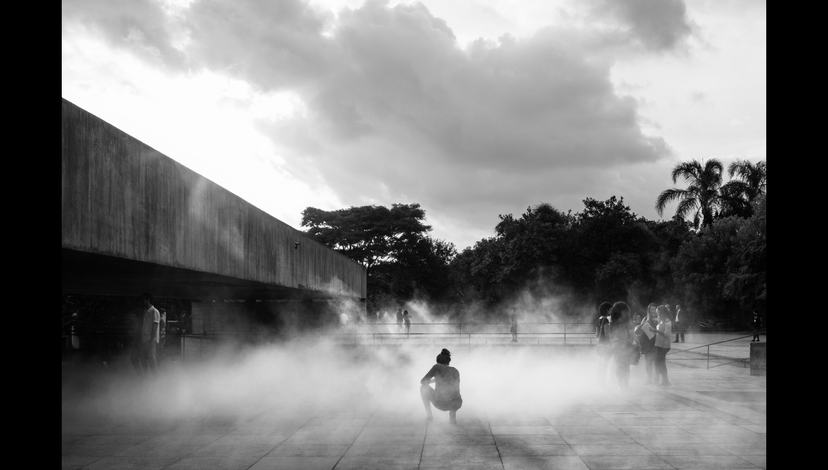
No Ar. Laura Vinci, 2017 in the Museum of Brazilian Sculpture (MuBE), São Paulo. Paulo Mendes da Rocha, 1986. Photo: Nelson Kon
Method
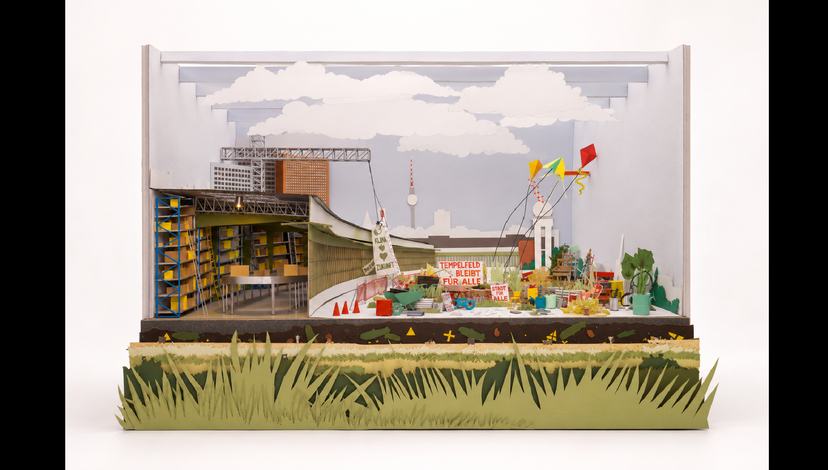
Elderly farmers commuting from Sichuan Town to the edges of Chongqing. Diorama. JingXuan Zhang, ADS10 (2025/26)
Form: Research by Design
ADS10 works through research by design; constructing critical positions through material practices. Design is not understood as the application of knowledge produced elsewhere, but rather as a means of producing knowledge in its own right. Models are the primary instruments through which hypotheses are formulated, tested and developed, and the relations between architectural form, territory and subjectivity are made tangible.
ADS10 challenges the modernist conception of the building as an autonomous object, while reaffirming the critical power of architectural form. We believe in the capacity of form to make social and material contradictions legible, contestable, and open to transformation. Form is the hinge between the technical, political and economic processes that shape architecture and the subjectivities its spaces accommodate and, in turn, shape.
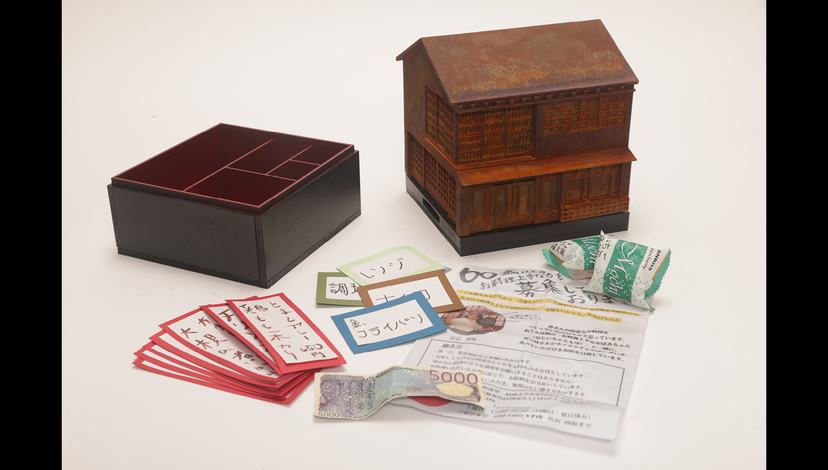
The occupation of Tempelhofer Feld by Allmende-Kontor. Box and Diorama. Finola Simpson, ADS10 (2025/26)
Model: Box & Diorama
Our investigation of architectural form first unfolds through two parallel lines of inquiry. On the one hand, students investigate a collective subject of their choice: a group, based anywhere in the world, who practice forms of life and production that contest or exceed the dominant logic of capitalism. The Box condenses extensive historical, architectural, and ethnographic research into a mixed-media assemblage that is simultaneously a symbolic object and a synthetic archive. On the other hand, selected architectures are examined as parts of wider productive and territorial ecologies: material extraction, construction and labour; logistics and finance; governance, ownership, and participation; maintenance, use, and environmental transformation.
This expanded field shifts the question from the building to who produced it; who was it produced for; what resources and forms of cooperation does it mobilise; and which forms of life does it enable or suppress? The Diorama gives these relations spatial and territorial form, combining analytical precision with critical interpretation to uncover conflicts and project other possibilities.
Montage: Constructing the Critical Space
The Box and Diorama are not neutral containers of information, or illustrations of predetermined arguments. Instead, these models operate through montage, demanding acts of selection, interpretation, and composition. By interrupting presumed relationships between form, programme, and site, the Box and Diorama can bring architectures, collective subjects, and territories into unfamiliar relations. Within this critical operation, form becomes a radical hypothesis: a means of testing how architecture might be appropriated, altered, or invented to sustain alternative social and ecological relations.
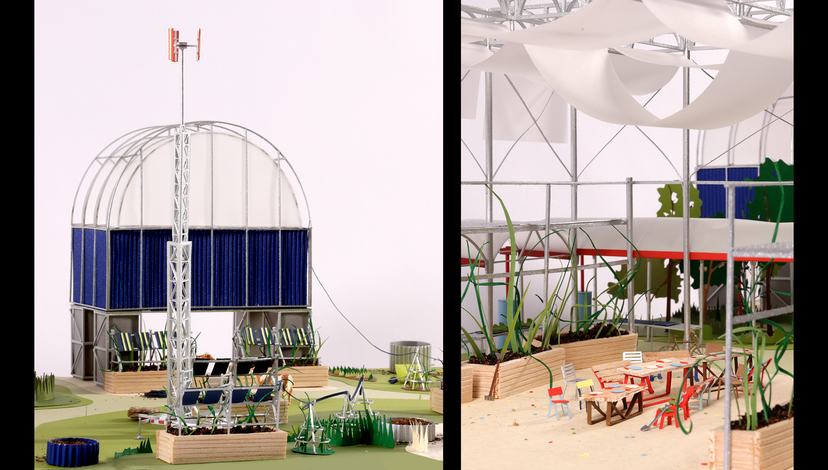
After the Harvest: From No-Man’s Land to Common Land. Ellie Lodder, ADS10 (2025/26)
Field Trip & Live Project
Rome & São Paulo
In 2026/27 ADS10 will undertake two field trips. In December, a model-making workshop in Rome with MODELAB, one of Europe’s leading model-making ateliers, will develop the technical skills through which models become instruments of thought. In February, fieldwork in São Paulo will ground the studio’s investigations in direct encounters with the city’s buildings, voids, materials, and collective practices. Developed in dialogue with institutions and associations, together with local architects, artists, curators, and researchers, the Live Project will culminate in a public exhibition and seminar in São Paulo, which assembles the studio’s work as an archipelago of Baroque Ecologies.
Tutors
Davide Sacconi
Davide Sacconi explores buildings, cities, production and research through designs, exhibitions, books and pedagogical projects. He holds a PhD from the AA and is a senior lecturer at the Royal College of Art. He edited the books Interior Tales, The Supreme Achievement, Savage Architecture and The London Workshops. He is a founding member of CAMPO, a space to debate, study and celebrate architecture founded in 2015. CAMPO’s work has been recently published in the book Zibaldone (VEII, 2024).
Gianfranco Bombaci
Gianfranco Bombaci is an architect, holds a PhD and is a founding partner of 2A+P/A, an architectural firm based in Rome. He is an associate lecturer at the Royal College of Art, directs the School of Design at the IED in Rome and is the editor of Design and Anthropology by Gian Piero Frassinelli. Together with Davide Sacconi, Matteo Costanzo and Luca Galofaro he is founder of the space for architecture CAMPO.
Olivia Neves Marra
Olivia Neves Marra is a Brazilian architect and researcher exploring the relationship between gardens, ownership, and urban form. After working on urban design and housing projects in Rio and Paris she earned her PhD from the Architectural Association where she is Programme Head of the Visiting School Rio de Janeiro. She is also Associate Director of the BSc Year 1 at UCL Bartlett, where she teaches History & Theory and a Design Studio in the MSci Programme.