AHRC Collaborative Doctoral Partnership (CDP) Studentship: Thames Barge Stories
Jump to
The National Maritime Museum (NMM) part of Royal Museums Greenwich, and the Royal College of Art (RCA) announced the fully funded Collaborative Doctoral Partnership in October 2025 under the AHRC’s Collaborative Doctoral Partnerships (CDP) scheme.
Thames Barge Stories: Exploring the design and material culture of the Thames Sailing Barge c1800-present with National Maritime Museum and Royal College of Art
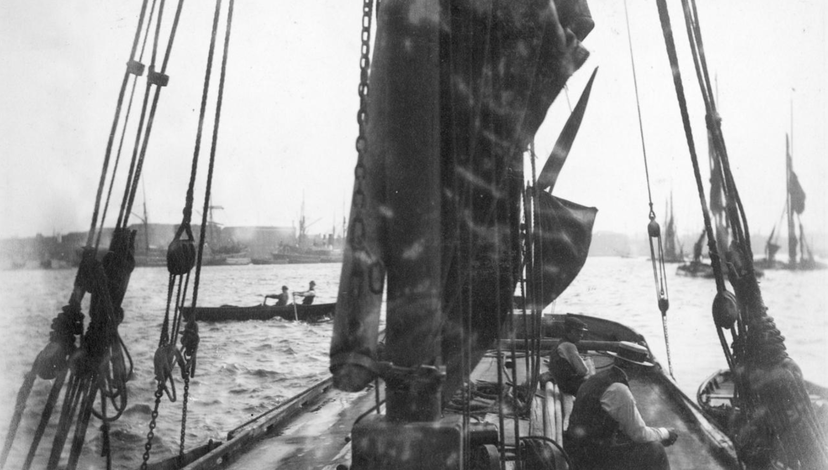
Photo credit: National Maritime Museum, Royal Museums Greenwich
Thames Barge Stories explores the design and material culture of Thames sail barges – commercial vessels unique to the Thames estuary – from their 19th-century heyday to the present.
This practice-led doctoral project combines lens-based art practice with design history methodology to generate fresh perspectives on Thames barges, revealing object-centred microhistories of local, national and global trade networks and bringing new visibility to the diverse working-class communities who sustained them. In doing so, this project aims to enrich knowledge about NMM collections and reconnect contemporary audiences with the rich cultural heritage of the river.
This project is jointly supervised by Dr Josephine Kane and Professor Rachel Garfield at the RCA and Dr Hannah Stockton and Simon Stephens at the National Maritime Museum.
Project overview
This practice-led interdisciplinary doctoral project employs archive and collections research as the basis for developing a substantial body of original film and/or photographic work, supported by a thesis.
The award sought an artist whose practice engages with social history and lived experience, keen to develop their archival research skills, knowledge of riverine material culture and to employ object-centred design historical methodologies. This studentship was also open to applications from historians with a creative practice in photography, art filmmaking or related lens-based work.
Project aims
The project is driven by two core aims:
- one focused on conducting collections-based research to shed new light on barge design and use;
- the other on photography and/or filmmaking as a means to generate new critical perspectives on their historical and contemporary significance.
The project pays close attention to the experiences of working-class communities and the diverse individuals engaged in building, sailing, living and trading on these unique vessels, including women and children.
It will also engage with contemporary barge owners, heritage partners and estuary communities in London, Kent and Essex.
Doctoral students
The doctoral student spends time at the National Maritime Museum researching relevant collections, from ship models and plans, to photographs and oral histories, concerned with Thames barges and the surrounding environment. They work closely with NMM’s curatorial staff, benefitting from their expertise in maritime London and maritime technologies.
RCA supervisory team
The RCA’s supervisory team, based in the School of Arts & Humanities, contribute expertise in lens-based art practice, critical design histories of London, and object-led, site-specific methodologies. As a member of the School of Arts & Humanities PhD community they have access to a studio and audio-visual facilities at the RCA. They engage with a lively research culture across the College which connects art and design practices with research on rivers and oceans.
Research questions
The supervisory team support the successful candidate to develop their own lines of enquiry and areas of focus in relation to the broader aims of the studentship. Indicative Research questions included (but were not limited to):
- How has the design, construction and use of Thames Sailing Barges changed since the early 19th century, and what were the key factors in these changes?
- What role has design and material culture played in the lived experiences and identities of crew and communities connected with the barges? How has this varied across time and geographical location? How can a visual investigation illuminate/animate these lived experiences?
- How does a lens-based output bring visibility and new audiences to histories of marginalised objects, people and places?
- What does an object-led history of the barge reveal about shifting cultural attitudes to the river, past and present and how can a visually led enquiry foster an affective understanding of their importance?
- How does an interdisciplinary design history/art practice approach to collections research bring new knowledge and methodologies, to the discipline of the history of design?
Research with the National Maritime Museum
This research studentship is allocated to the National Maritime Museum, via their membership of the REACH CDP Consortium by the AHRC.
The successful student spends time carrying out research and gaining relevant experience with the partner in Greenwich, London as part of the studentship.
Get in touch
If you have further questions, please contact Dr Josephine Kane
[email protected]