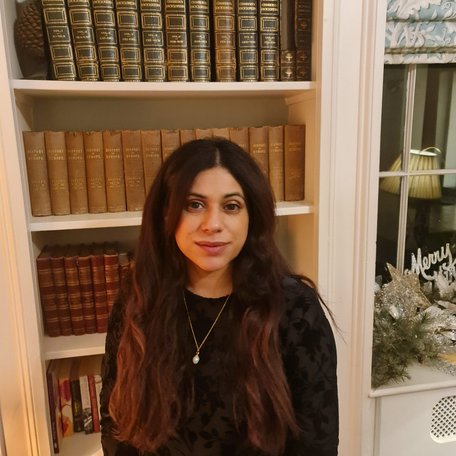
Sureya Gulzar
Integrating More-Than-Human Participation in Urban Planning to Enhance Sustainability and Social Cohesion in Social Housing Communities
This research examines how incorporating the "more-than-human" concept, which includes non-human entities such as plants, animals, and ecosystems, into urban planning can enhance environmental sustainability, social cohesion, and quality of life in social housing communities.
Many social housing estates have outdoor spaces that are underused and not designed to encourage community engagement and biodiversity. This study aims to fill this gap by using MtH principles to redesign these spaces with Peabody Community Foundation and stakeholders.
The main goals are to create spaces that encourage interactions among multispecies, human and non-human actors, support environmental care, and advance social and environmental objectives. This model will be expanded to other social housing estates in London through collaboration with Peabody. The research seeks to produce results that improve community connections, boost biodiversity, and foster a sense of ownership and environmental stewardship.
Key details
School, Centre or Area
Area of expertise
Supervisors
Personal links
More about Sureya
Biography
Sureya Gulzar is a doctoral researcher at the Royal College of Art, undertaking a Collaborative Doctoral Award with Peabody Community Foundation. Her practice-based PhD explores how more-than-human participation (including plants, animals, and ecosystems) can be integrated into social housing estate design and urban planning to strengthen health, wellbeing, social cohesion, and environmental justice.
Her previous roles include establishing a regional Health and Housing partnership spanning social housing, the NHS and local authorities, and contributing as a Co-Investigator to RCA-led research on nature-based and community-led approaches to health and recovery.
As Head of Social Investment in the Black Country Region, she has led community investment and innovation strategies, convening cross-sector partnerships across housing, the NHS, and the third sector.
Sureya is the founder of The MindKind Projects CIC, supporting community-based action research and lived-experience-led prevention models. Her work brings together participatory design, systems thinking, and asset-based community development to prototype practical, scalable approaches that help communities (human and more-than-human) thrive.
Degrees
Sureya is a Fellow of the School for Social Entrepreneurs
Funding
AHRC LCDA2\100048