About the Helen Hamlyn Centre for Design
Jump to
We focus on projects that use inclusive design to improve people's lives. With a three-decade history, we are the longest-running centre for design research at the RCA.
Inclusive design
The concept of 'inclusive design' was framed by the RCA Professor Emeritus Roger Coleman in 1994. It advocated for design that ‘includes the widest number of people’ beyond accessibility.
We use the principles of inclusive design to address challenging societal issues. We work with organisations across all sectors to create impactful projects and implement people-centred process, through collaborative research and innovation projects.
We share knowledge through publications, events, exhibitions and executive education with staff available for consultancy, workshop facilitation and keynote delivery. We have an international reputation, working with government, business, community and the third sector on over 300 projects to date.
Since its establishment (formally in 1999, and the DesignAge programme started in 1991), the Helen Hamlyn Centre for Design has undertaken pioneering inclusive design research to inform and advance the design of environments, products and services for a better society.
Through the generous support of the Helen Hamlyn Trust, the Centre has championed the role of inclusive design in improving people’s lives. Its innovative and empathic ways of engaging with people and giving voice to those marginalised by society have shaped how research is undertaken and communicated, with lasting impact.
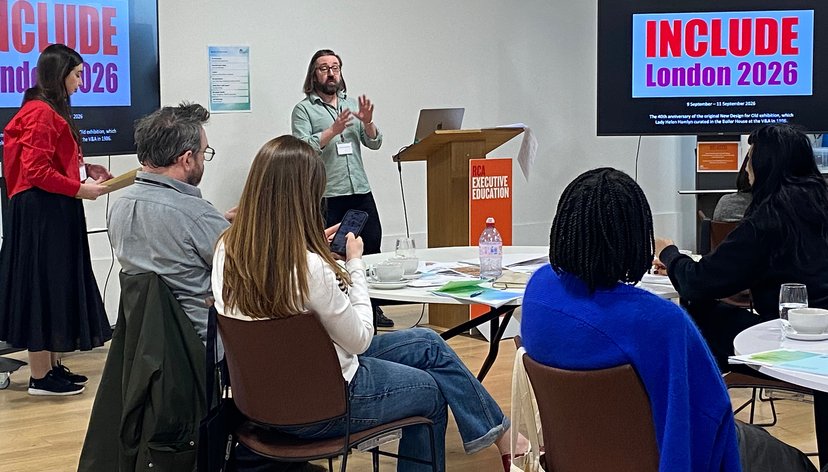
Our biennial INCLUDE conference, began in 2001 and designed to run in turns with the Cambridge Workshop on Universal Access and Assistive Technology (CWUAAT), has attracted delegates from all over the world. Our well-established Executive Education Programme continues to work with leading organisations world-wide.
Research, Innovation and Knowledge Exchange
Research, Innovation and Knowledge Exchange activities are led by the Centre’s ‘core’ team:
- Dr. Chris McGinley is a Reader in Inclusive Design and leads the Age and Diversity work. He was instrumental in the establishment of the DesignAge Institute and has a strong track record in applying research into tangible design outputs for everyday living and inclusive housing.
- Gail Ramster founded the Public Toilet Research Unit with Professor Jo-Anne Bichard. Her research has led to improvements in the provision of toilets for all and she has expertise in working with communities.
- Dr. Katie Gaudion led the initial scoping study and was an active member of the steering group that shaped the development of PAS 6463 - a guidance framework that sets out best practices for creating environments that better support neurodivergent people.
- Dr. Ninela Ivanova is the Centre’s Innovation Fellow. She leads the Inclusive Design for Business Impact work. This includes a wide portfolio of industry knowledge-exchange and collaborative research projects, accelerated knowledge transfer and custom executive education.
- Dr. Melanie Flory is the Centre’s Associate Director of Research. She undertakes ground-breaking research in design and neuroscience, leading a stream of research relating to inclusive health.
- Professors Paul Chamberlain and Claire Craig are the Helen Hamlyn Co-Chairs, bringing with them extensive Design for Health (e.g., Dementia, indoor environment, everyday lives) expertise and networks.
- Professor Hua Dong is Director of the Centre. A leading expert in the field, she has a global impact on inclusive design, healthy ageing, and design and engineering education.
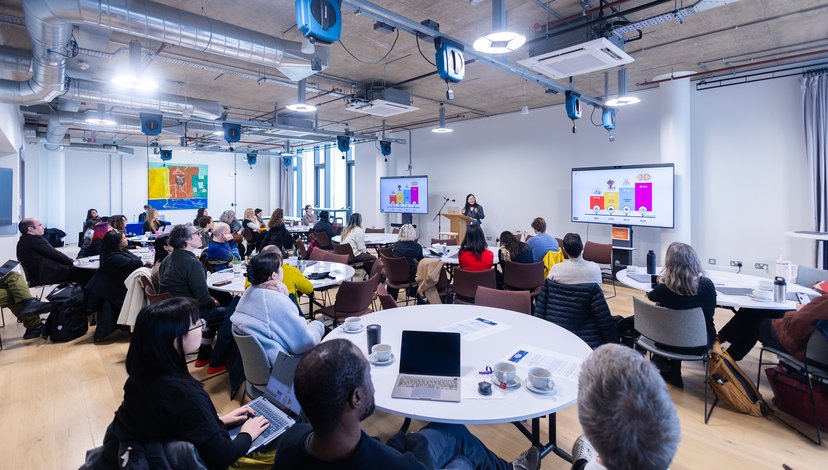
Professor Hua Dong talks about Inclusive Design from 1.0 to 4.0 at the RCA's Research Day 2026 (photo by Chris Lee)
Our work
We work on design and research projects with business, government, community and public sector organisations.
Work with us
Research grants
The majority of design research projects undertaken by the Centre are collaborative. We work with a variety of partnering institutions and academics, covering disciplines ranging from orthopaedic surgery to wearables for ADHD monitoring.
We lead, or partner, on the writing of grant applications, strategic planning and ultimate realisation or execution of award-winning research outputs. These may span traditional academic outputs such as papers and conference presentations, but crucially include practical design outputs (e.g. information, apps and product designs) for impact in the real world.
We have been awarded funding from:
- Arts and Humanities Research Council (AHRC)
- Economic and Social Research Council
- Engineering and Physical Sciences Research Council
- National Institute for Health and Care Research
- Wellcome Trust, Innovate UK
- Horizon 2020.
If you would like to partner with us on a grant funded research project, please contact us at [email protected]
Knowledge exchange
We engage in knowledge exchange with business, government, the non-profit sector and the design community.
Engagement takes place through industry collaborations, education and events and publications.
Knowledge Transfer Partnerships and Accelerated Knowledge Transfer Partnerships are collaborations between the Centre and an industry partner and are undertaken to improve business competitiveness and productivity through funded partnerships with our academics and researchers. The project Pioneering Architecture for Later Life Sector, a collaboration with the Centre and architects Cartwright Pickard was a recent example.
We collaborate with universities on projects with design departments within universities focusing on teaching inclusive design through live briefs.
Scoping studies
We partner with public, private and government organisations that are looking to scope a new research area, new audience, or user group or enter a new market. The aim is to inform future research and design practice, innovation, public engagement and outreach programs, as well as policy.
For example, Design and the Mind, 2018 – a collaborative project with Wellcome Collection, which explored ways to address issues surrounding cognitive, physical and digital access to the Wellcome Hub and its resources for a variety of users, by framing this as an integral and positive part of design and research processes.
Design sprints
Design sprints are a rapid solution to develop a range of people-centred design ideas and prototypes, to open up new design directions, visionary thinking and opportunity areas for an organisation. Design sprints are highly customisable, versatile and creative modes of engagement that can be adapted to suit the needs of a range of businesses. They can last anywhere from three days to three weeks, these sprints combine people-centred innovation and creative leadership to deliver powerful potential outcomes.
If you would like to talk to us about running a design sprint in your company, contact us at [email protected]
History and endowment
30+ Years of Inclusive Design at the RCA
1986
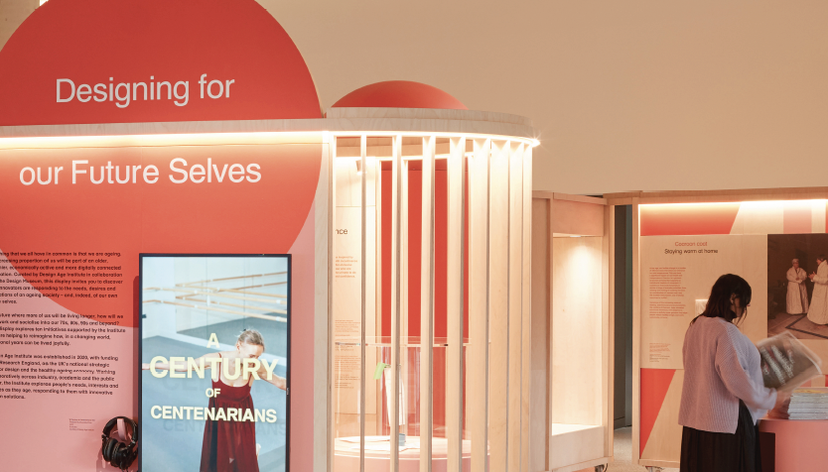
Landmark New Design for Old exhibition at the Boiler House gallery at the V&A Museum. Curators Lady Helen Hamlyn and Elizabeth Henderson invited 16 International Designers to redesign everyday items for the home to suit the needs of older people. The exhibition showed how design could make a difference to the lives of older people.
1991
DesignAge - an action based research institute at the RCA - was founded to address the needs of marginalised groups by developing practical applications of academic and creative thinking in co-operation with commercial partners.
This laid the foundations of what was to become the Helen Hamlyn Centre for Design: the vision of Lady Helen Hamlyn under the direction of Roger Coleman at the RCA.
1994
Roger Coleman defines Inclusive Design in an academic paper given at an International Ergonomics Association’s 12th Triennial Congress in Toronto
1994-1995
DesignAge wins the Queens Award for Higher Education.
The judging panel of this highly prestigious award noted:
This is an imaginative and extremely valuable contribution to the design questions arising from ageing populations. It has practical relevance to industry and commerce as well as involving all faculties and students. It is an international exemplar.
1998
Jeremy Myerson joins as co-founder and co-director alongside Roger Coleman
1997-2007
Development of a programme where new RCA graduates partner with business and industry to explore new ideas in addressing demographic change, a broadening of research methods to more effectively capture user requirements as the basis of creative design processes.
2003
Roger Coleman co-authors an influential report on how the NHS should take a more strategic approach to design leading to the development of a number of landmark projects including the redesign of the emergency ambulance, designing out violence and aggression in A and E and reducing medical error on surgical wards.
2008-2015
Deepening of theoretical grasp of inclusive design, new PhD programme, large scale collaborative projects.
Helen Hamlyn Trust extends their support for the work of the Centre, with the appointment of the first endowed Chair position, held by Jeremy Myerson.
2015-2021
Rama Gheerawo is appointed new director following the retirement of Jeremy Myerson and leads the Centre into new territory with projects aligned more closely to computer and material science, exploring the use of digital apps, autonomous vehicles, SMART textiles and VR.
Scope of Inclusive Design broadened to include issues of Mental Health, race and social equity
2020-2024
The Centre receives large research grant from the Government to establish the Design Age Institute - a new initiative to create innovations for an ageing society.
2025
In November 2025, the Helen Hamlyn Centre for Design Launched its new PhD programme in Ageing, Health and Inclusive Design. The programme welcomed the first cohort of PhD students in January 2026.
Endowment
The Helen Hamlyn Centre for Design is endowed by the Helen Hamlyn Trust a charity dedicated to supporting innovative projects that will effect lasting change and improve quality of life.