Custom House, Our House is a community co-produced oral history, publication and exhibition project that mobilises working-class and global majority lived expertise as civic heritage within contexts of urban regeneration and displacement.
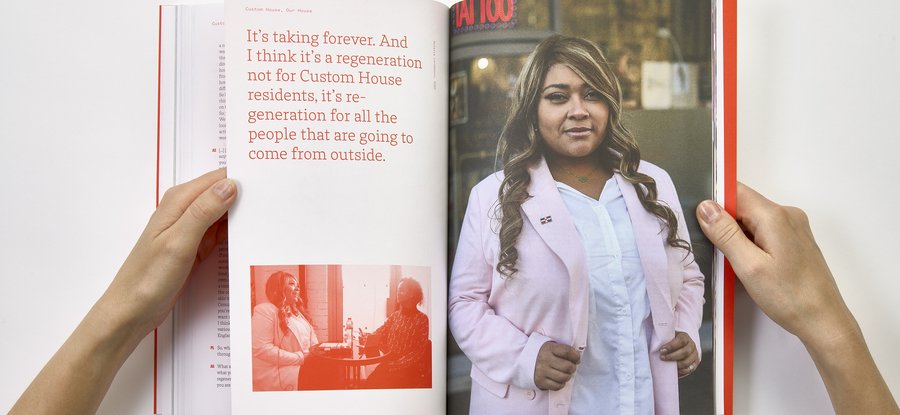
Image: Yearwood-Sanchez, I. in Brennan, J. (ed.) (2025) Custom House, Our House: A Community Archive of Regeneration, Power and Collective Voices.
Custom House, Our House (2024–26) is a community co-produced oral history, publication and exhibition project developed in response to regeneration and displacement in Custom House, east London. The project situates itself within wider struggles over housing justice and uneven urban redevelopment, recognising that regeneration is experienced not as an abstract policy but as a lived restructuring of neighbourhood life.
Through twelve resident-led oral histories and commissioned photographic portraits, the project documents how long-term working-class and global majority communities organise, care for one another, and articulate alternative visions of home, belonging and neighbourhood futures. Rather than treating heritage as retrospective preservation, the project understands lived expertise, intergenerational memory and organising knowledge as forms of civic heritage shaped in the present.
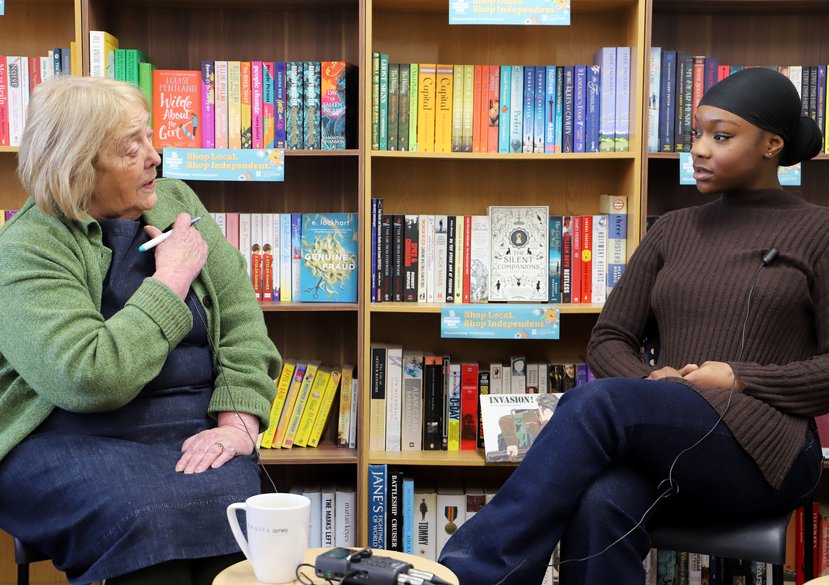
Residents were trained to conduct interviews themselves and contributed to editorial and design decisions, embedding co-authorship within the research process. The resulting publication (Silent Grid, 2025), touring exhibition across five Newham libraries and photography exhibition at Rosetta Arts created accessible civic spaces for collective listening and public dialogue. Twelve oral histories have been formally accessioned into Newham Heritage Service, ensuring long-term public access to resident-authored regeneration histories.
The project demonstrates how collaborative listening, visual practice and archival embedding can redistribute narrative authority and move locally embedded knowledge into durable civic record. In doing so, it offers a transferable, place-based approach to sustaining resident-authored histories within regeneration contexts.
Listen to oral history excerpts from the project on the Custom House, Our House website.
Key details
Gallery
More information
The challenge
Custom House faces the intersecting pressures of long-term disinvestment, structural inequality and state-led regeneration processes that have often marginalised working-class and global majority residents within planning and redevelopment narratives. Regeneration is frequently framed as linear improvement; however, for many residents it entails housing precarity, disruption to social and cultural infrastructures, and limited influence over decisions shaping their neighbourhood’s future.
The challenge addressed by this project is twofold. First, to respond to the under-recognition of resident experience, organising knowledge and intergenerational memory within formal archives and dominant regeneration narratives. Second, to create conditions in which community members can produce, circulate and preserve their own accounts of neighbourhood change as part of the area’s civic record.
Rather than positioning residents as consultees or research subjects, the project treats them as knowledge-holders and co-authors. In doing so, it seeks to address the imbalance between locally embedded lived expertise and the institutional frameworks that define, document and legitimise regeneration history.
Research questions
- How do Custom House residents enact forms of collective agency in response to regeneration?
- How do oral histories and co-produced visual narratives intervene in dominant narratives of urban regeneration?
- In what ways can community storytelling function as a housing-justice practice and contribute to how regeneration is defined and documented?
Aims
1. Document lived experiences of regeneration.
To record grounded, resident-led accounts of regeneration through twelve oral-history interviews conducted by community members trained in oral-history methods – generating knowledge that emerges from lived experience.
2. Share community-led approaches to regeneration.
To foreground the organising strategies, collective actions and everyday forms of care through which residents contest displacement and shape regeneration from below.
3. Recognise and value local knowledge.
To affirm the political significance of situated, community-held knowledge – including cultural memory, organising expertise, intergenerational relationships and skills – within Custom House’s working-class and global-majority communities, framing them as integral to the area’s living heritage and as legitimate contributors to urban futures.
Methods
The project employs a participatory methodological approach grounded in community organising principles and critical visual communication. The resident interviewers were trained not simply in technical oral-history collection but in practices of deep listening, relational accountability and the ethics of co-produced storytelling, including consent, stewardship and long-term care of recorded heritage materials.
The photographic work – interviewee portraits by Inés Yearwood-Sánchez and streetscapes by Chris Dorley-Brown – affirms residents’ presence and agency through a co-creative approach that involves participants in how they are represented. The resulting images function as visual counter-claims to the erasures often produced by regeneration discourse.
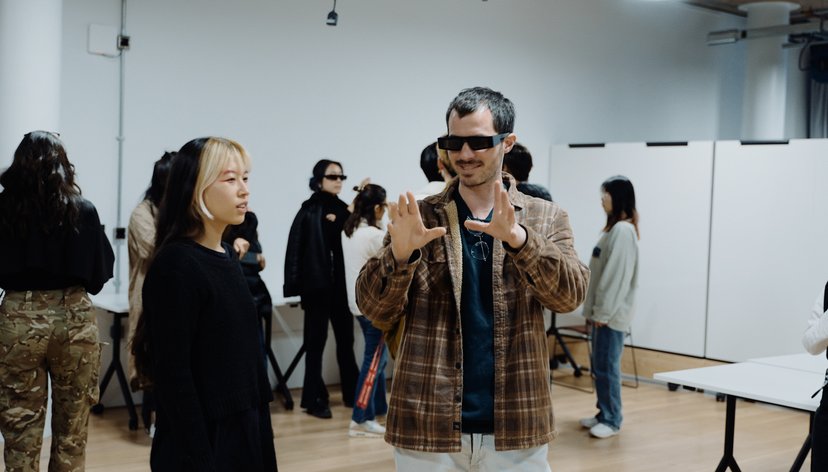
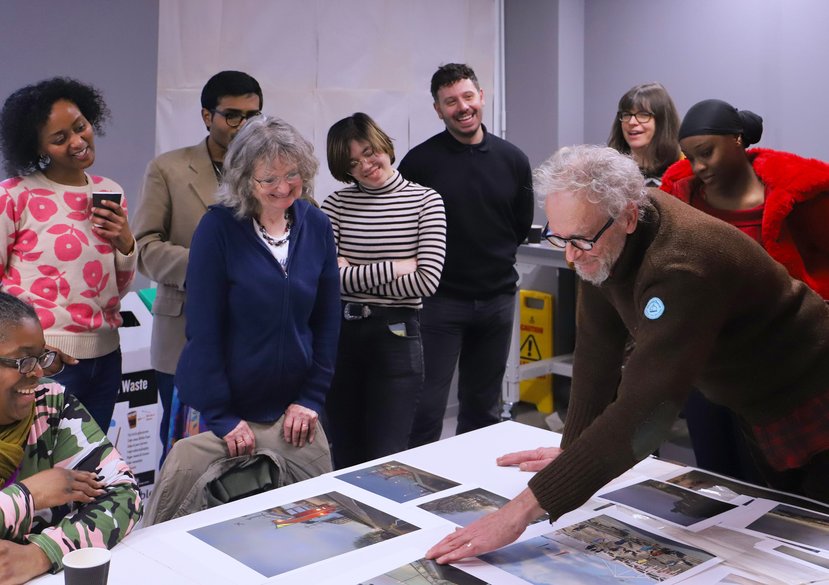
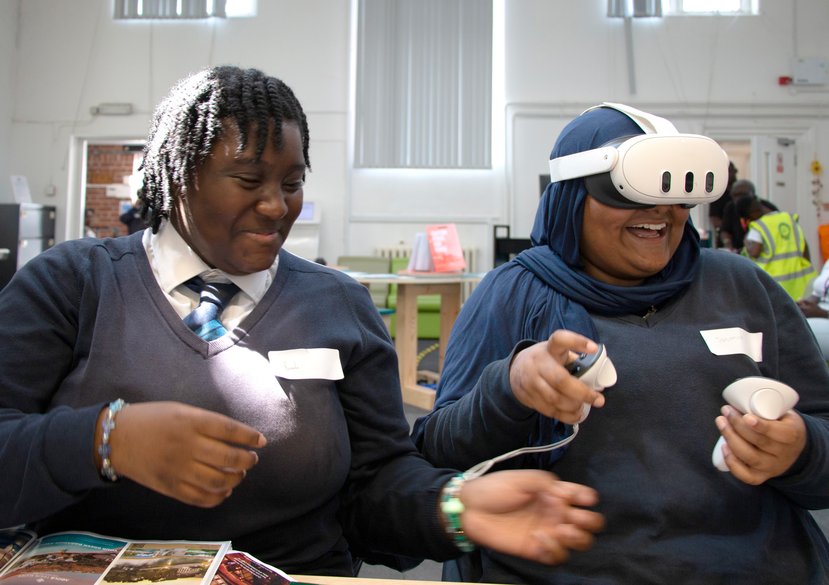
Public discussions and workshops (in zine-making, VR heritage, sound and portraiture) acted as organising spaces – where residents collectively articulated experiences, built connections and generated shared analysis of housing conditions and redevelopment impacts. These workshops functioned as both engagement and research sites, shaping the editorial and archival outcomes of the project.
Public engagement
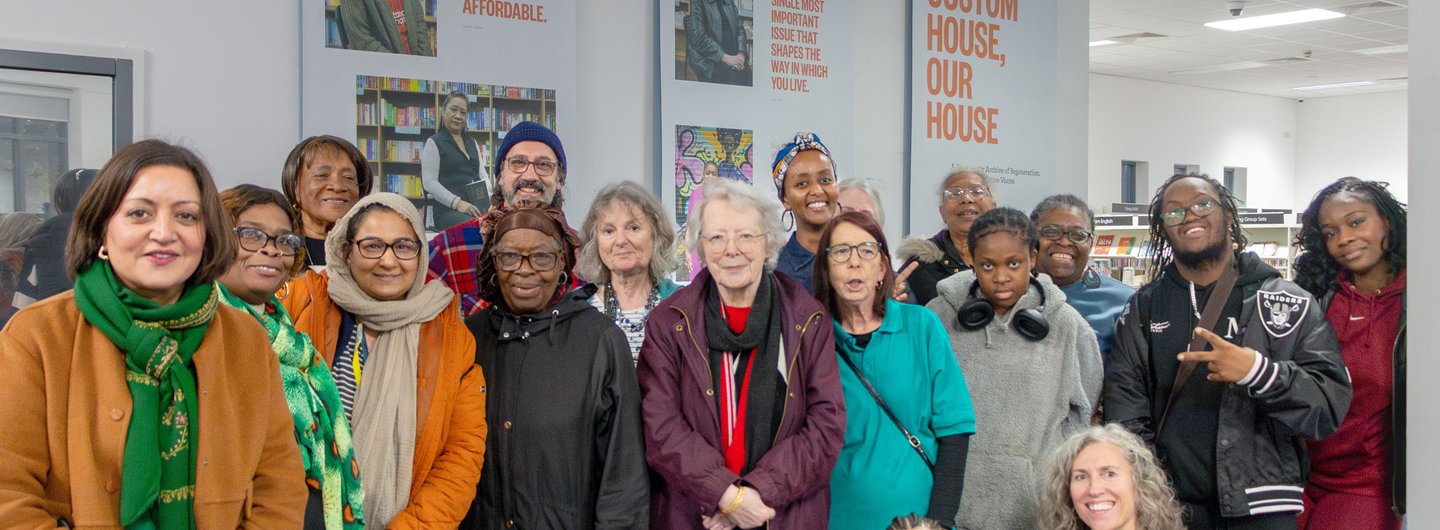
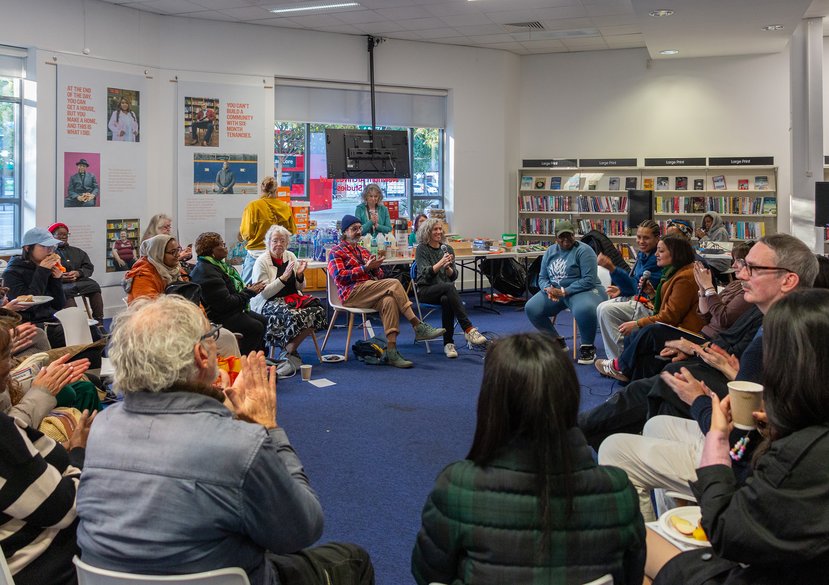
By embedding the project across five Newham libraries, the research activated civic spaces as sites of encounter, solidarity-building and shared heritage interpretation, positioning libraries as accessible custodians of local history. These library-based encounters created accessible platforms for residents to engage each other, explore common struggles and build intergenerational conversations about the future of their neighbourhood. The collective listening and public forum with Mayor Rokhsana Fiaz, community partners and residents made visible the political tensions between policy rhetoric and the realities of lived urban precarity.
Policy relevance
The project generates resident-led evidence that challenges dominant regeneration policy narratives. It highlights the limitations of existing consultation processes and the need for planning frameworks that recognise community expertise, organise against displacement, and recognise housing as a social right rather than a redevelopment opportunity.
These materials can support community organising efforts, inform municipal practice, and contribute to debates on just cities, participatory governance and alternative housing futures.
What we did
- Trained residents in oral-history methods rooted in relational, non-extractive practice.
- Commissioned portrait and documentary photography that intervenes in regeneration’s representational politics.
- Co-designed a publication and touring exhibition that collectively built a community-located archive challenging erasure, preserving community knowledge and asserting the right of existing residents to be seen, heard and historically acknowledged within redevelopment processes.
- Toured an exhibition across civic library spaces to support public debate and community visibility.
- Delivered creative workshops that functioned as both engagement and organising infrastructure.
- Convened a series of public forums to articulate demands, reflect collectively, and situate resident knowledge within broader policy and governance contexts.
Outputs
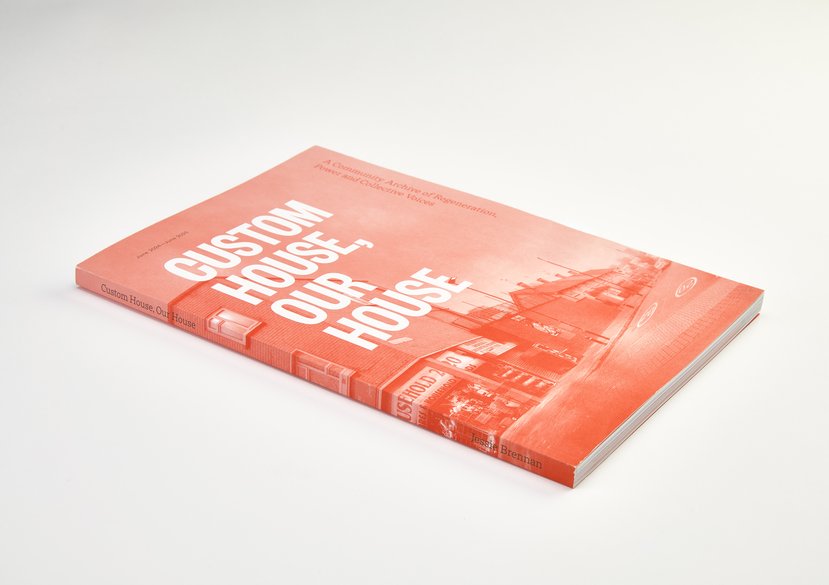
- Publication: Brennan, J. (ed.) (2025) Custom House, Our House: A Community Archive of Regeneration, Power and Collective Voices. London: Silent Grid. (ISBN: 978-0-9930231-8-7)
- Twelve oral histories have been accessioned into the archive of Newham Heritage Service; the publication has become part of the Newham Heritage Service’s collection
- Touring exhibition across five Newham libraries; Photography exhibition at Rosetta Arts
- Public engagement workshop programme, including discussions on community-led regeneration and housing justice
External project team
Denise Evans-Barr – Project Collaborator, Co-Founder of Custom House Bookshop
Inés Yearwood-Sánchez and Chris Dorley-Brown – Commissioned Photographers
Ioana Simion, Mado Kelleyan, Sotiris Gonis – Workshop Facilitators
Volunteer interviewers: Ivorine Bogle, Elizabeth Lutterodt-Clottey, Pat Leeson, Susan Mills, Kelsey Poyton, Terry Regan, Esmeralda Tecle, Joden Wyatt and Shadid Zamil
Makar Polovinka – Workshop Photographer