Key details
Date
- 19 January 2026
Author
- Lisa Pierre
Read time
- 7 minutes
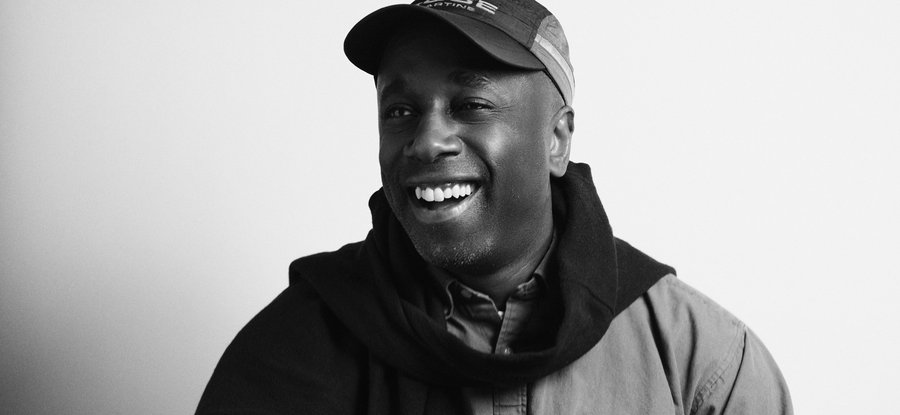
Stephen Vernon (MA Fashion Womenswear, 1998), Senior Design Director at Calvin Klein, has an impressive history working with renowned brands such as Jil Sander, Thom Browne, Stella McCartney and Theory. With an eye toward the future and an unwavering commitment to design excellence, he continues to shape the evolution of craftsmanship, blending innovation with thoughtful design.
“I believe true sustainability lies in designing pieces that are timeless — something that will be treasured for years. Good design is sustainable in itself.”
Senior Design Director
Calvin Klein encompasses a brand that has very visible, recognisable branding in some lines, whilst others are minimalist, sensual creations. What part of this process do you oversee?
Since joining Calvin Klein over five years ago, I’ve played a key role in shaping the brand’s direction during a pivotal time of transition. When I first arrived, the company was undergoing a reset. We were almost starting from scratch. It was a surreal moment, especially during the pandemic when we were among the few allowed into the building. It was just us and the brand’s archivist. Myself and the team and I dove deep into Calvin Klein’s DNA, studying the iconic ‘90s collections that had made such an impact on me growing up. I remember seeing those pieces in person for the first time. They seemed so simple, yet intricate. The way they hung, the minimalism — there was a purity and complexity to it. The colours are so perfect. When looking at the rail, and you can just see these perfect queues of greys that are perfect for the brand. With the brand’s signature minimalism in mind, we worked to streamline the product offering, focusing on refining the aesthetic. It’s been a journey of reduction.
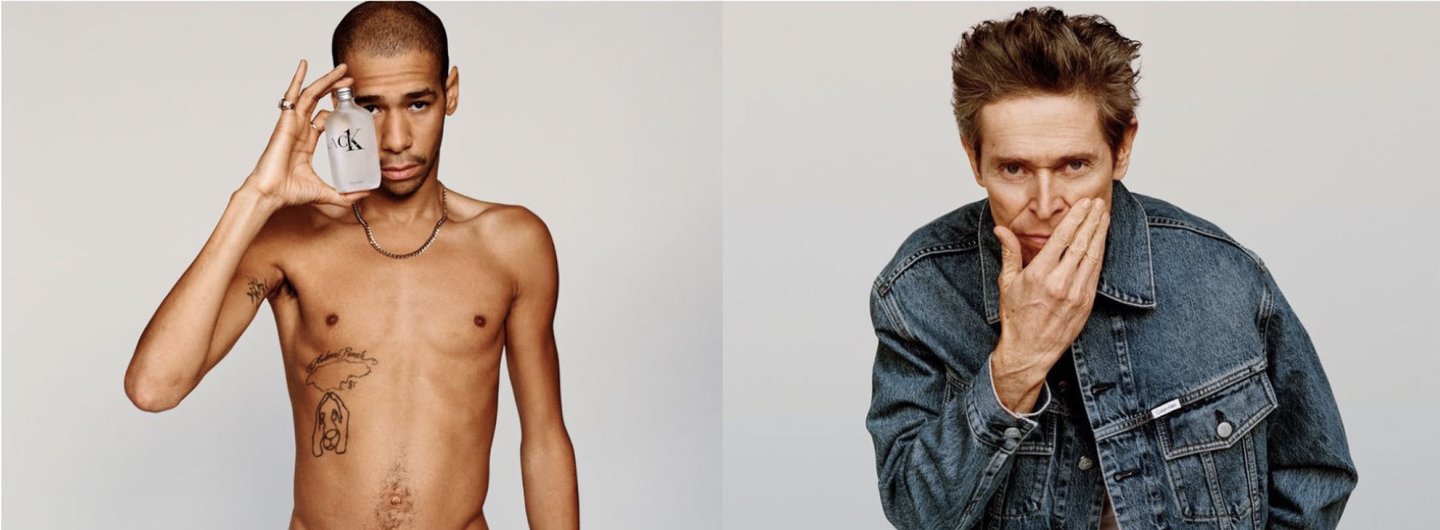
Some of Calvin Klein’s most famous ad campaigns have included Brooke Shields, Mark Wahlberg posing with a topless Kate Moss, A$AP Rocky and Jeremy Allen White. Do you feel that it is the iconic allure of these people, or the brand that makes the campaigns work so well?
Over the years, Calvin Klein has featured some of the world’s most iconic figures in their advertising campaigns — I believe the magic lies in the synergy between the models and the brand’s aesthetic. There’s a documentary — In Vogue: The 90s — that discusses the Kate Moss campaign of the 90s. Christy Turlington and others brought a unique energy to the brand. I think it's the combination of the person and the clothes. Calvin Klein’s clothes are minimalistic, so they allow for an intimate union between the wearer and the clothes. I think it's kind of cool as well, so I think it's the person and the brand together.

Kaia Gerber in Heron Preston for Calvin Klein
You have been both a menswear and womenswear designer. Do you have a preference, or do they both allow you to celebrate different aspects?
My experience spans both menswear and womenswear, and I find that each offers its own challenges and opportunities for creative exploration. When I first trained in womenswear, I was fascinated by the variety of design vocabularies, from structure to softness in dresses. The balance between masculine tailoring and feminine shapes is something I truly enjoy exploring. I admire designers who blend both worlds. Phoebe Philo, Demna Gvasalia and Rick Owens all have the ability to bring menswear-inspired tailoring to womenswear, giving women a sense of strength and elegance.
I also like mixing the two. And I feel comfortable in both. I try to think of the person and I try to think of the finished garment and how you would feel wearing it or seeing it. You know, when you have that moment where you see something you feel like, ‘I need to have that’. I always think about ideas like, ‘what would make me want this?’. I always have that in my head. What would draw me to this as a person looking at the garment?
When you entered the ateliers of fashion in 1998 did you feel it wasn’t a very diverse place for a black man? After a quarter of a century have you seen any change in diversity within the Industry?
I had an opportunity to work in Italy before I graduated, it was in Milan and it was interesting because it was located on Via Monte Napoleone, which is like the Main Street there. I went to do the runway and the pre-collection. I thought ‘this is brilliant’. But I started to notice that there weren't many black people or people of colour , or diversity, even on the streets. Never mind in the workplace. People saw me as an outsider, especially with my English accent. Psychologically, it was hard for me. There were moments when I thought, ‘why am I even doing this?’. But I never let it deter me.
Milan is much more diverse now, and I’ve seen positive changes. I think in the workplace, it's something that people are very sensitive about, to be honest. For sure, I feel that I have to work twice as hard as someone with a different colour of skin. I like a challenge, so I don't see it, it doesn't faze me really. I’m motivated by challenges, not intimidated by them. I don't really see colour, but if I can help someone that has the talent, I will give them all the support I can to help them and all the tools they need. If I can support them, I really, really will, because I think it's really important. To belong and have diversity, I think it's super important and I do feel like historically, it has been in deficit.
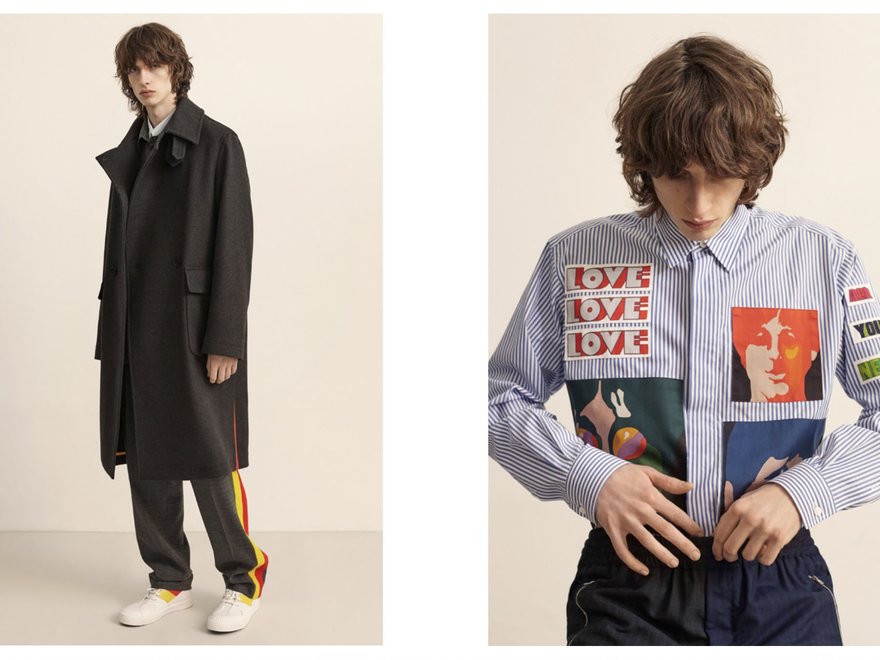
Stephen Vernon for Stella McCartney
“Some of my best friends are from my time at the RCA. I think the friendships you make, that you don't understand at the time, will go on to be lifelong. It's almost like this international network.”
Senior Design Director
Having worked at Stella McCartney in the USA and working also in Germany and Italy have you noticed any differences within the design culture in different countries, or is the fashion world more of an international environment where borders mean little?
I think that the education back when I was studying, at least there was definitely a different style. that was kind of regional, I would say. I think Central Saint Martins (University of the Arts London), for example, and the Royal College of Art, were definitely highly praised schools that would encourage their students to have individuality, and it was encouraged to be well read, have a good background knowledge and a good skill set. I fell in love with New York when I moved here 20 years ago. I have to be curious about a project and feel I can bring something to the brand and the experience.
I’ve experienced different design cultures firsthand. I feel the fashion world is increasingly global, but each country has its own unique approach. When I worked between Milan and Hamburg with Jil Sander I was drawn to the experimental, deeply thematic approach to design. It was a place that valued high skill and craftsmanship. In contrast, the American market, with its more commercial mindset, taught me how to balance artistry with the need for best selling products. Both are valuable, and I think being able to work across both spectrums — commercial and artistic — makes for a well-rounded designer.
What would you say was the most valuable lesson you learnt at the RCA?
I feel like the friendships you make there are for life. Some of my best friends are from my time at the RCA. I think the friendships you make, that you don't understand at the time, will go on to be lifelong. It's almost like this international network. If they live in Europe, but I'm passing through Europe, and you have dinner with them, and we talk, and it’s as if we have known each other for 30 years. It's quite crazy and it's nice to share experiences, and sometimes you talk about difficult things that you're going through and you're able to even workshop them over dinner or just share it and people understand what you mean. So I think the friendships I made are very valuable.
There are lots of questions around sustainability and the wear-it-once culture with social media sometimes playing a role in this. What would you say are some of the things affecting global luxury brands right now?
Having worked with Stella McCartney, a pioneer in sustainable fashion, I understand the challenges of balancing sustainability with luxury. At Stella, sustainability was at the core of everything, and we were given clear goals for using sustainable materials. It was nourishing and amazing, and it just taught me so much in terms of materialisation and the technology that is out there that is available.
In more commercial markets, sustainability can be tricky because it often costs more to source ethically produced materials — designing well, something that's done really beautifully, that could be handed down and treasured for a long time. I believe true sustainability lies in designing pieces that are timeless — something that will be treasured for years. Good design is sustainable in itself.
How do you think marketing has had to change with digital platforms to attract and maintain Interest?
I think it's a tough one. I was talking to a friend about it. I think it's too quick and I have friends that are photographers and work in the creative industry and I feel like it's too fast. I think we are forced to have new Instagram content, and I think you're missing that moment of these beautiful shoots that are made with film capturing fewer images a day that feel more captivating and have more attention to detail. I think we're missing that. I miss it at least. Obviously, I like Instagram but I miss the slower, more deliberate process of creating stunning images that were carefully crafted. I hope that we’ll return to a more thoughtful approach to content creation.

Stephen Vernon for Jil Sander
Do you think fashion is moving more towards gender fluid collections?
The shift towards gender fluidity in fashion has definitely gained momentum in recent years. While street fashion has embraced this fluidity, the runway has been slower to adapt. I think the streets are ahead of the runway in this regard. I just think that's cool that you can move between being masculine and feminine, and I like the duality of it. I encourage it and I think it's fantastic, and I used to wear skirts and all sorts like that when I was growing up, and I love it. I think it's great. People are mixing items of clothing whether they are structured or fluid in ways that look amazing and I think it’s great. Fashion should embrace that freedom.
Images of Stephen Vernon © Christopher Starbody