Key details
Date
- 25 June 2026
Read time
- 3 minutes
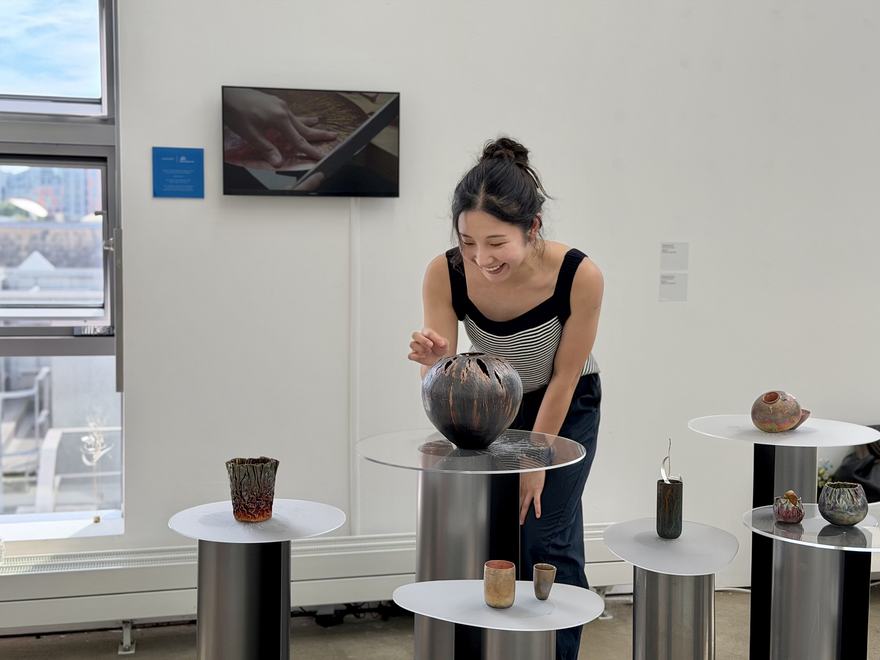
With my degree show installation, RCA2026
As I approach graduation, I am preparing for the degree show and reflecting on the past year as a continuous process. I have spent most of my time working intensely in the studio, and now, as the installation is completed, I find myself looking back at the entire journey as something still unfolding rather than finished.
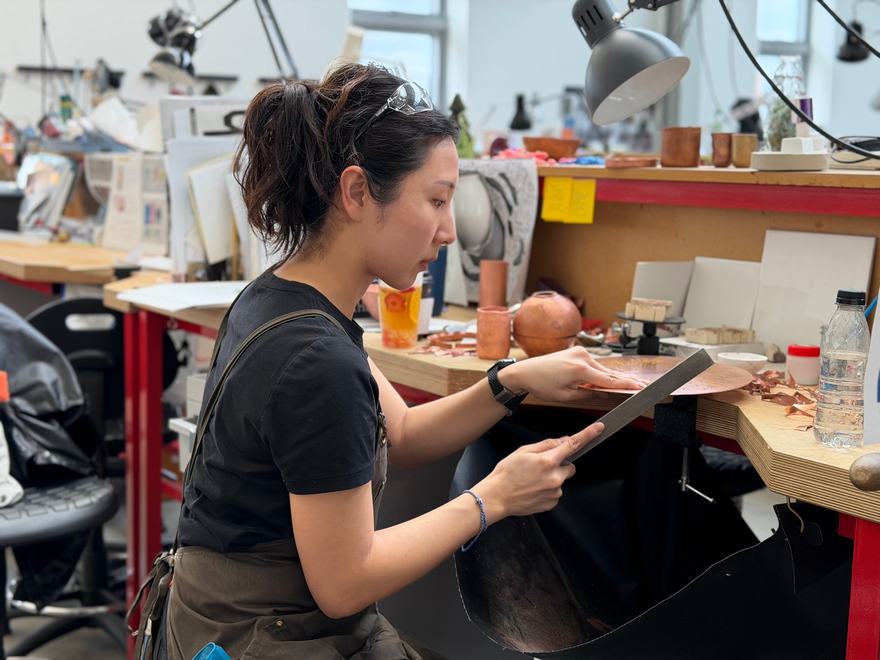
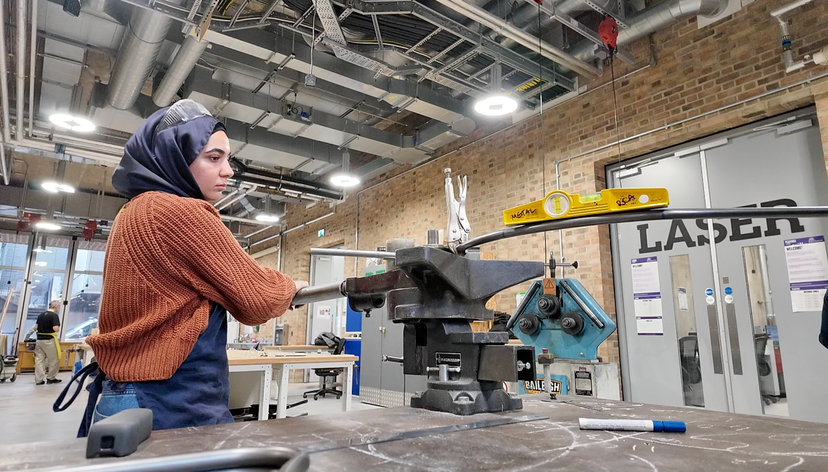
Working at the bench in the RCA metal workshop
My time at the RCA has been less about learning specific techniques and more about shifting the way I think about making. Before coming to the RCA, my practice was largely driven by planning, control, and the pursuit of resolved forms, influenced by my background in architecture. Through processes such as photo etching, raising, and press forming, I gradually moved away from fixed outcomes and toward what emerges through material behaviour.
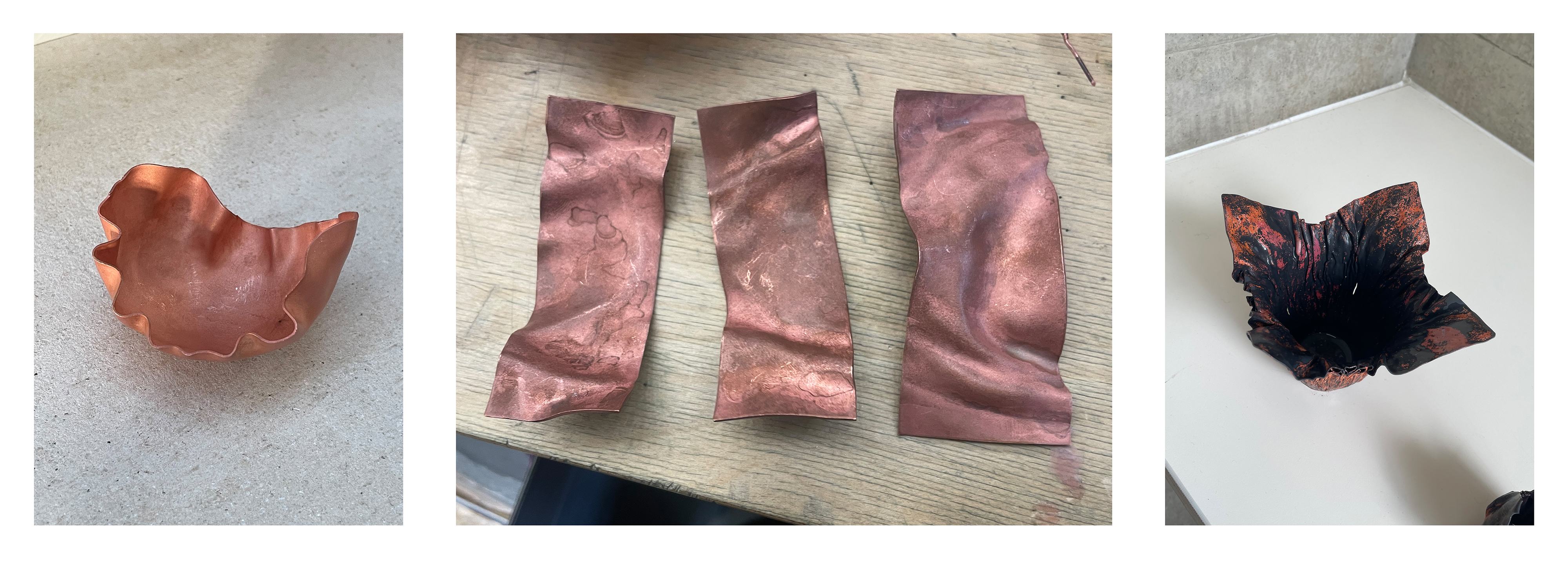
Testing how metal responds to pressure, texture, and form
Rather than controlling form, I became more interested in how metal responds under pressure. Unintended deformations and irregular surfaces began to feel less like errors and more like moments where the material reveals its own logic.
This shift led me to reconsider my understanding of flow. For me, flow is not simply a representation of movement, but a condition that emerges under certain material circumstances. When rigid, cold metal unexpectedly takes on organic forms, an underlying flow within the material becomes visible.
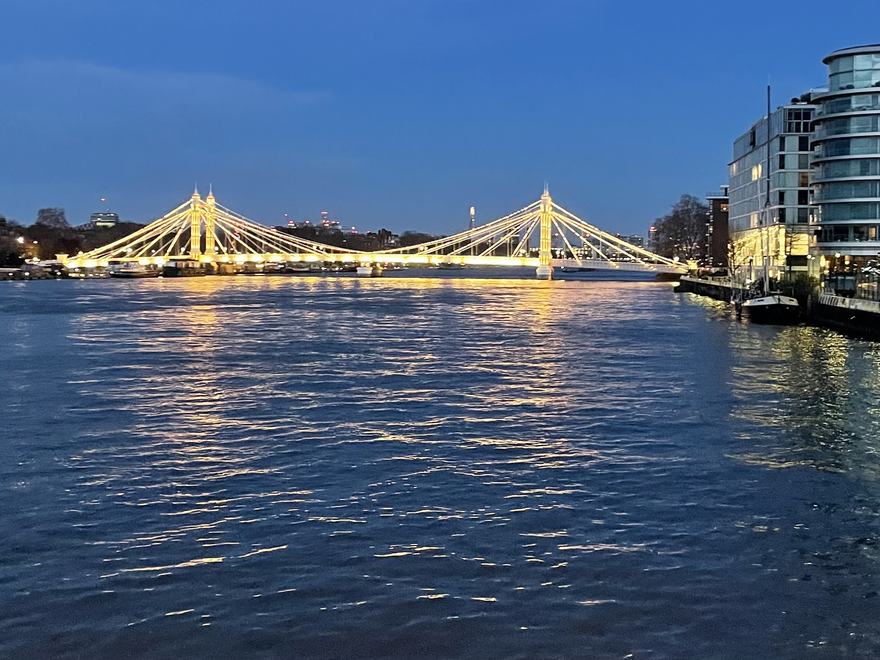
Ripples on the River Thames, an important source of inspiration
This idea is closely connected to my experience of water. Observing the River Thames, especially while crossing Battersea Bridge on my way to the RCA workshops and studio, became an important reference point. The ripples forming around stones exist within the larger current, yet develop their own independent patterns. I began to relate this to my own position – being shaped by external conditions while still forming my own direction.
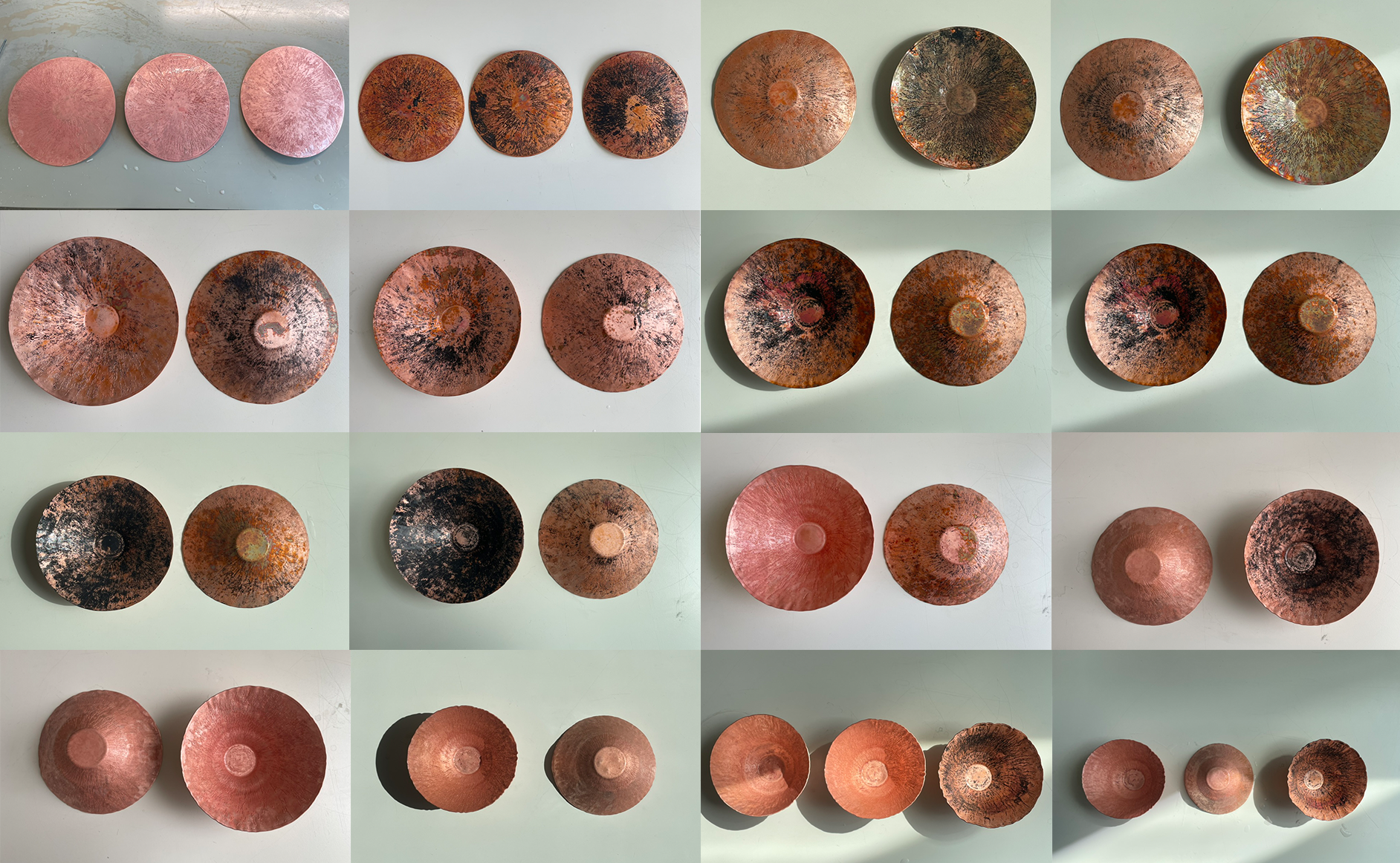
Photo etching and raising process
My current degree work develops from these observations. I begin by etching patterns onto metal sheets and then extend them through raising and hammering to create three-dimensional forms. During this process, the surface often tears, wrinkles, or develops unexpected holes. Rather than correcting these changes, I choose to accept them as part of the work.
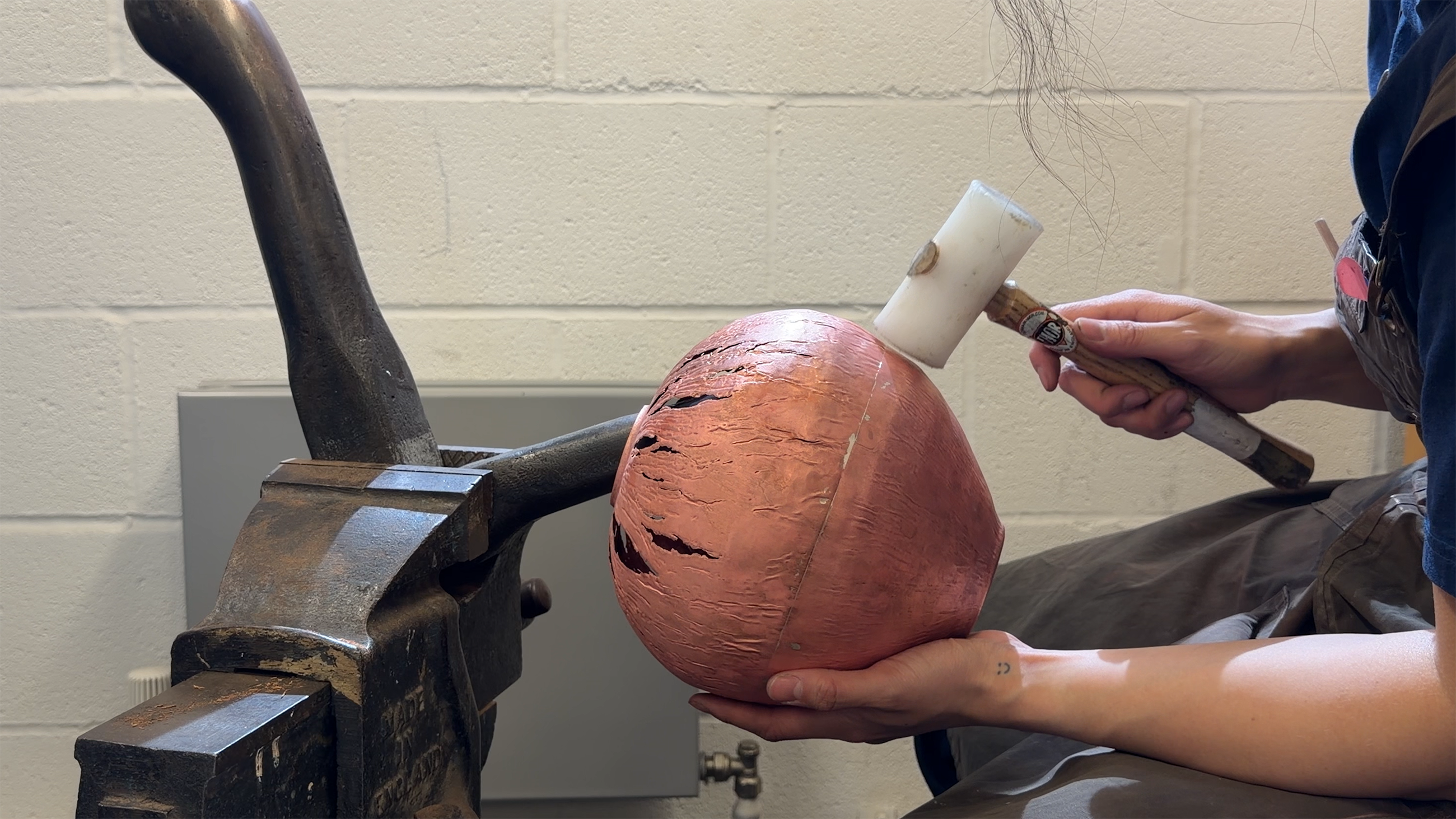
Hammering copper during the forming process
The more I repeat this process, the more I feel that I am not fully controlling the form, but instead following the direction that the metal itself begins to reveal. Completion is no longer predetermined; it becomes a state I arrive at intuitively.
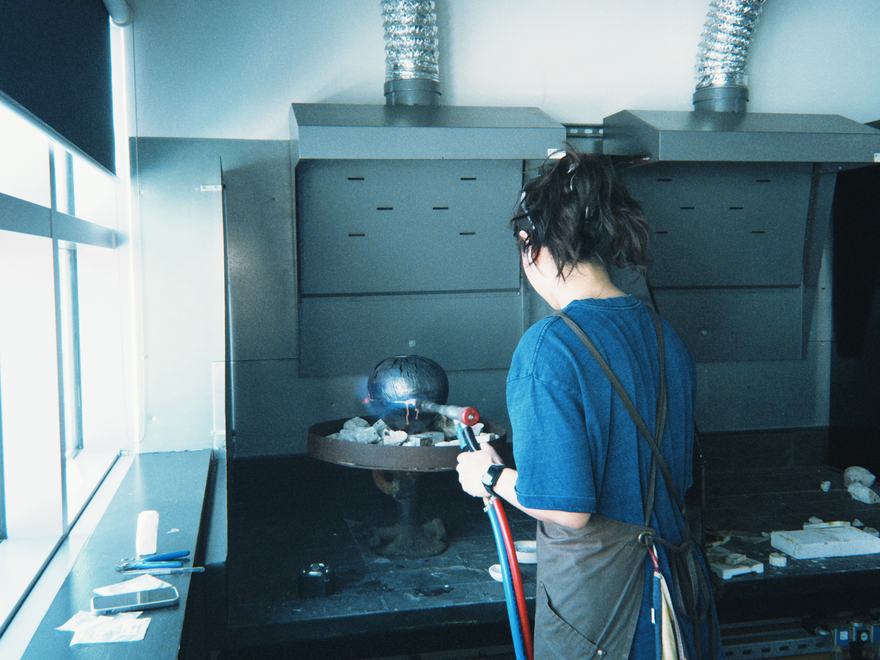
Working in the forge during the metal-forming process
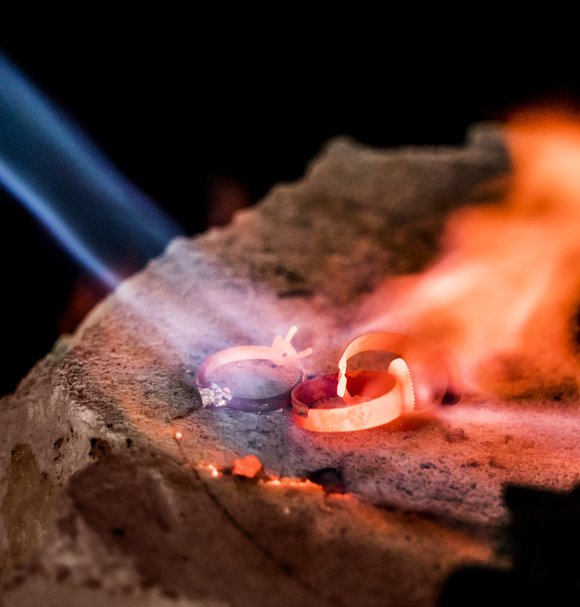
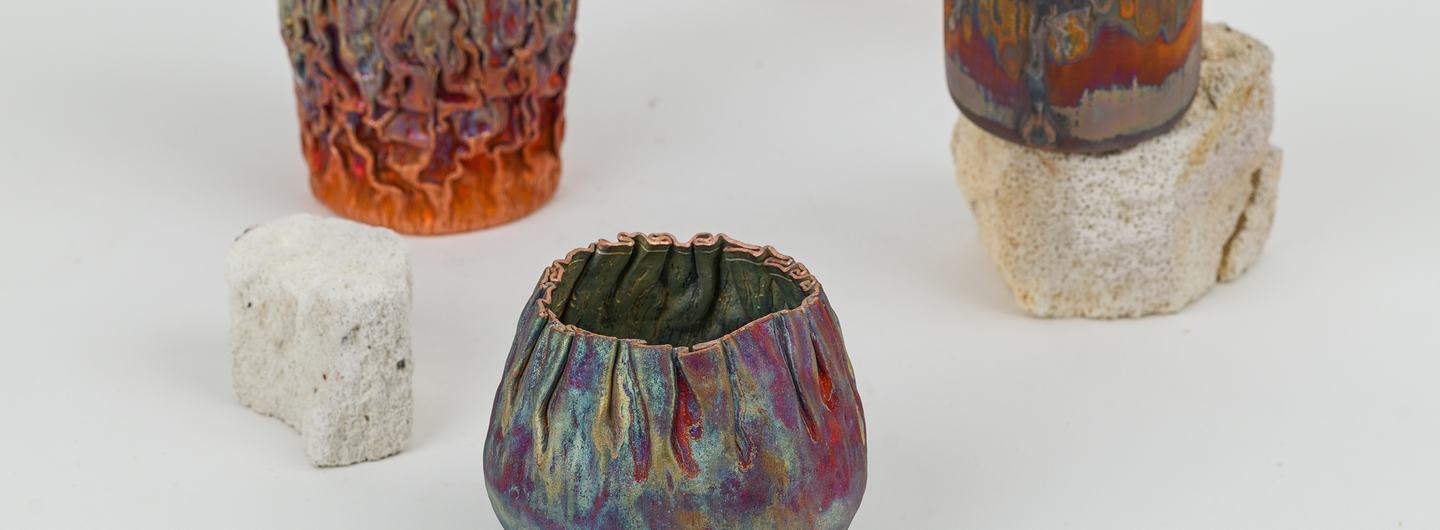
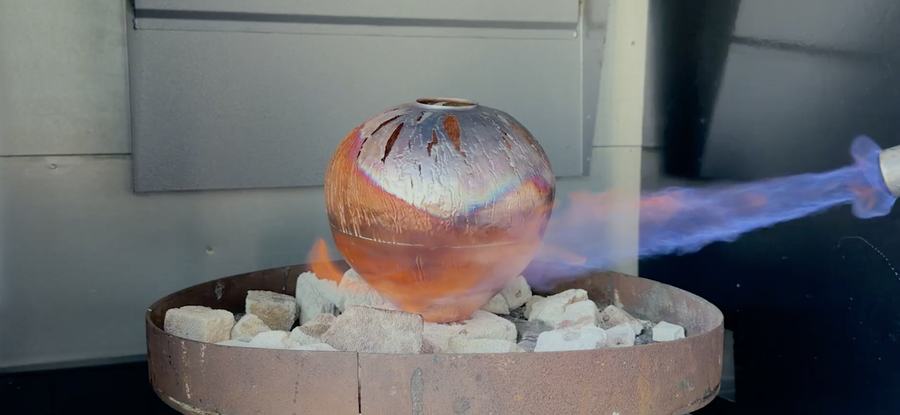
Since coming to the RCA copper has become my primary material. It is both pure and highly responsive, constantly transforming through repeated processes of annealing, pickling, and oxidation. Flame painting developed from observing these transformations. The vivid colours created through heat feel like temporary layers within the metal briefly surfacing. However, these colours are not permanent; they gradually fade over time.
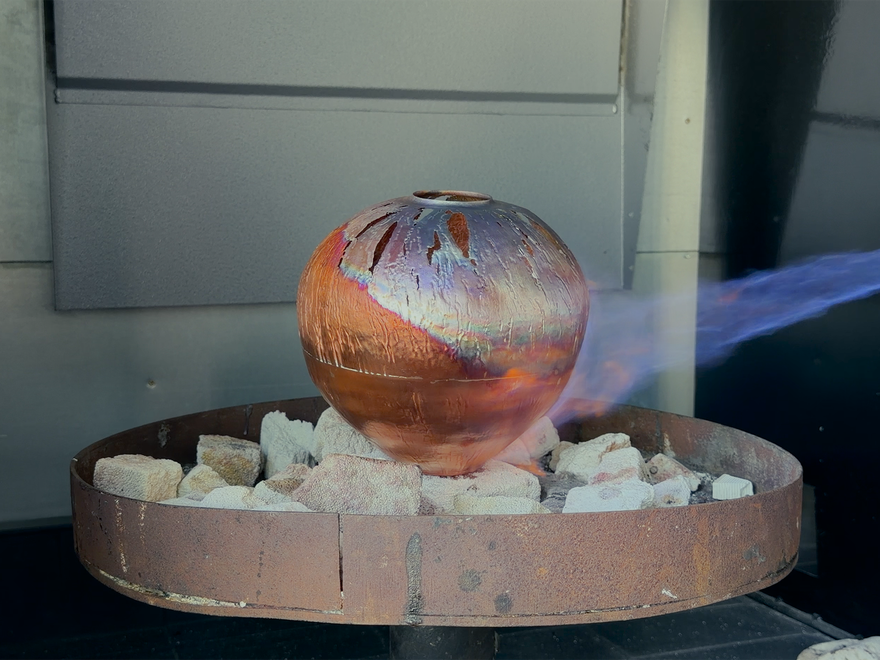
Copper transforming through heat and oxidation
At first, I tried to preserve them, but I gradually came to understand that their disappearance is an essential part of the work. Because they fade, the moment becomes more intense, and transformation itself becomes part of completion.
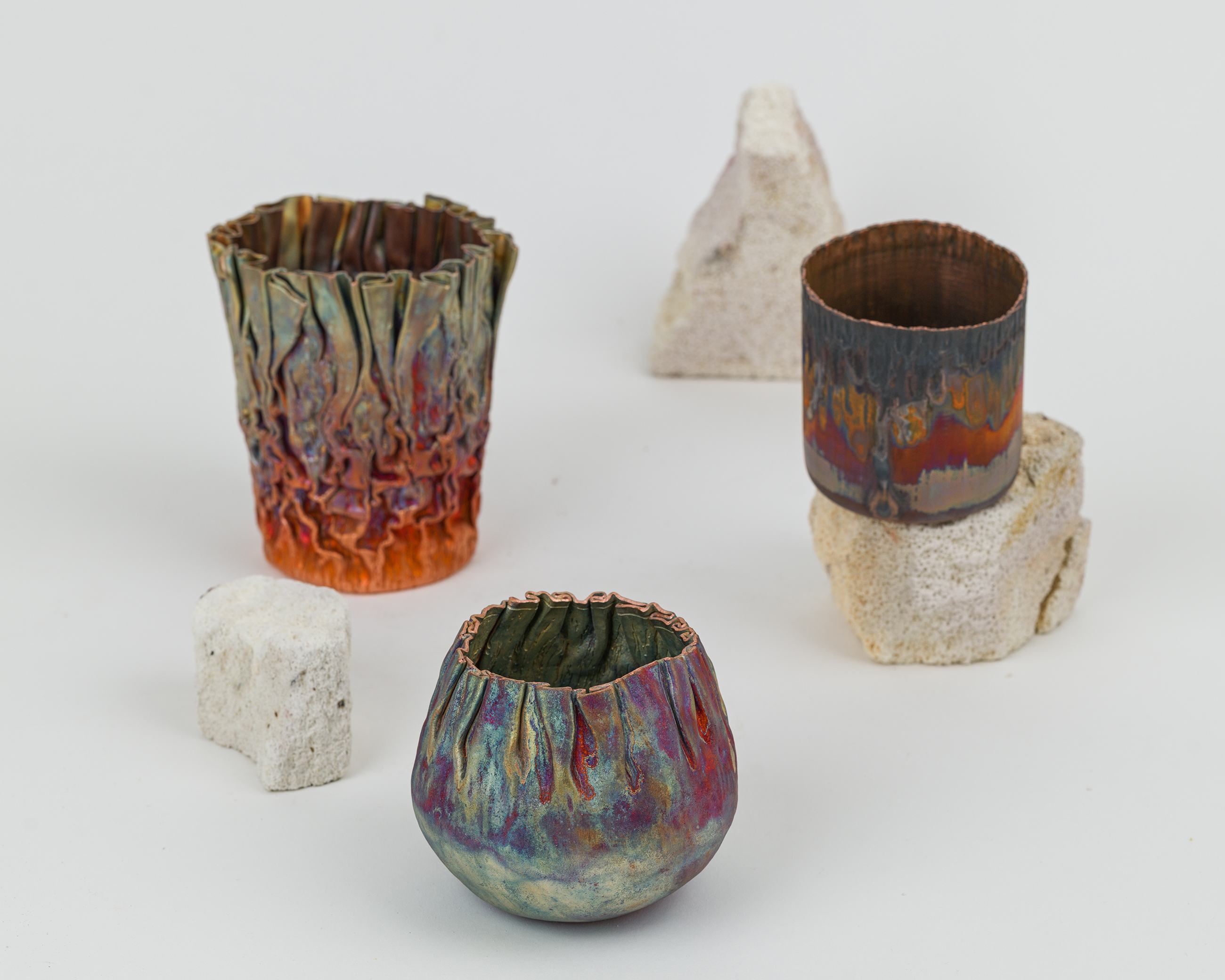
Flame-painted copper objects
Through this process, I have come to rethink the idea of completion. Rather than a fixed end point, completion feels closer to a temporary pause within an ongoing process. The metal continues to oxidise and change, and the work exists within this continuous movement.
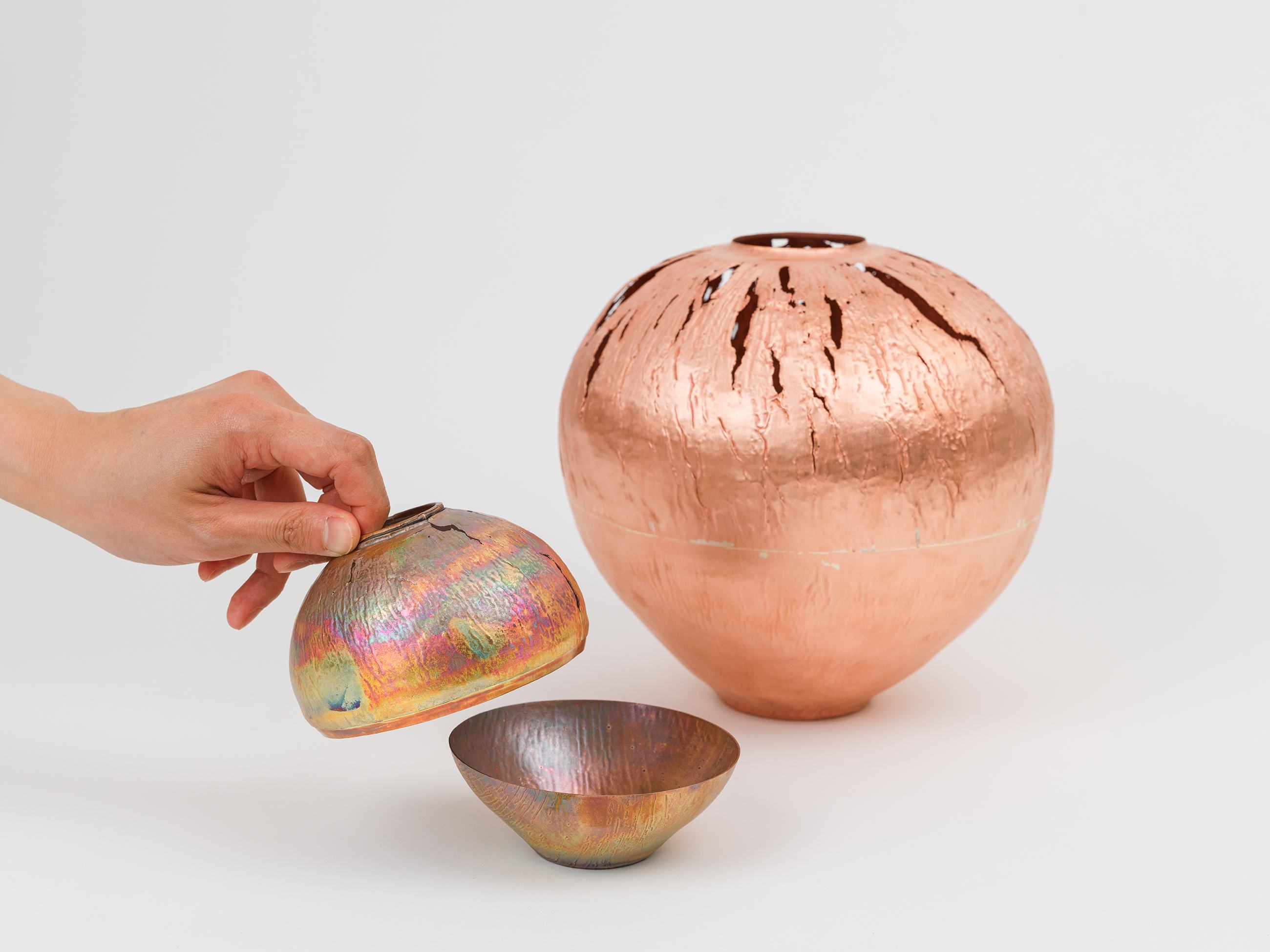
Still, Yet Flow
After the RCA, my direction is still open, but I want to continue exploring my relationship with materials in greater depth. I am interested in expanding my practice across jewellery, object, and installation, and in developing a long-term engagement with a single material through sustained observation.
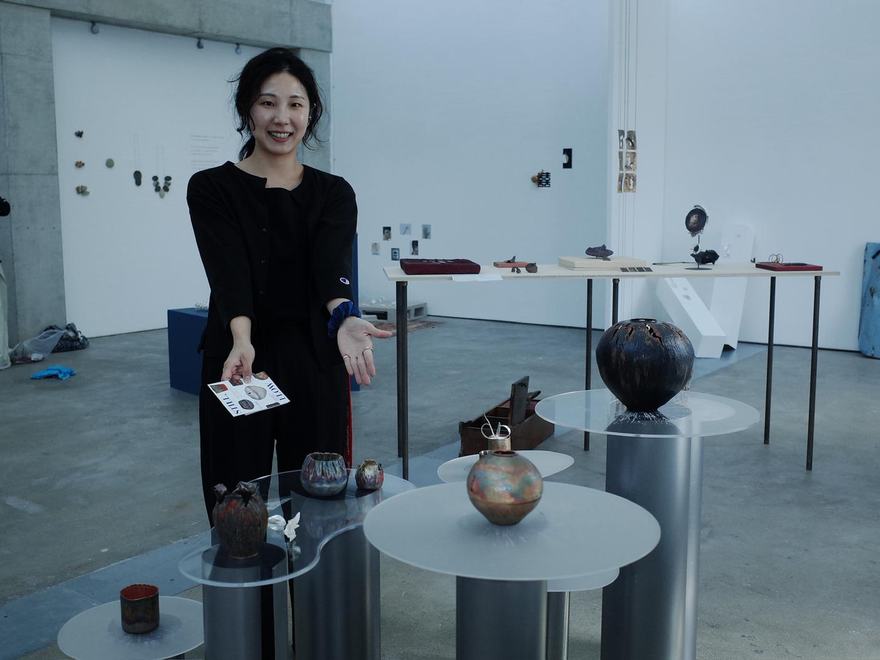
In the exhibition space during RCA2026
My time at the RCA has taught me not just how to make work, but how to continue a practice. At this point, graduation does not feel like an ending, but rather the beginning of another unfolding flow.