Key details
Date
- 21 April 2026
Author
- Alexandra Genova
Read time
- 4 minutes
RCA Intelligent Mobility MA student Kian Mokhtarpour reached the final of the BRP International Design Challenge in Lapland with a concept vehicle designed to help firefighters respond to the growing threat of wildfires.
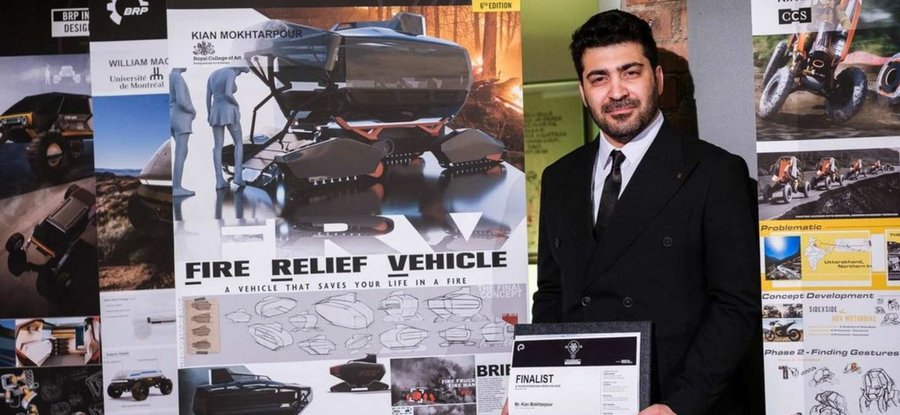
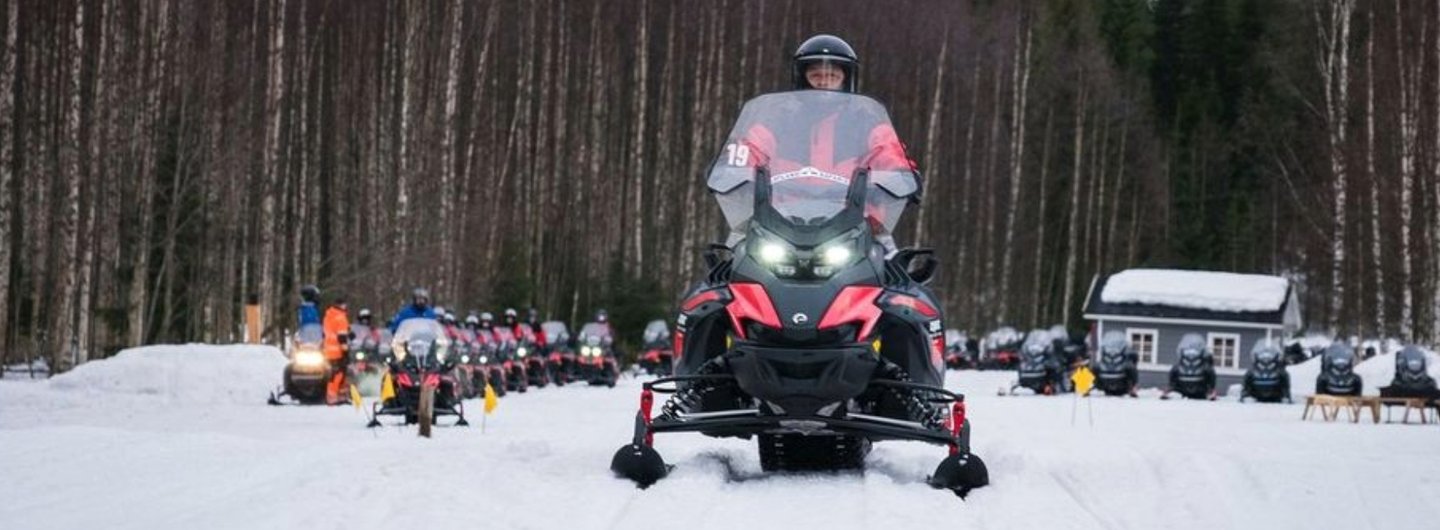
In the snowy landscapes of Lapland, students from eight design colleges around the world gathered to present their ideas at the sixth edition of the BRP International Design Challenge. Among the finalists was Kian Mokhtarpour, a RCA’s Intelligent Mobility MA student, who designed a vehicle in response to the increasing catastrophic impact of wildfires, which damage ecosystems and accelerate global warming.
“I designed a concept aimed at helping firefighting teams control and contain fires as quickly as possible,” says Mokhtarpour. “It’s an intelligent, remotely controlled robotic unit that operates alongside firefighting teams. It can transport firefighters to the site, rescue injured or trapped individuals, and transfer them to safe areas or hospitals.”
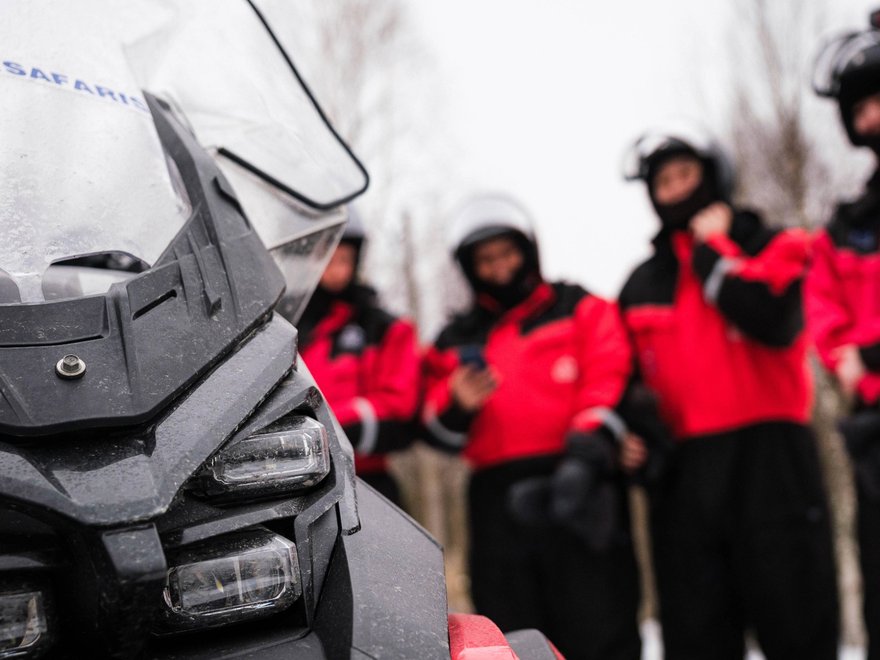
Through its Design Challenge, BRP celebrates the creativity and ingenuity of design students developing pragmatic solutions to environmental and natural disasters.
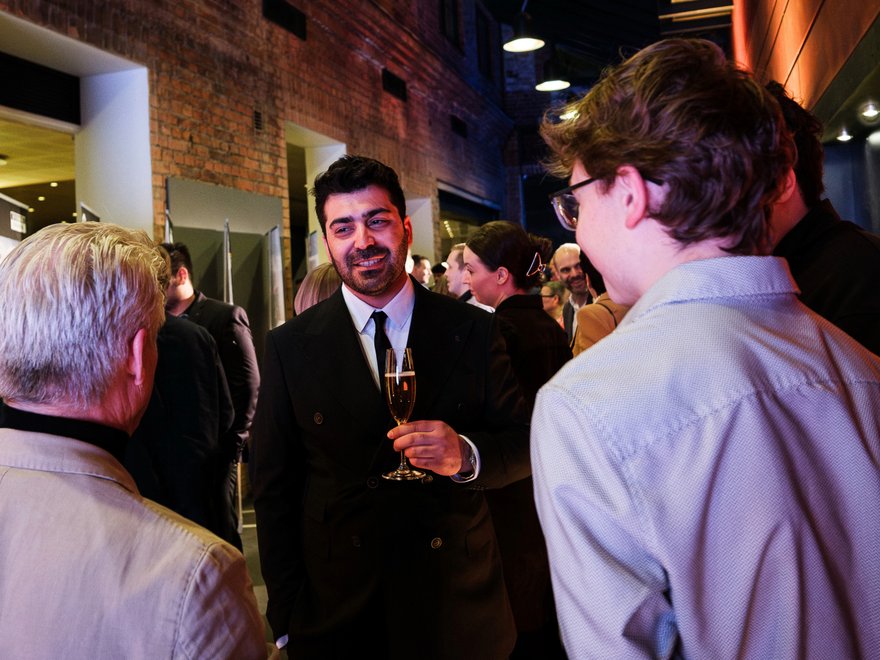
Mokhtarpour (centre) networks at BRP's 6th edition of its International Design Challenge
The design stood out for its focus on emergency response and human-centred mobility. It uses fire-resistant materials, a structured wheel system and a highly secure heat-resistant glass cabin, and can carry four to six firefighters as well as six to eight passengers. In extreme situations, if the vehicle is compromised by fire, the cabin can detach and be airlifted by helicopter to safety.
The competition brief asked entrants to respond to the United Nations Sustainable Development Goals. Mokhtarpour’s design focused on protecting human life while supporting the preservation of forests, green resources and clean air. “The Design Challenge continues to demonstrate the importance of empowering young talent and giving them the space to explore bold ideas,” says Denys Lapointe, Chief Design Officer at BRP. “Each edition strengthens our belief that collaboration across generations is essential to shaping the future of mobility, and that great design knows no boundaries.”
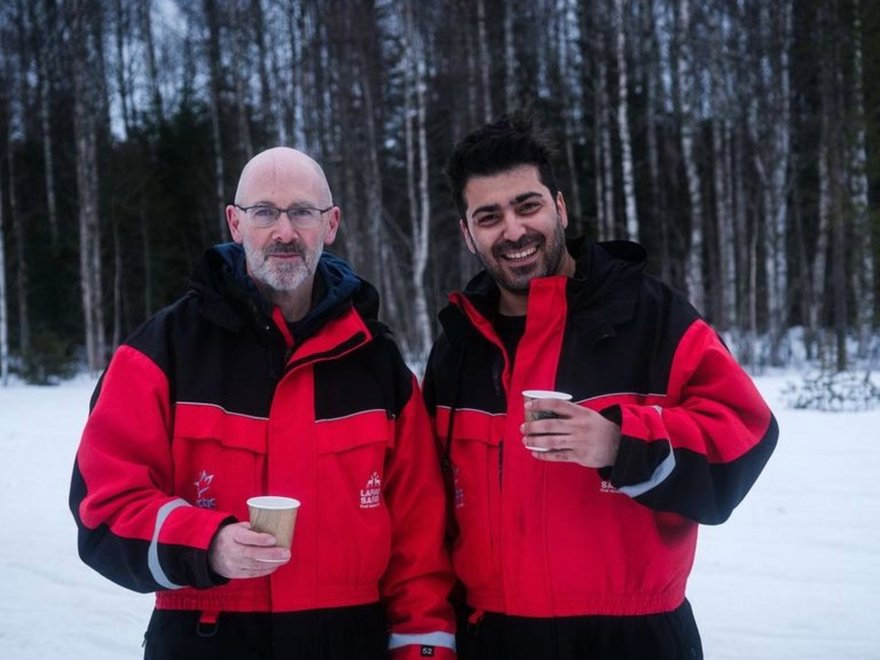
Chris Thorpe (L), Head of Programme for Intelligent Mobility at the RCA, attended alongside Mokhtarpour (R) as a guest speaker
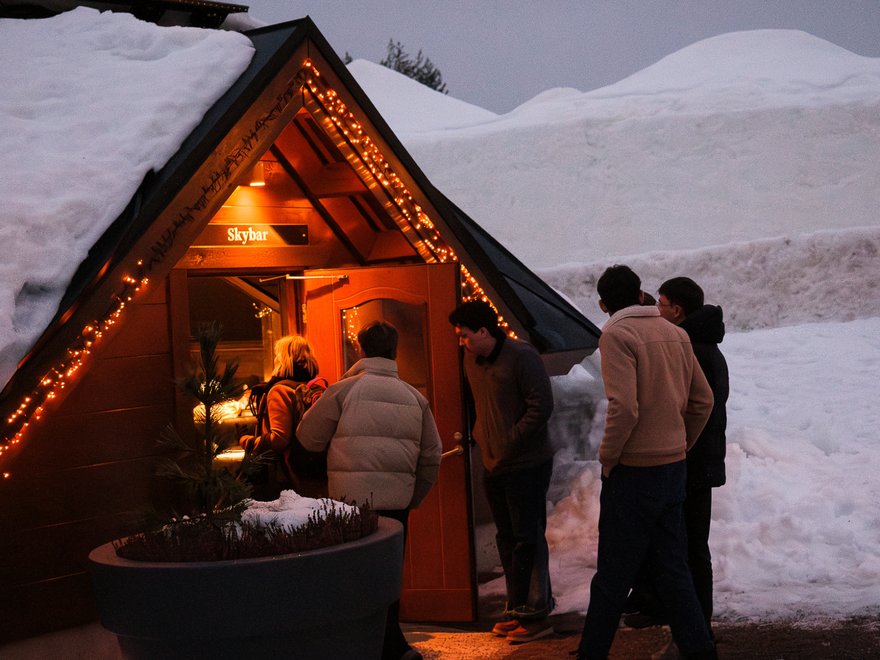
The competition offered students a unique chance to engage with professionals and peers from around the globe and to develop meaningful and innovative solutions
The competition formed part of Arctic Design Week Goes Campus, a programme of networking and panel discussions hosted by the University of Lapland in Rovaniemi, Finland. Chris Thorpe, Head of Programme for Intelligent Mobility at the RCA, attended alongside Mokhtarpour as a guest speaker, contributing to discussions around sustainability, environmental challenges and the growing role of artificial intelligence in design.
For Thorpe, the growing presence of artificial intelligence in design presents both opportunities and challenges. Speaking at the conference, he reflected on conversations with designers from BRP about the risks of relying too heavily on generative tools. “One of the biggest challenges is that AI, if you’re not careful, can push design towards a kind of middle ground of mediocrity,” he says. “It reflects back what’s already been created — a mash-up of existing ideas that can become homogenised and generic.”
Instead, the Intelligent Mobility programme at the RCA encourages students to develop a critical understanding of the technology. “Our approach is to make sure students have a healthy critique of these tools and understand both what they can and can’t do,” Thorpe explains. “It’s important not to use AI as a substitute for skill or design thinking, but as a tool that can genuinely improve the quality of the work.”
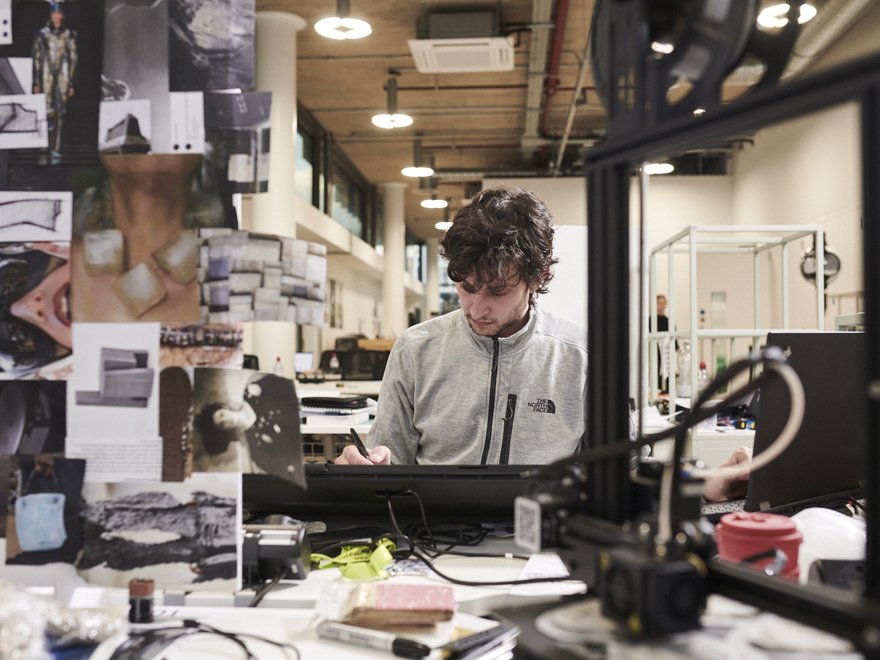
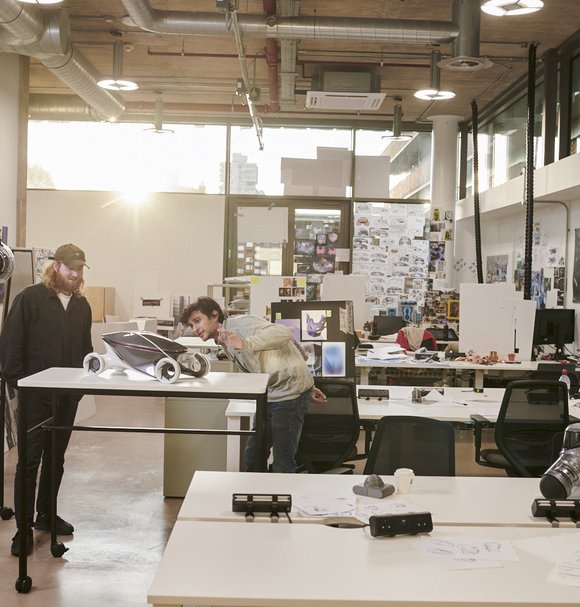
Intelligent Mobility design studio at the RCA
The Intelligent Mobility MA builds on the rich history of vehicle and transport design at the RCA, placing it within the context of rapidly changing social, cultural and technological landscapes. The programme has roots stretching back to the 1960s, and today’s graduates benefit from a long legacy of alumni whose continued engagement helps shape the course’s evolving approach.
For Mokhtarpour, the experience of developing a proposal for BRP provided an opportunity to test his ideas in a real-world context. A self-taught automotive designer from Iran, he comes from an academic background in civil engineering and architecture. “Coming from a country with many limitations, I have progressed step by step through dedication and self-learning,” he says. “The Royal College of Art, being one of the top art and design schools in the world, offers me the opportunity to grow, learn and connect with leading professionals in the field.”
Innovation and originality remain central to the programme’s ethos. Students are encouraged to tackle complex global challenges — from environmental change to new forms of mobility — through speculative thinking, research and experimentation. In this sense, the BRP International Design Challenge highlights the kind of critical and inventive thinking that RCA students are bringing to the future of mobility.
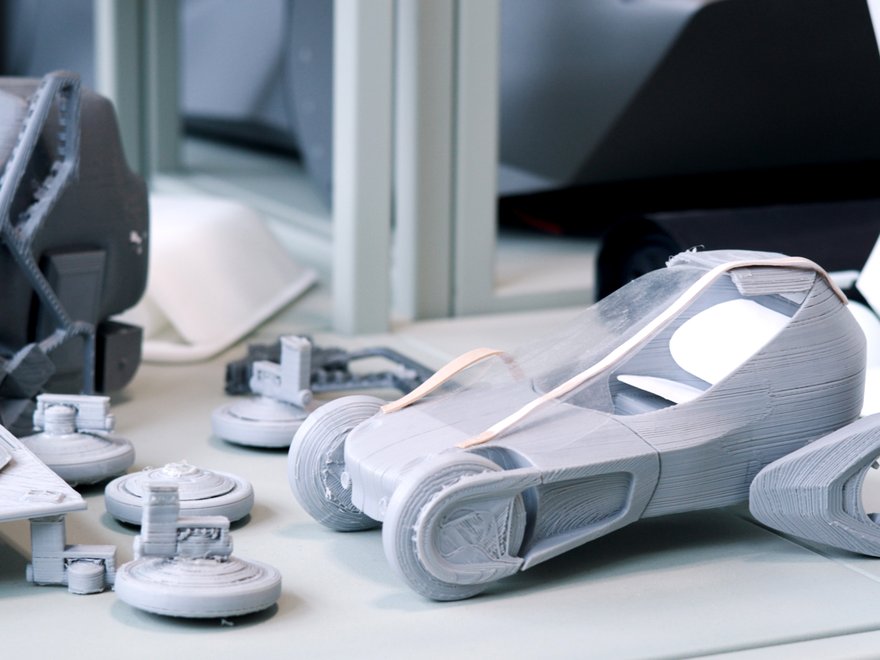
A prototype model created on the Intelligent Mobility course