Key details
Date
- 21 January 2026
Author
- Alexandra Genova
Read time
- 9 minutes
Exploring how art supports healthcare in clinical settings, in communities, and as a way of communicating lived experience.
As health systems increasingly turn to creative practices – from social prescribing to arts programmes embedded in hospitals – a question emerges: what kind of care can art offer that medicine alone cannot?
Across the Royal College of Art, artists, designers and researchers are engaging with art and health not as a clinical intervention, but as a way of recognising, translating and protecting practices of care that often predate the hospital. From intergenerational craft and immersive storytelling to the redesign of healthcare spaces, these projects ask how creative health might support wellbeing without flattening lived experience.
In the latest RCA podcast, this topic is explored in a discussion between Camille Baker, an interdisciplinary digital artist, curator and researcher and Professor of Interactive and Immersive Art in the School of Communication, creative health professional Lottie Barnes, and RCA President and Vice-Chancellor, Christoph Lindner, who ask whether creativity should be an essential part of patient care.
For Mah Rana, a practising artist, researcher and writer working in the fields of contemporary jewellery, creative health and health psychology, the evidence is already clear. “We don’t really have to prove anymore that art is good for your health – the statistics and the evidence are there. The problem is that it’s not yet embedded in everyday thinking in the way exercise is," says Rana. "The ambition is that creativity becomes something people see as essential to wellbeing – not optional. The benefits can be immeasurable, and, as she says, it can change lives.”
In her various policy‑facing roles – including as Director of the Lived Experience Network (LENs), a member of the advisory panel for the National Centre for Creative Health, and part of London Action on Creative Health – Rana has witnessed how this shift is slowly taking place. “It’s still early days, but there is movement. On the surface, hospitals might already have art programmes, but they’re often limited to something very passive – paintings on the wall, background music," she says. "What’s emerging now is a much more active approach, particularly around mental health.”
Art is most commonly encountered in healthcare environments as something decorative: a framed print in a corridor or a radio playing in a waiting room. These gestures are not insignificant, but they rarely reflect the full potential of what creative health can offer. One organisation pushing beyond this limited model is Hospital Rooms, which collaborates with artists, service users and NHS mental‑health units to create artworks and creative programmes for clinical spaces, while actively challenging stigma and advocating for culture and creativity as a human right within mental healthcare. Stephen Felmingham, Head of School of Critical and Cultural Studies at Plymouth College of Art, describes their mission simply: “Hospital Rooms bring art to those most in need of what it can bring: hope, a view of another world and healing.”
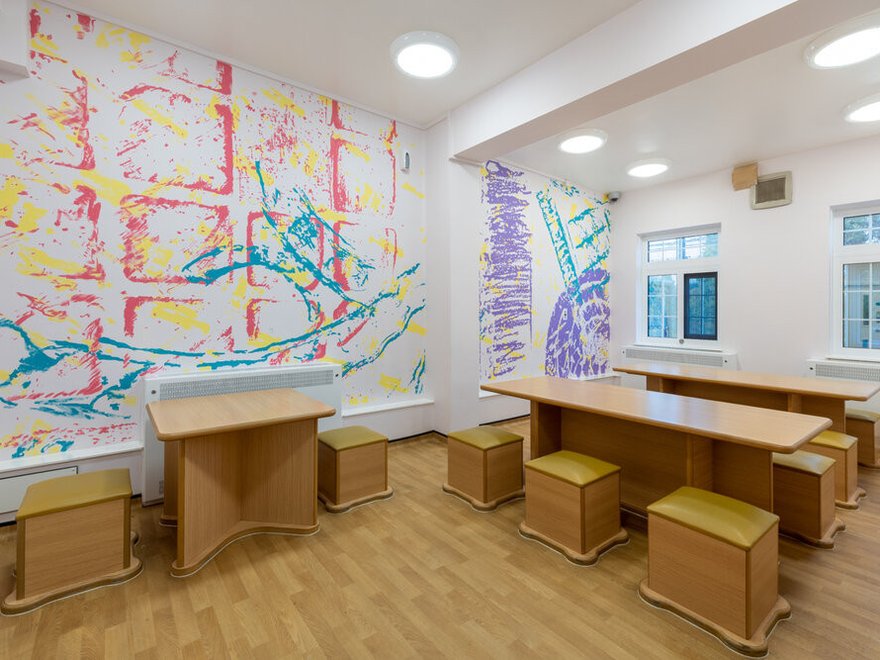
Harold Offeh, Hospital Rooms commission, Croydon Picu dining room, photo by Damien Griffiths courtesy of Hospital Rooms
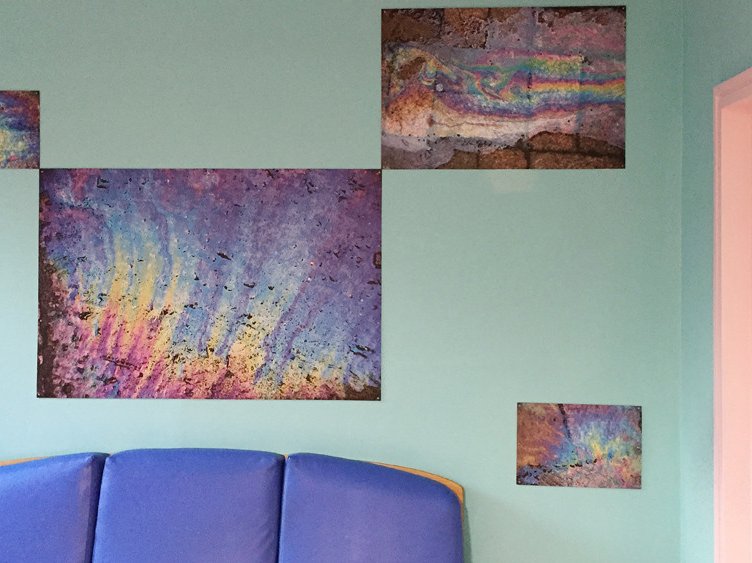
Harold Offeh, Hospital Rooms commission: TV Room, Eileen Skellern 1, Maudsley Hospital Photographic installation, 2018 Photo: Damian Griffiths courtesy Hospital Rooms
The RCA has collaborated with the charity on several projects over the years, including a commission in 2019 with artist and Contemporary Art Practice Head of Programme, Harold Offeh, to work with service users from the Psychiatric Intensive Care Unit at Bethlem Royal Hospital. Offeh described the resulting collaboration as “paying focused attention to the overwhelming possibilities of our external environment.”
Rana brings this approach directly into her teaching. As part of the MFA programme at the RCA, she runs a live project with Hospital Rooms, co‑founded by artists Niamh White and Tim Shaw, where students develop short instructional art films designed to function as accessible creative workshops.
The project has increasingly focused on young people’s mental health in the wake of the pandemic. Hospital Rooms found that teenagers were already watching their existing films online, but that the content was often too long or poorly tailored to their needs. Rana’s students are now working on shorter, more responsive formats, developed in consultation with NHS sites such as St George’s Hospital in Tooting.
Jordan Baseman, a visual artist, filmmaker and Reader in Time-based Media at the Royal College of Art agrees that if done in the right way, presenting art in hospitals can be very effective. He points to CW+, the official charity of Chelsea and Westminster Hospital NHS Foundation Trust, which has been inviting students from the RCA's Sculpture MA and Contemporary Art Practice MA programmes to create digital artworks to be screened at both Chelsea and Westminster and West Middlesex University hospitals for the past ten years, something Baseman, as a Tutor for CAP, has contributed to.
Alongside collaborations like this, CW+ manages what it calls Europe's largest public art collection within a hospital. They feature over 1,800 artworks alongside digital art, music, and workshops, transforming clinical spaces into a vibrant, arts‑infused healing environment. “They’ve shown that it actually reduces the amount of medication people need. It makes people healthier, their recovery is quicker,” says Baseman. “So they put art everywhere – in the waiting rooms, in the hallways, even moving‑image commissions throughout the building. It’s all about distracting people’s attention, in the best possible way.”
Alongside collaborations like this, CAWH manage what they call Europe's largest public art collection within a hospital. They feature over 1,800 artworks alongside digital art, music, and workshops, transforming clinical spaces into a vibrant, arts-infused healing environment. “They’ve shown that it actually reduces the amount of medication people need. It makes people healthier, their recovery is quicker,” says Baseman. “So they put art everywhere – in the waiting rooms, in the hallways, even moving‑image commissions throughout the building. It’s all about distracting people’s attention, in the best possible way.”
For Baseman, this idea of distraction is not trivial, but deeply humane. “It’s the idea of giving people, even momentarily, a way not to be inside their pain or their frustration, like when they’re sitting in a waiting room. That’s what they’re trying to do on a deeper level.” Here, creative health becomes not a visual backdrop to treatment, but part of the environment through which care is experienced.
Yet the principles behind creative health did not originate in hospitals or policy frameworks. They have long existed in community centres, local groups and domestic spaces – often without being named as such. “There are lots of small community groups that have been doing this work for decades," says Rana. "They don’t do it because they’ve read the evidence – they do it because they know, intrinsically, that it’s good. They know it from their own experience, and from what they see in their communities.”
Crucially, she argues, the effectiveness of creative practice depends on personal meaning. “Whether it’s art, walking or gardening, it has to be meaningful to you,” says Rana. “If you don’t have an emotional connection to it, you’re much less likely to take part.” Baseman agrees, and is sceptical of overly formulaic approaches to arts‑based care. “I think it’s really condescending to expect someone who’s living with cancer to feel better for painting a picture,” he says. For him, creativity must be chosen, not prescribed – a form of agency rather than compliance.

Still from Mah Rana's documentary film that accompanies, Knitting With my Mother

When [my mother] was sewing or crafting, her speech production was much more fluid, even memory recall was better. She felt calmer. There’s a rhythm to it” - Mah Rana
Beyond supporting recovery or improving environments, art performs another crucial function in healthcare: it makes illness legible. Statistics can measure outcomes, survival rates and risk factors, but they struggle to communicate what it feels like to be unwell. Artistic practice, by contrast, can articulate the texture of dependency, fear, boredom, rage and vulnerability; the inner landscape of care.
This insight lies at the heart of Rana’s doctoral research, Knitting with My Mother, which explored dementia care through video and interpretative phenomenological analysis. The project grew out of two formative experiences: volunteering at Headway East London, a community centre for adults with brain injuries, and crafting weekly with her mother, who lived at home with Alzheimer’s disease.
At Headway, Rana noticed that while speech and cognition were often impaired, embodied knowledge remained. “Even though cognition might be impaired, or speech production might be difficult, other skills that they had learned prior to their brain injury were still there.” At home, she observed similar changes. “When [my mother] was sewing or crafting, her speech production was much more fluid, even memory recall was better. She felt calmer. There’s a rhythm to it.”
Rana filmed their sessions and when the short documentary was later screened at festivals and cinemas, audiences often failed to realise that her mother had dementia at all. Indeed, the research challenged dominant medical assumptions. “What the body knows, it still retains, to a certain extent,” shes says. “What I saw was that it is even possible to learn new skills with dementia – which doesn’t fit the biomedical model. That’s why I’m interested in making and materiality in particular.”
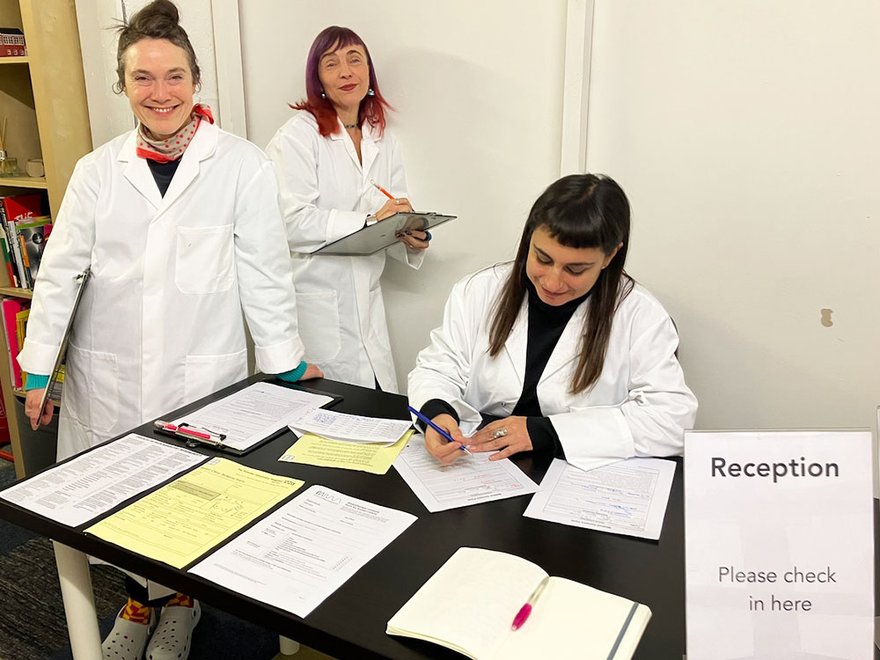
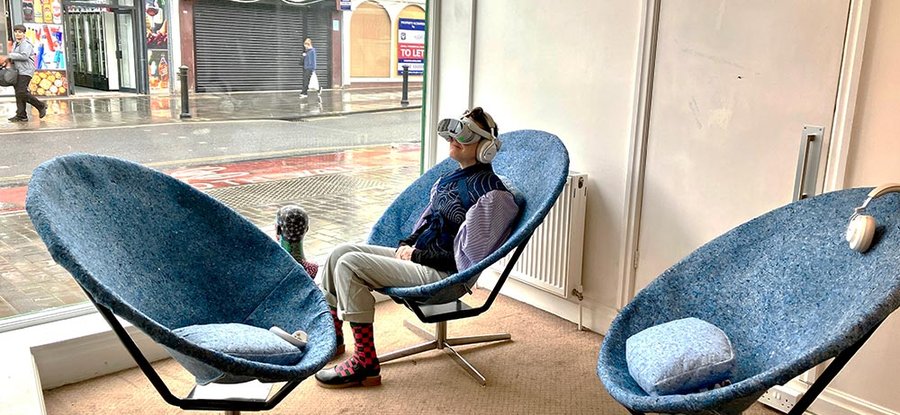
A photo taken during the performance of Mammary Mountain VR experience
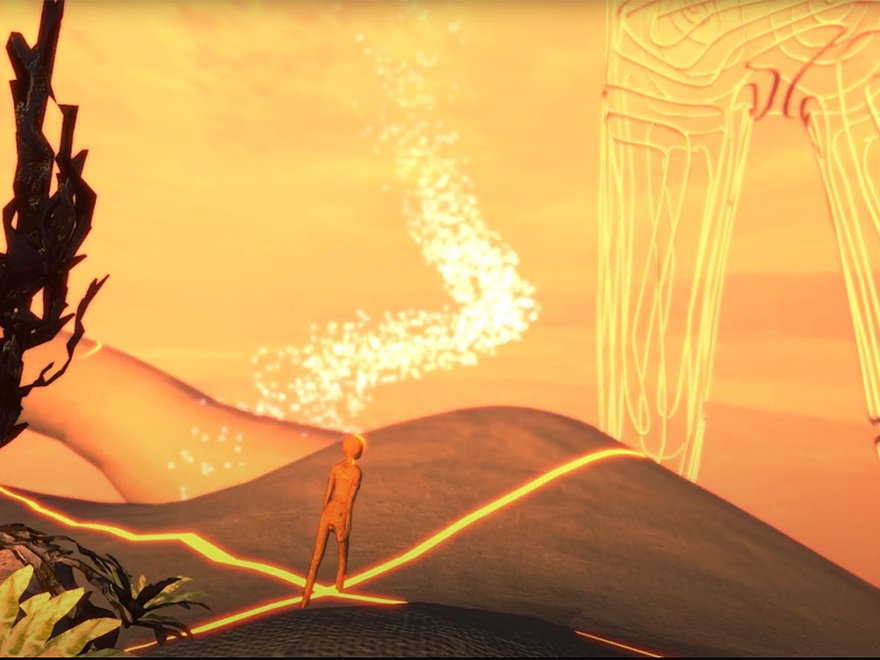
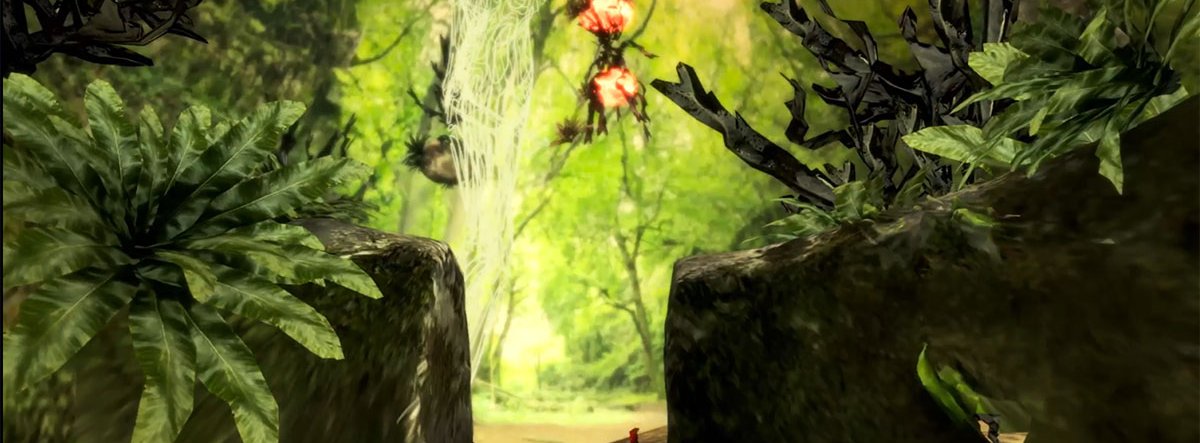
Still from the Mammary Mountain VR experience by Camille Baker, Tara Baoth Mooney and Maf’j Alvarez
Camille Baker's work also explores the potential of art to document lived experience of healthcare, through the lens of immersive technology. Her VR project Mammary Mountain, made in collaboration with Tara Baoth Mooney and Maf’j Alvarez, is a performative, intimate exploration of breast‑cancer treatment, built from patient testimonies and staged as a navigable landscape. The work has been shown everywhere from galleries and film festivals to shopping centres, reaching audiences far beyond traditional cultural settings.
One visitor, newly out of treatment, arrived furious. “She said, ‘I’ve just finished my treatment and it was the worst thing ever, and I can’t believe the NHS is allowed to do this to people.’ Then she saw the piece and came out and said, ‘Oh… I hadn’t realised that it could get worse.’ In a strange way she felt validated. It was like therapy.” Other survivors recognised how the project communicated what they were unable to during treatment. “A lot of people are too weak to talk to their loved ones, because they’re worried they’ll end up taking care of other people’s feelings – this reverse kind of caretaking,” says Baker. “We were able to say what they didn’t have the energy to say.” In this sense, art does not merely accompany healthcare; it becomes a form of testimony.
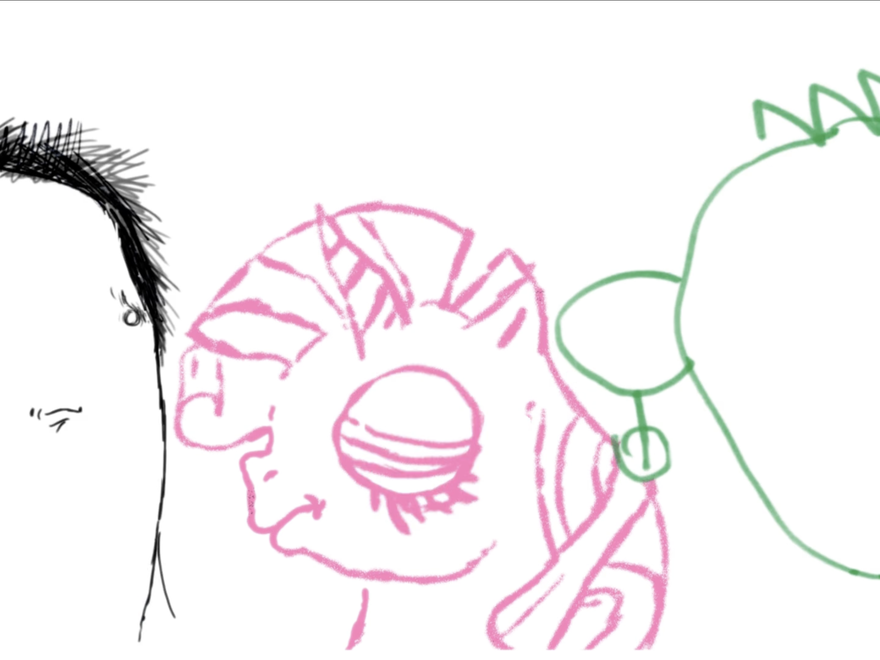
Baseman has explored this idea in his own practice. A Different Kind of Different, an animated short film released in 2021, traces the psychological impact of breast cancer from the shock of diagnosis and loss to a tentative, hard‑won acceptance. The film centres on the transformative moment of mastectomy tattoos – punctured by the line, “Holy fucking crap!” – as a way of reclaiming the body after medical intervention. Premiering through a series of online screenings and illustrated talks during the pandemic, the work offered viewers an intimate account of how treatment reshapes identity as much as anatomy, articulating dimensions of the illness experience that rarely surface in clinical language.
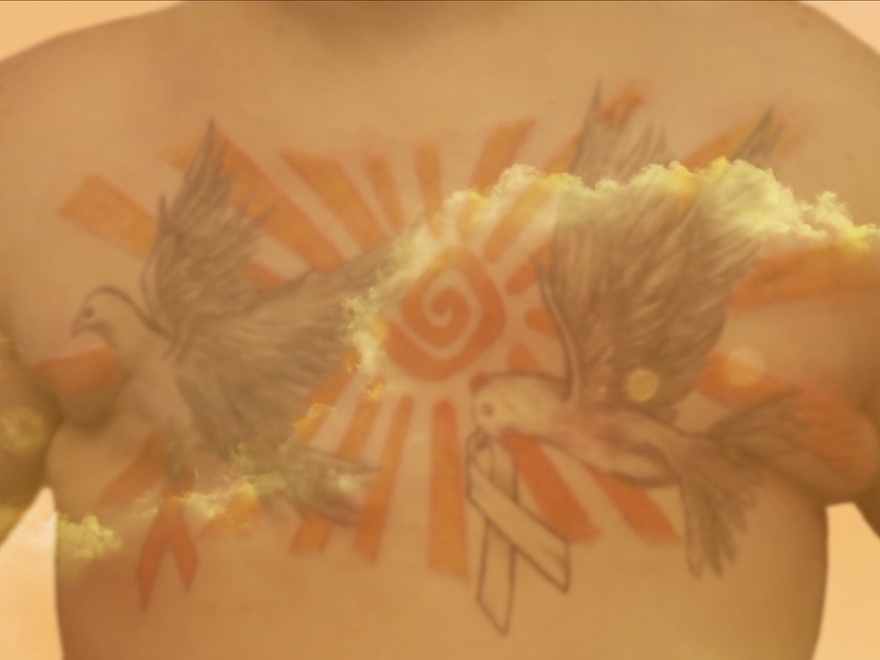
Still from A Different Kind of Different animated film, directed by Jordan Baseman
Together, these practices point to a broader role for creativity in how care is imagined and delivered – not as a replacement for medicine, but as a parallel system of attention, meaning and human connection.
Baker describes it as a necessary counterweight to clinical logic.“There is a very strong role for art in healthcare settings – not as an antidote, but as a support to the clinical context, and as a spiritual, holistic dimension that just isn’t otherwise possible. Maybe the clinical world doesn’t value it that much yet, but more and more people are telling them that they need to – that this is part of the healthcare journey.”
Baseman, meanwhile, frames its value more simply. “I don’t care what people say – art can really change the world. It certainly changes my world every day. It helps me think about things that are more important. It takes me somewhere else that I need to go.”
In hospitals, in community centres and in living rooms, creative practices continue to do what medicine often cannot: hold complexity, honour vulnerability, and make space for experiences that cannot be articulated through data.