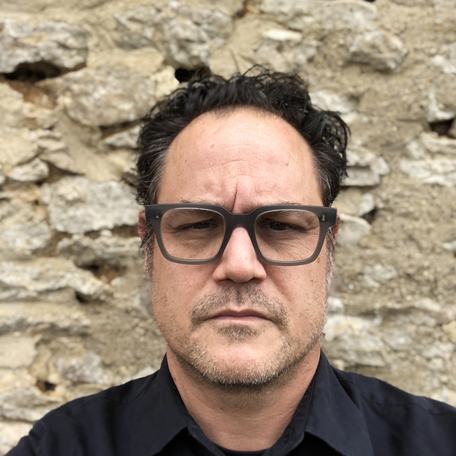
Dr Mark Campbell
- Reader in Architecture and Media, Senior Tutor (Research)
- Architecture MArch (ARB/RIBA)
Mark Campbell is a Reader in Architecture and Media in the School of Architecture at the RCA and a Senior Tutor (Research) on the MA Architecture programme. His research operates at the intersections of art, architecture, and media histories. In particular, his recent work explores the use and consequences of image and time–based media in creating and critically–informing architectural space.
Dr Campbell trained and practiced as an architect in New Zealand, before receiving his MA and PhD from Princeton University as a Fulbright Scholar. His dissertation was supervised by Professors Beatriz Colomina and Anthony Vidler and explored the collision of hypochondria and aestheticism in early twentieth-century architectural culture. While in the United States, Campbell taught at Princeton University and the Irwin S. Chanin School of Architecture at the Cooper Union for the Advancement of Arts and Science, where he also served as Publications Manager at the Cooper Archive, working on the reissue of key works by John Hedjuk and Lebbeus Woods.
Prior to joining the RCA, Campbell was an invited faculty member at the Architectural Association, where he predominantly taught in the Graduate and Diploma schools, and a Visiting Professor of Architecture at Southeast University, Nanjing. He is a former editor of the Journal of Architecture (RIBA) and managing editor of Grey Room (MIT), and a current peer review member of the UK Arts and Humanities Research Council (AHRC) and UK Economic and Social Research Council (ESRC).
Campbell is the author of four academic monographs: Paradise Lost (2016), which records and analyses the photogenicity of spent architectural developments; The Parallax View (2024), which examines the creation of paranoiac, conspiratorial space through a mediatized, cinematographic gaze; Bernard Berenson: Connoisseurship and the Art Market (2026), a critical biography that discusses the financial determination and curatorial collection of major artworks; and Architecture as a Frail, Literary Object (2026), which considers the motives, ambitions, and malaprops of writing architectural history during the early-1900s. He is the author of the forthcoming contracted monographs Dawn of the Dead (2028) and Post–Architectural Landscapes of the USA (2029). Together with Professor Ines Weizman and Dr M’hamad Safa, Campbell is a co–founder of the 'Sonic Architecture' research collective at the RCA, which investigates architectural histories through sound and is an affiliate of the college–wide inter–disciplinary research group ‘Voicing Sound.’
More information on Campbell’s research work is available on the School of Architecture Research website.
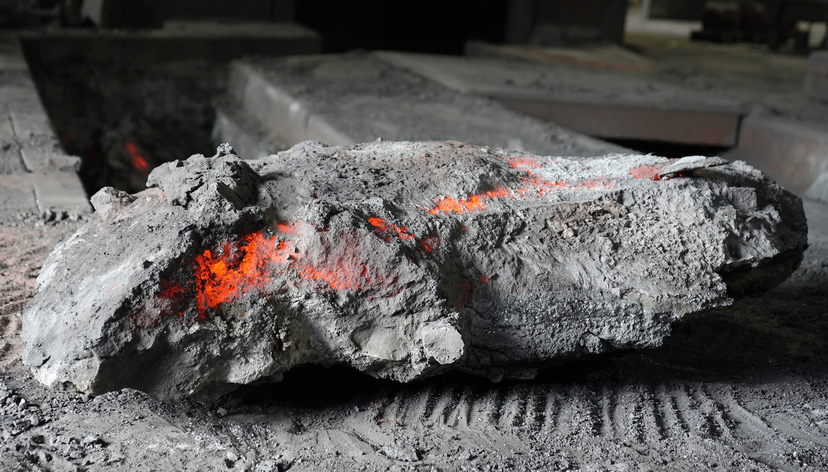
Gallery
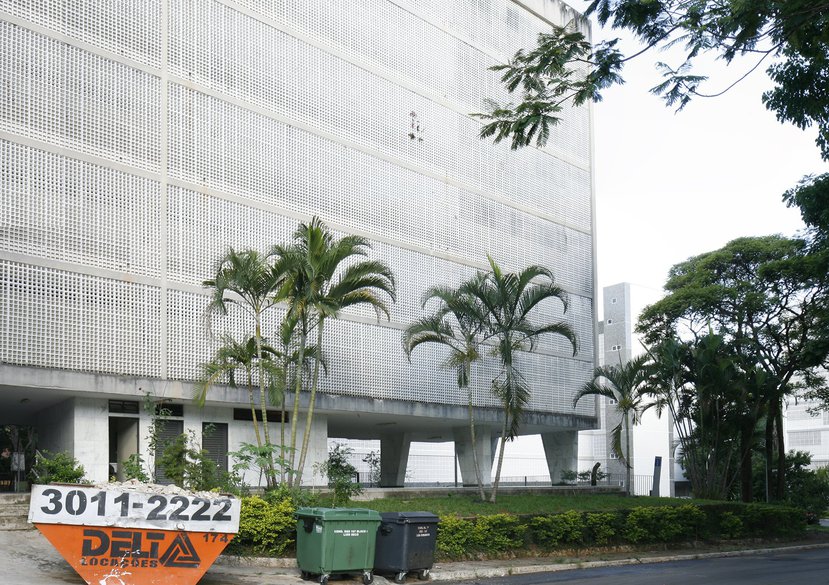
More information
Publications
Publications:
Campbell, M. (2029), Post–Architectural Landscapes of the USA. New York: Routledge USA (contracted)
Campbell, M. (2028) Dawn of the Dead. London: Bloomsbury / BFI Film Classics (contracted)
Campbell, M. (2026) Bernard Berenson and the Acquisition of Taste. London: Lund Humphries.
Campbell, M. (2026) Architecture as a Frail, Literary Object. London: Routledge.
Campbell, M. (2024) The Parallax View. London: Bloomsbury / BFI Film Classics.
Campbell, M. (2016) Paradise Lost. London: Architectural Association Publications.
Book Chapters:
Campbell, M. (2016) 'The Overlook' in J. Aragüez, ed. The Building. Zurich: Lars Müller.
Campbell, M. (2014) 'Unreal Estates' in J. Self, ed. Real Estates: Property and Ownership in Neoliberal Debt Economies. London: Bedford Press.
Campbell, M. (2013) 'TVs' in M. Campbell, ed., Guns, Household Objects, Road Trips, Cars, Bodies, Acts of Devotion & TVs. London: Architectural Association.
Campbell, M. (2012) 'Choice by Design' in POA 1-22. London: Bedford Press.
Campbell, M. (2012) 'Gleaming Toys' in H. Furjan, ed. VIA: Dirt. Cambridge: MIT Press.