Key details
Date
- 18 March 2026
Author
- Alexandra Genova
Read time
- 3 minutes
Somaiya Afzal brings her background in industrial design and technology to the Design Products MA. Here, she reflects on learning to embrace uncertainty and the joys of being back in the workshop.
I believe that to be a good designer you must stay curious. Coming from an Industrial Design and Technology background, studying Design Products at the Royal College of Art has allowed me to continue developing that curiosity whilst shaping my design practice. At the RCA my practice grows through conversation, experimentation and constant questioning. During my time here, a full module dedicated to experimentation allowed me to push beyond my boundaries and explore ideas more freely.
Most days begin in the studio, a shared space where people from all over the world and from different backgrounds — whether that is design, engineering, or computer science — work alongside one another. It becomes a place for conversation and exchange, often spontaneously. Because of this, the studio becomes less about working individually and more about developing ideas collectively.
“Instead of rushing towards the final outcome, there is an emphasis on iteration and experimentation, even if you fail.”
Design Products MA
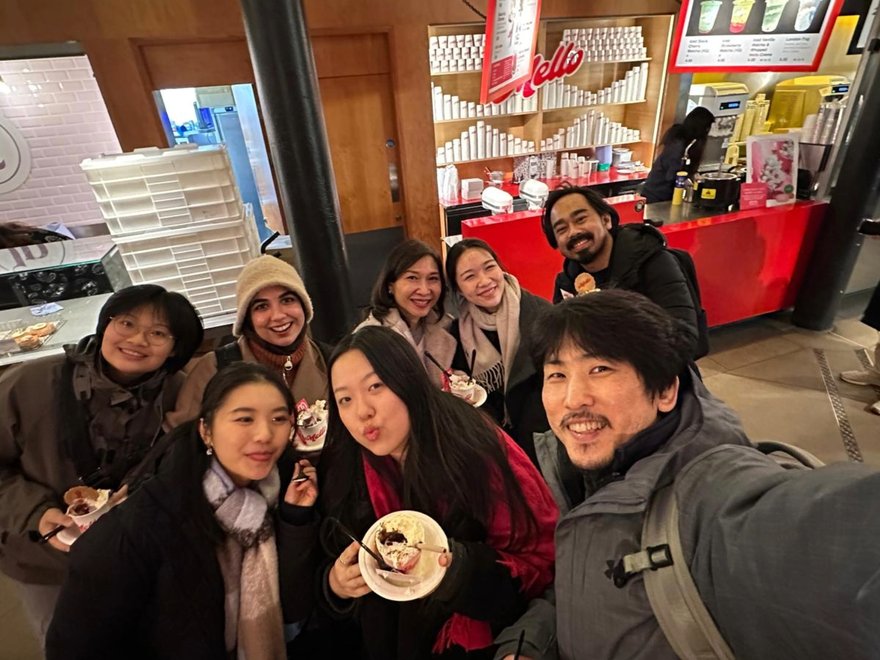
Somaiya Afzal spends time with RCA friends in London
Teaching in Design Products often happens through lectures, tutorials and crits. Lectures regularly feature guest speakers, whether RCA alumni or visiting practitioners, who share insights into their work and practice. Tutorials and Crits provide different but equally valuable opportunities for feedback. Whether presenting your work to a group of peers during a crit or discussing it in a one to one tutorial, both environments encourage you to critically think about your project. You are often asked questions you may not have considered before, and most importantly, you must be able to explain the reasoning behind the choices that inform your design decisions.
One thing I have continued to develop at the RCA is becoming comfortable with uncertainty. At the beginning of a project I often do not know what the final outcome will be. Instead of rushing towards the final outcome, there is an emphasis on iteration and experimentation, even if you fail.
Sometimes a project may not fully come to fruition due to time constraints, but there is encouragement to revisit and develop ideas further. The RCA also provides opportunities to work in multidisciplinary teams. One example that I enjoyed was the Grand Challenge, a one month programme where students from different design disciplines collaborate to respond to a theme. This year’s theme was “Bettermeant,” and my team focused on sustainability and materials. At the end of the project we had the opportunity to connect with representatives from Holland & Barrett, who offered valuable feedback on how the project could develop further. Experiences like this provide insight into how design operates within professional contexts.
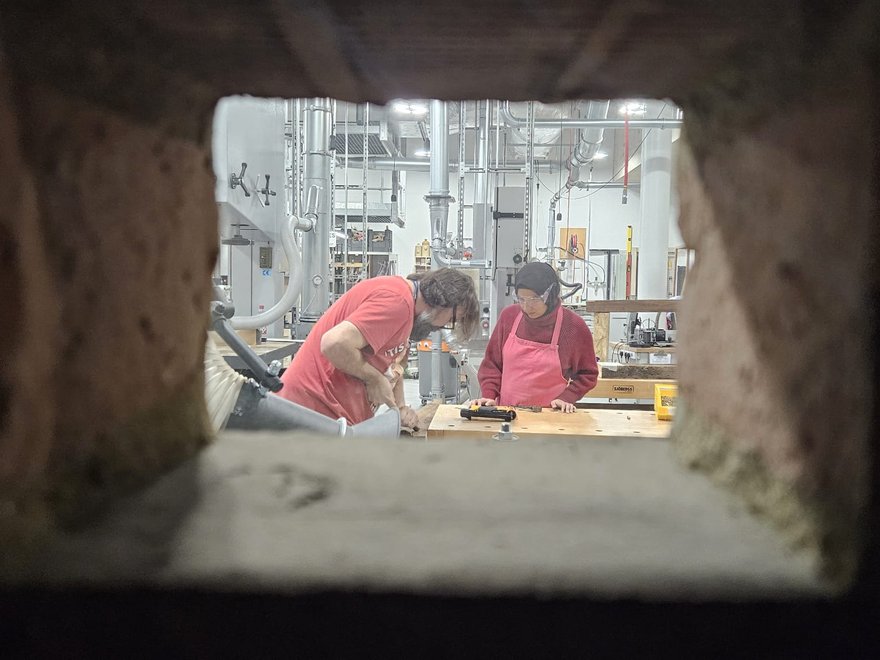
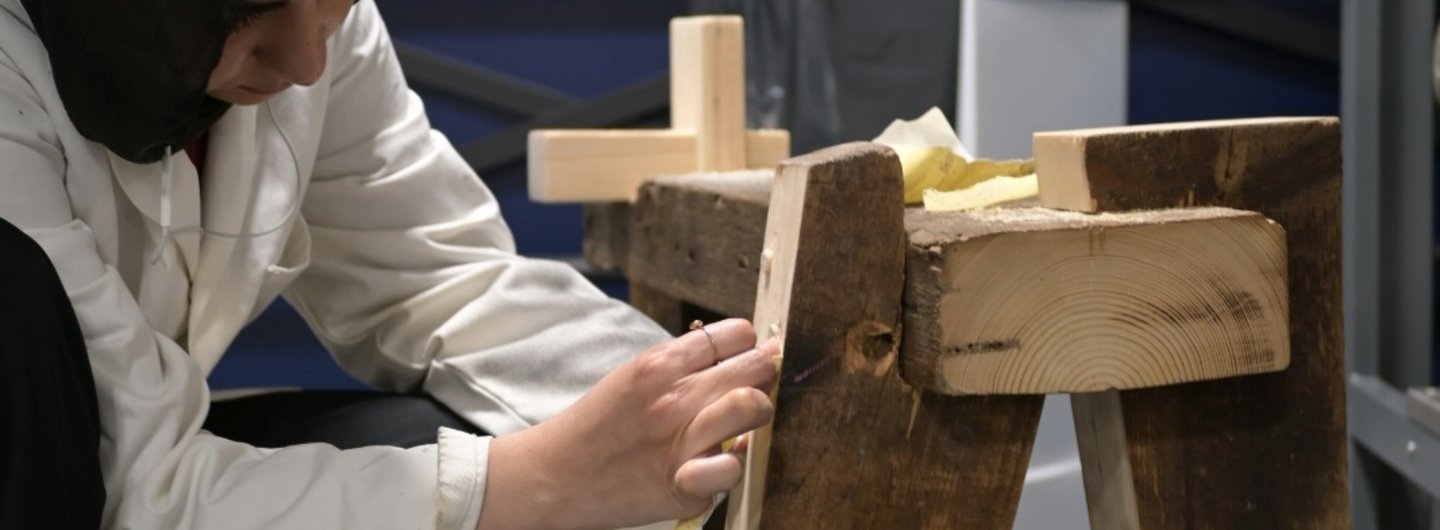
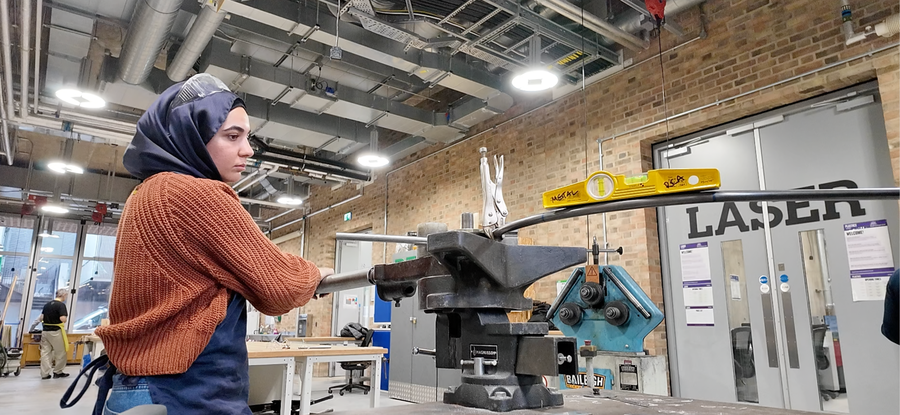
Somaiya Afzal has loved returning to "hands-on making" in the RCA studios
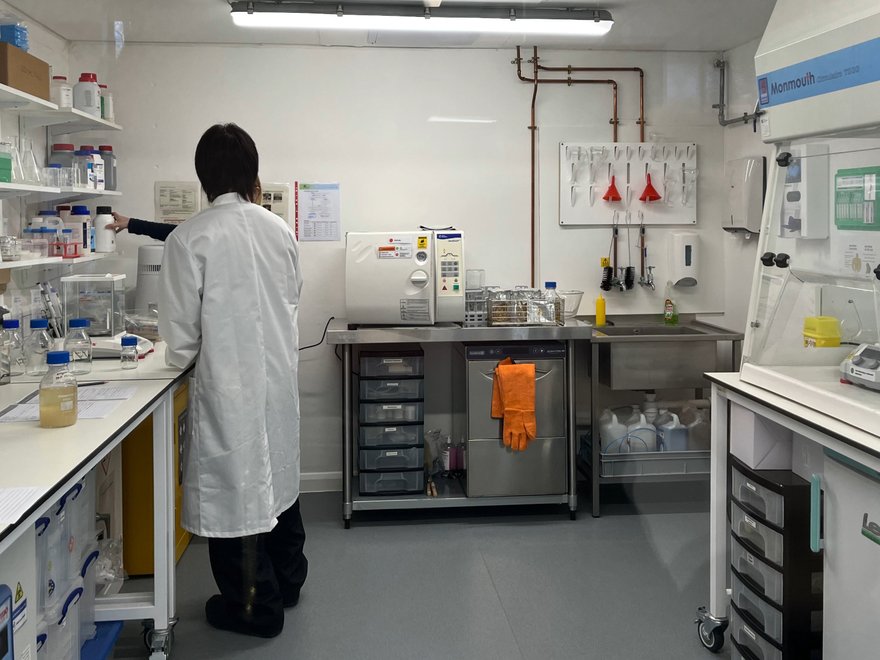
Fellow Design Products MA students in the BioLab
“[My] experience is not only about developing individual projects, but also about shaping the communities and conversations that surround them.”
Design Products MA
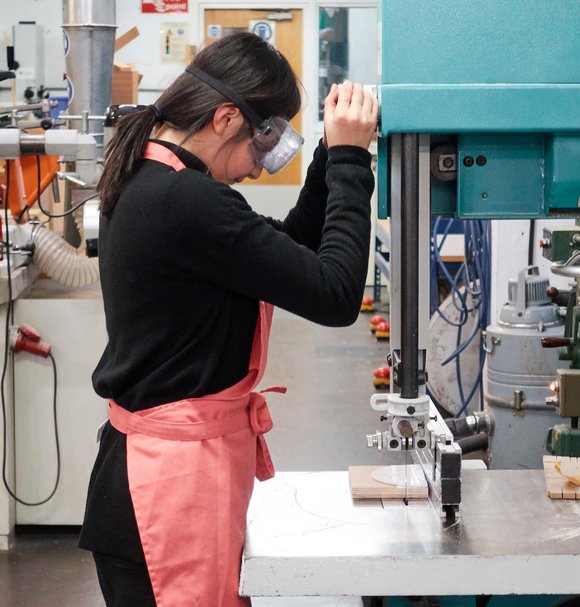
One of my favourite aspects of studying at the RCA is the access to workshops and facilities. It has been a long time since I have worked in a workshop environment, but as someone who enjoys making things by hand, the opportunity to learn from technicians and return to hands-on making has been incredibly rewarding.
My Individual Research Project explores an area I have been interested in for a long time but had not previously studied in depth: Biodesign and Regenerative design. As the project develops, I expect to spend more time experimenting in the Bio Lab.
Outside of the studio, I founded the RCA Muslim Creative Society and currently serve as its president. Recently we had the opportunity to collaborate with the Students’ Union and the School of Architecture to host the second ever Iftar at the RCA. It was a rewarding moment where students, staff and friends came together to break iftar - whether they were fasting or simply there to support the Muslim community.
For me, this reflects something important about studying at the RCA. The experience is not only about developing individual projects, but also about shaping the communities and conversations that surround them. It is not only about creating outcomes, but enjoying the journey that comes with the process of being in such an environment.
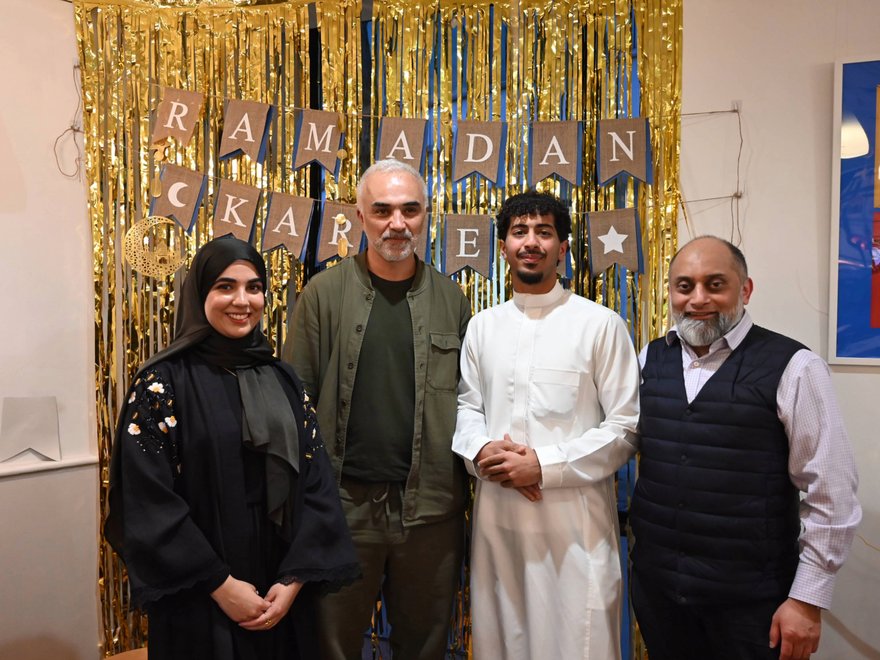
Somaiya Afzal founded RCA Muslim Creative Society. Credit: Hinna Khan