Key details
Date
- 2 February 2026
Read time
- 3 minutes
Varun Bisht moved from India to study Design Futures at the RCA. Here, he reflects on his journey — from receiving his offer letter to finding his feet in London.
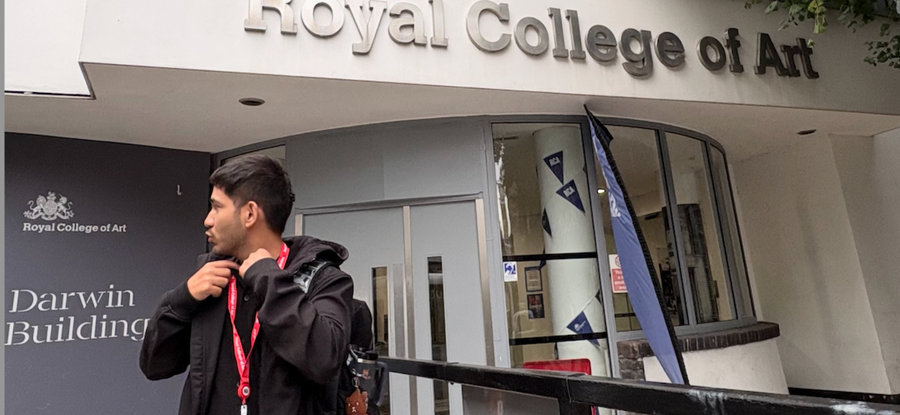
I applied to the Royal College of Art in early January, with just one day to spare before the Round 1 deadline. As an international applicant, the decision felt urgent and uncertain, driven more by instinct than certainty. I chose the RCA because it represented a way of thinking about design that went beyond polished outcomes—one rooted in questioning, experimentation, and critical authorship. Submitting the application felt less like completing a form and more like committing to a possible future.
When the offer email arrived a few weeks later, I was sitting in my office cafeteria in India. I remember hesitating before opening it, preparing myself for disappointment. Instead, relief arrived first, followed quickly by disbelief. I reread the email several times and asked my sister to confirm that I had understood it correctly. But that moment of joy was brief; almost immediately, practical concerns surfaced—finances, visas, and the reality of moving countries alone. As an international student, acceptance is only the beginning of the process.
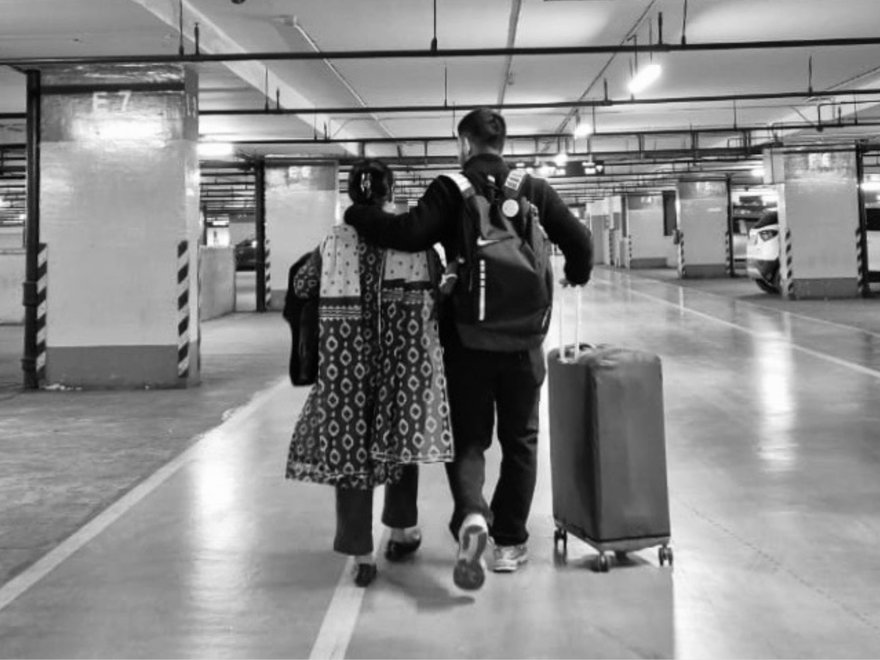
"Leaving India after 25 years—leaving my parents, routines, and familiarity—was far heavier than I expected." - Bisht
The months that followed were emotionally uneven. There were moments of confidence when things progressed smoothly, and moments of stress when nothing felt certain. Leaving India after 25 years—leaving my parents, routines, and familiarity—was far heavier than I expected. When my visa was finally approved, I booked my flight for the 22nd of August. Excitement and grief coexisted; the opportunity ahead was undeniable, but so was the weight of departure.
The flight to London was long and sleepless, filled with anxieties shaped by stories and second-hand advice. Some of those anxieties dissolved quickly: immigration, which many had warned me about, was surprisingly smooth. London welcomed me with a bright, sunny day. I stayed with my cousin initially, and that familiarity provided stability during an otherwise disorientating transition. For an international student, even one anchor can make a difference.
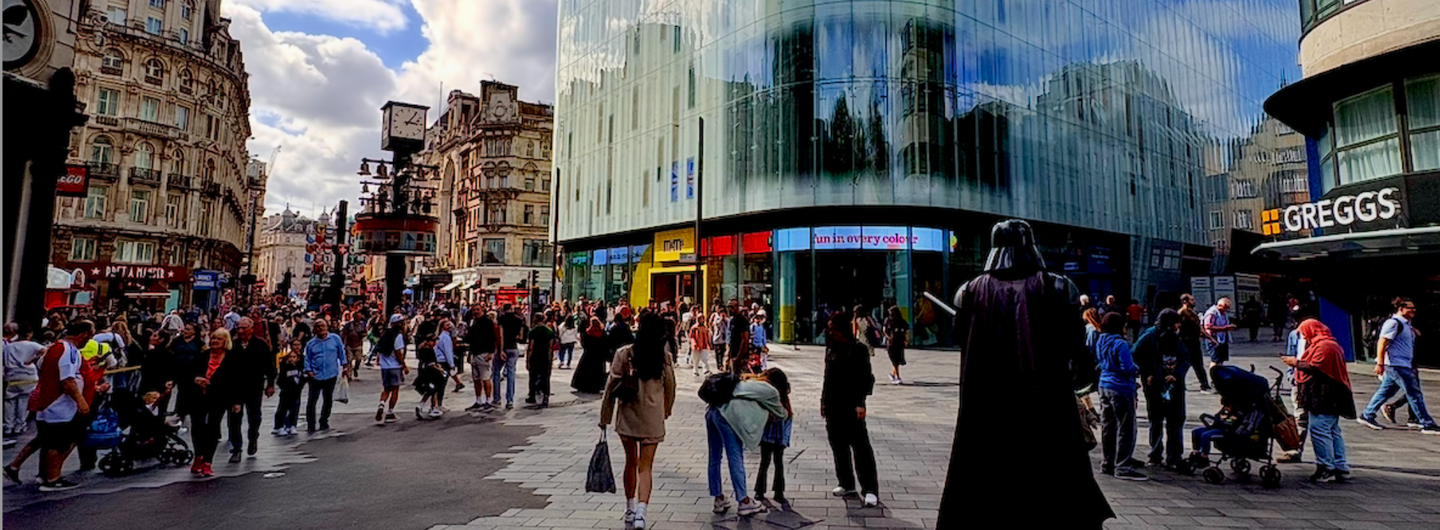
My first week was spent navigating systems: buying a SIM card, opening a bank account, registering with the NHS, applying for a National Insurance number, and arranging a Student Oyster card. None of this was difficult, but all of it was unfamiliar. Each completed task made the city feel slightly more manageable. As more students arrived, the experience became less isolating. Walking through central London with a course mate—from Soho to Trafalgar Square and down to the Embankment—was the first moment the city felt liveable rather than overwhelming.
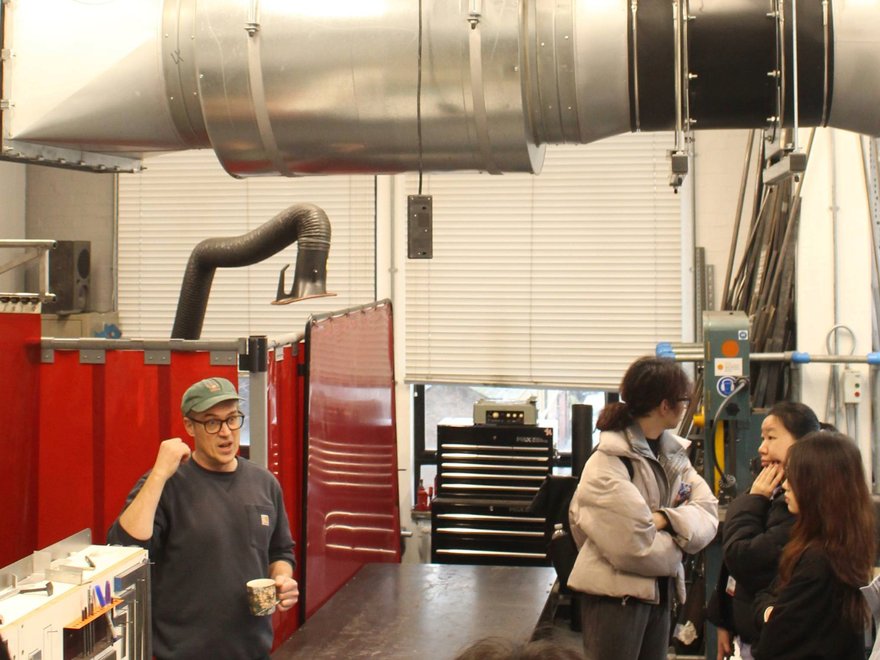
"The RCA felt open and welcoming, supported by student-led activities and a course structure that encouraged learning through making." - Bisht
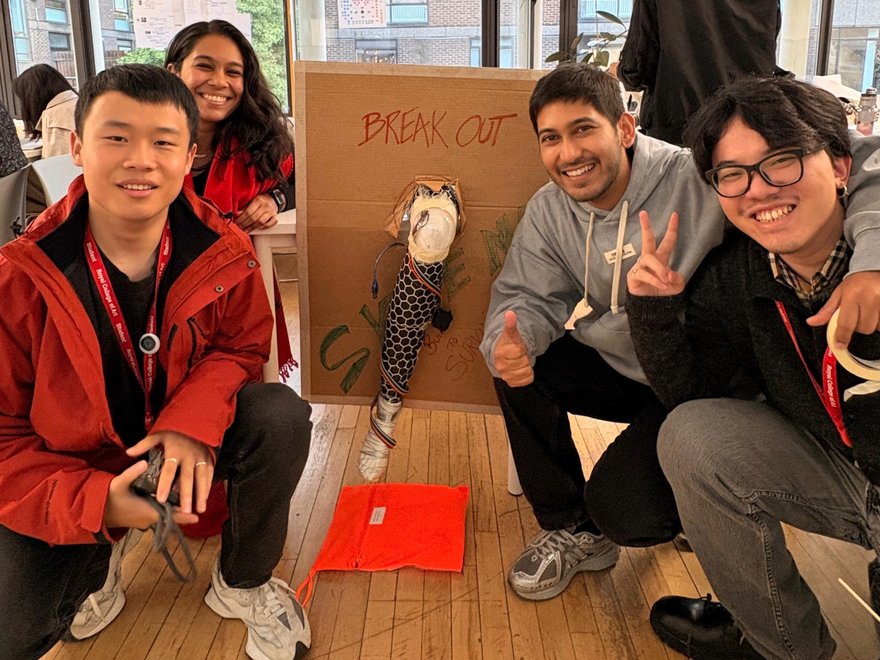
"Meeting my cohort, teachers, and seeing the studio space grounded me." - Bisht
Induction week at the RCA arrived with its own challenge: a tube strike that made reaching South Kensington unexpectedly stressful. Still, meeting my cohort, teachers, and seeing the studio space grounded me. The RCA felt open and welcoming, supported by student-led activities and a course structure that encouraged learning through making.
What I did not anticipate was how much of the adjustment would happen beyond the classroom. Arriving at the RCA as an international student is not a single moment of arrival—it is a gradual process of learning how to exist between certainty and uncertainty. Somewhere between navigating a new city, sharing studio space, and learning to be comfortable with not knowing, I began to understand that this unease is not a barrier to learning, but part of it.
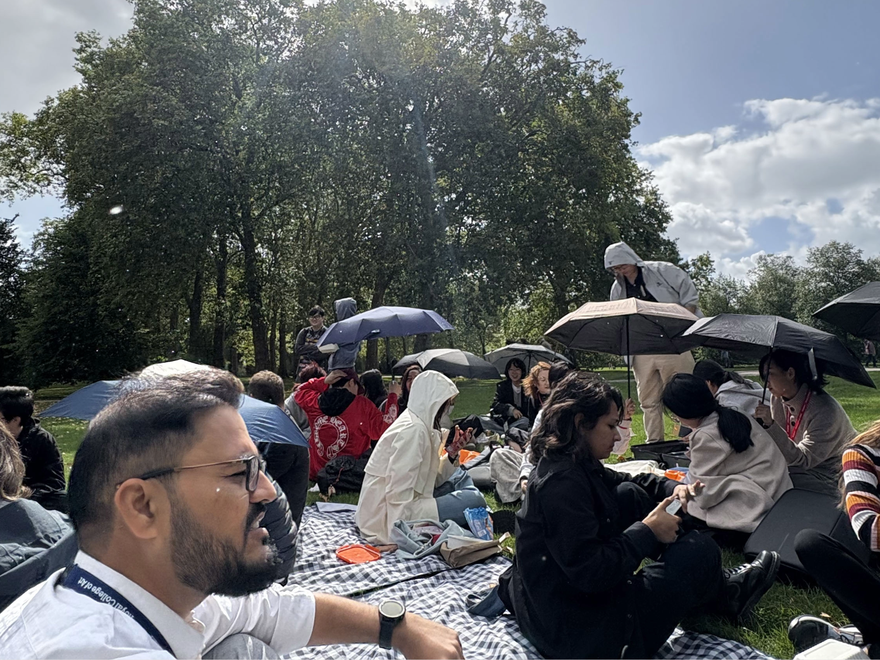
Bisht's cohort enjoy a picnic in a London park