Key details
Date
- 12 May 2026
Author
- Alexandra Genova
Read time
- 5 minutes
The Innovation Design Engineering alumna and Journee Rentals co-founder discusses her foundational years at the RCA and why building something 'real' is important for designers early on.
Could you tell us a bit about your current practice and what you’ve been working on recently?
I've joined my family back in the US as a co-founder and head of design and marketing at Journee Rentals, a national platform for electric, low-speed vehicle rentals (aka golf carts!). We're building the infrastructure, brand, and product experience on top of the expertise of STAR EV from the ground up, which means my days are split between investor storytelling, consumer-facing design for the platform and vehicle experience, marketing, and operator tools for our rental partners. We have over 21 rental partners across more than 10 states in the US and are actively growing day by day. It's an exciting time!
Your work often looks at how emerging technologies intersect with everyday experience. What kinds of questions or problems tend to drive your projects?
I'm usually drawn to the friction where a technology exists but the experience of it feels hard or exclusive. I tend to ask: who is this actually for, how does it embrace their needs, and how does it make their experience exceptionally easy and magical? These questions have followed me from interactive tools at university to designing North Star products at Special Projects, to what I'm doing now in mobility. The technology is rarely the barrier. The barrier is usually assumptions baked in at the design stage about who the user is.
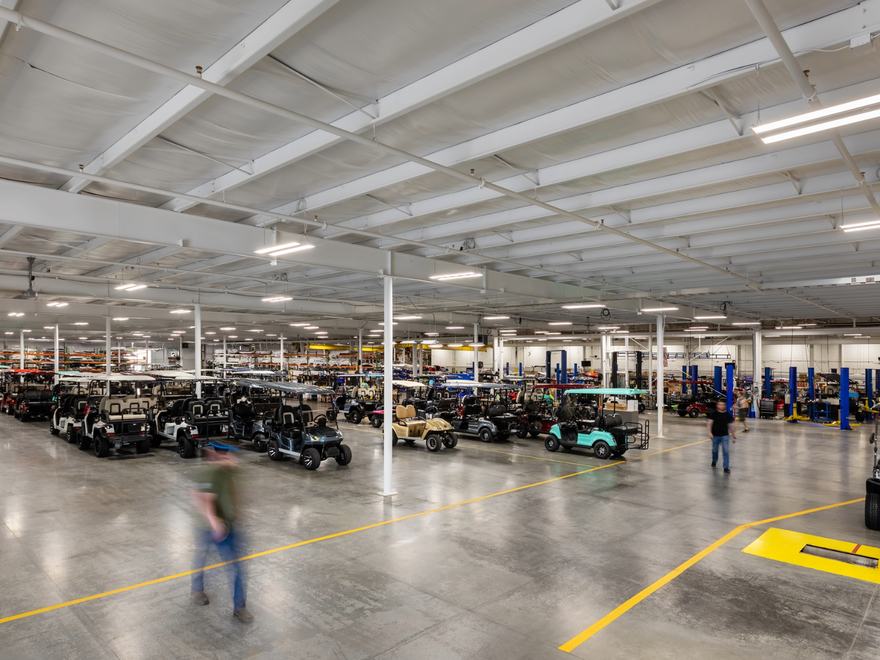
Jenny Hu is the co-founder and head of design and marketing at Journee Rentals, a national platform for electric, low-speed vehicle rentals.

Journee Rentals, conceived by Jenny Hu, has over 21 rental partners across more than 10 states in the US.
One of your RCA projects, Squiggle Sculpt, explored making 3D modelling more accessible. What sparked that idea and what did the project reveal to you about creativity and technology?
Squiggle Sculpt came from watching people freeze up in front of 3D modelling software. There's this moment where someone has a clear creative vision, they open the tool, and the upskilling needed kills it. The learning curve is so steep that people start doubting their idea instead of the software. I wanted to know what ML (then in its early stages!) + 3D creation could look like if you started from intuition rather than technical literacy. What the project revealed was that the medium shapes the imagination. When you lower the barrier to entry, you don't get worse work, you get different work. Often more surprising, and more fun.
Accessibility and approachability seem to be important themes in your work. Why do you think it’s important to design tools that enable more people to participate in making and creating?
Because the tools we have bind our actions and ideas.
You’ve worked across research labs and industry, including roles connected to companies like Google and Microsoft. How have those experiences shaped the way you approach design today?
Each place has had its own unique qualities. Research enables high-level thinking and expanding 'what ifs' for designing across contexts and interactions. Developing products forces you to crystallize each step of the user experience and how those steps relate to business and operational needs. I'm fortunate to have worked in both and can pull from those experiences as I build.
“Build something real as early as you can. Don't wait until you feel ready.”
Designer, researcher and IDE MA alumna
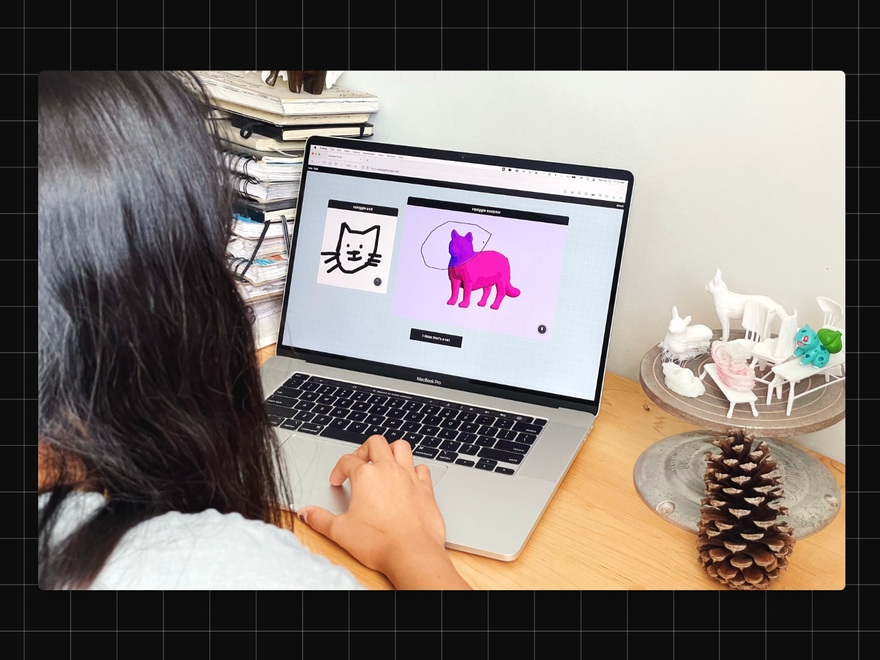
Jenny Hu's RCA project, Squiggle Sculpt, explored making 3D modelling more accessible.
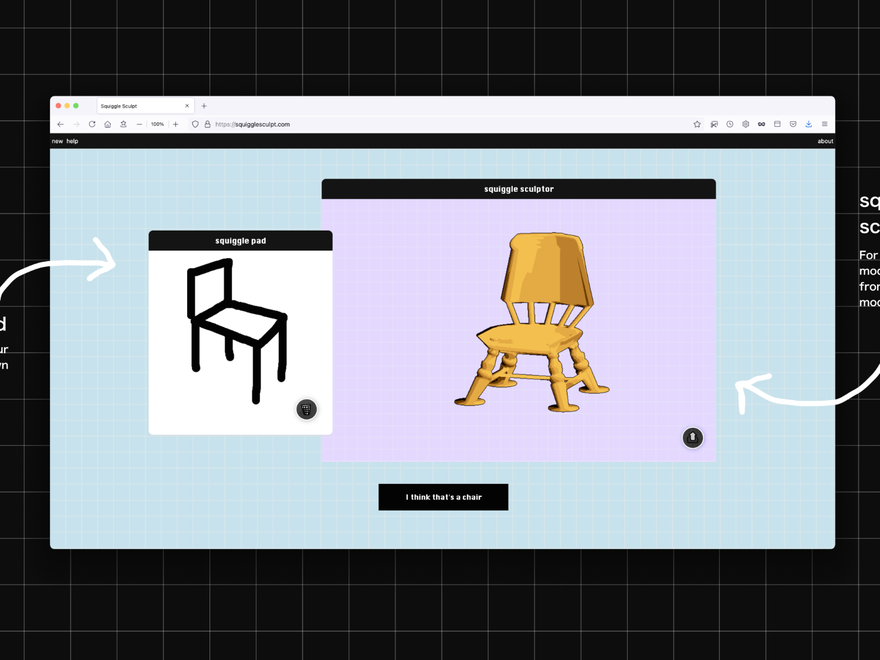
"Squiggle Sculpt came from watching people freeze up in front of 3D modelling software." - Jenny Hu
You studied Innovation Design Engineering at the RCA and Imperial. What first drew you to the programme and what were you hoping to explore during your time there?
I was drawn to IDE because it refused to let you pick a lane. It embraced the fact that work encompassing both engineering and design can be the most transformative for how we live day to day and on a societal level.
How did working across design, engineering and research influence the way you approach a project?
You learn to move between and translate across the three worlds of design, engineering, and research. That's a skill I've used constantly, whether it was in the context of a startup, a research group, or as a designer in a company. Building a company means talking to engineers, investors, operators, and customers, often in the same day. Being able to shift registers without losing the thread is a skill honed during IDE, maybe more than any specific technical skill.
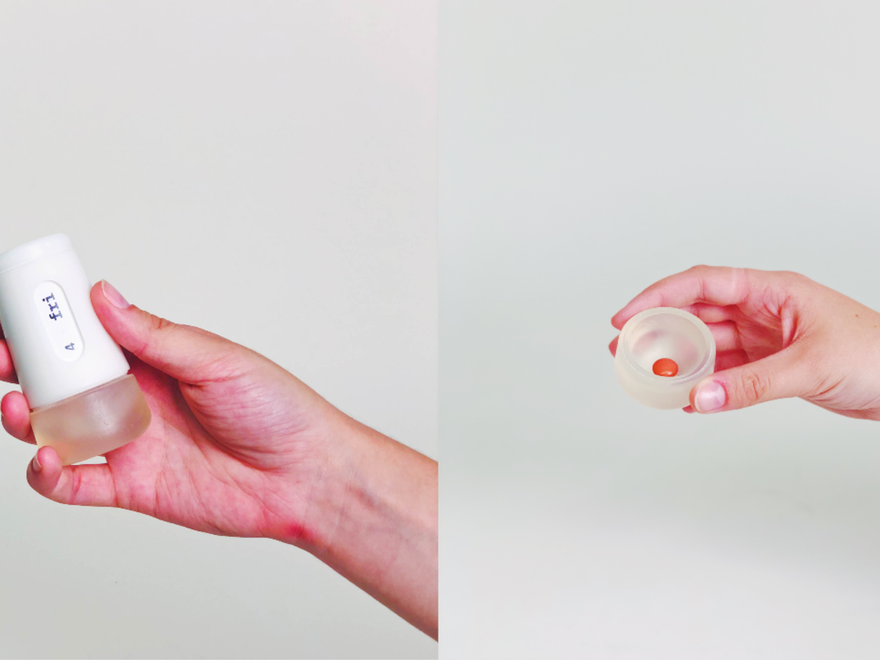
ARA - conceived by Jenny Hu - is a hybrid project of industrial design and UX exploring an alternative perspective and use of the contemporary birth control pill.
“I was drawn to Innovation Design Engineering because it refused to let you pick a lane.”
Designer, researcher and IDE MA alumna
Looking back, are there particular tutors or projects at the RCA that had a lasting influence on your practice?
The IDE program has a long line of 'design engineers turned entrepreneurs'. Regardless of the industry, the enthusiasm for building with impact remains. Gravity Sketch was a great influence from the perspective of taking emerging technologies like virtual reality and crystallizing them into real-world value as a creative tool. Closer to my year, the Tyre Collective is a great example of high-impact, climate-forward solutions for mobility.
What advice would you give to current RCA students who are interested in forging a career in your industry?
Build something real as early as you can. Don't wait until you feel ready. The IDE environment is extraordinary for thinking, but the clearest things you can learn through design have come from watching people actually use the thing you've built.
What’s next for you? Are there areas of design or technology you’re particularly excited to explore in the future?
Right now I'm deep in building Journee. We're heading into our first real peak season, so there's no shortage of the present to focus on. But I'm genuinely excited about how our work can shape the future of mobility design as a category. LSVs and slow-speed transport sit at an underserved intersection of last-mile transport, urban planning, electrification, and everyday experiences that I think is still badly underdesigned. Beyond that, I'm watching what's happening with AI and spatial computing/physical-digital interaction closely. The questions I was asking at RCA about how people relate to objects and tools feel more live now than ever.

