Key details
Date
- 6 March 2026
Author
- Alexandra Genova
Read time
- 5 minutes
As we mark International Women’s Day, we look back at three female RCA graduates from the last 100 years, whose influence gathered momentum over time.

There is a long history of notable women graduating from the Royal College of Art and going on to shape the fields of art and design. Women were admitted to the College just five years after it opened; a relatively progressive move for the period. Yet early co-education did not automatically mean equality. A gendered curriculum persisted and professional visibility remained uneven.
As Professor Emeritus Graeme Chalmers notes, change began in the nineteenth century, but for many women it was neither swift nor sufficient to guarantee entry into “the” art world. A survey of RCA student destinations between 1901 and 1909 reveals the disparity clearly: only eleven female graduates exhibited work at one or more of the “representative exhibitions” in 1909, compared with fifty-three male graduates.
These disparities unfolded against a period of profound social change. The campaign for women’s suffrage — shaped in part by RCA graduate Sylvia Pankhurst — was transforming public life. Yet even as women gained ground politically and educationally, professional visibility within the art world remained harder won.
Studying at the RCA continued to open doors as the century wore on. Yet for women graduates, entering studios, galleries and critical circles still largely shaped by male networks, visibility was far from guaranteed. Talent did not automatically translate into prominence, and some careers unfolded more slowly than others.
Below are three women artists whose recognition was a slower burn. Spanning the early twentieth century to the height of post-war modernism — from Kathleen Mary Easmon, who graduated in 1914, to Ulla Goodman in 1953 and Pauline Boty in 1961 — their stories reflect different moments in the College’s history, and show the varied routes by which women forged lasting artistic legacies.
Kathleen Mary Easmon (ARCA Diploma (Design), 1914
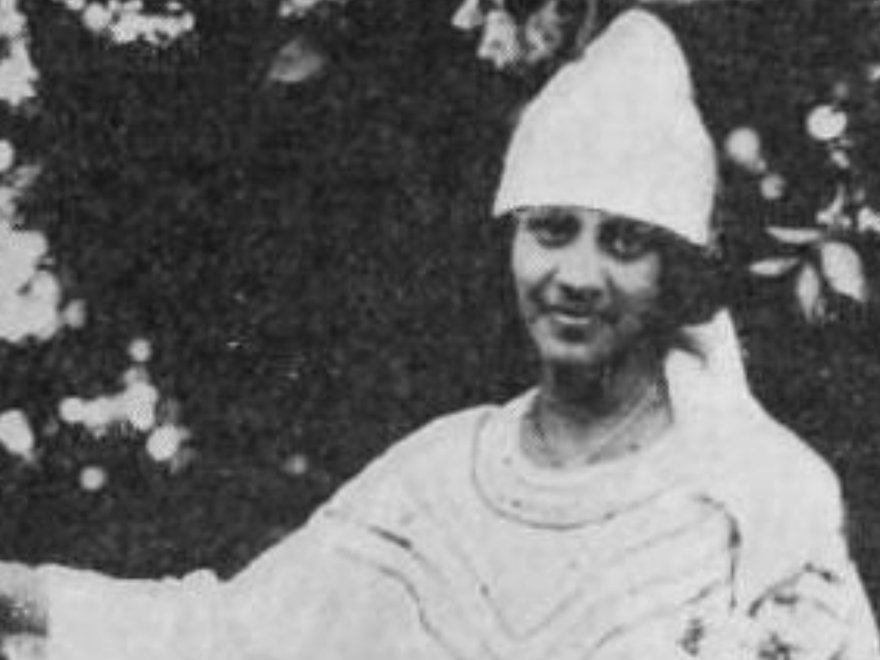
Kathleen Mary Easmon in her wedding gown, taken in 1922.
Kathleen Mary Easmon was born in Accra (now Ghana) and is believed to have been the first West African to graduate from the Royal College of Art. Hailing from a prominent medical family, she departed from an established professional lineage to pursue a creative path. After completing her secondary education at Notting Hill High School for Girls, she studied fashion design at South Kensington College before continuing her training at the RCA, graduating with an ARCA Diploma in Design in 1914.
While at the College, her poems appeared in the RCA Student Magazine, including one titled Forget Not Yet. Easmon was not confined to a single discipline: she was a poet, illustrator, dancer and performer — a polymathic creative presence at a moment when such expansiveness was unusual for women.
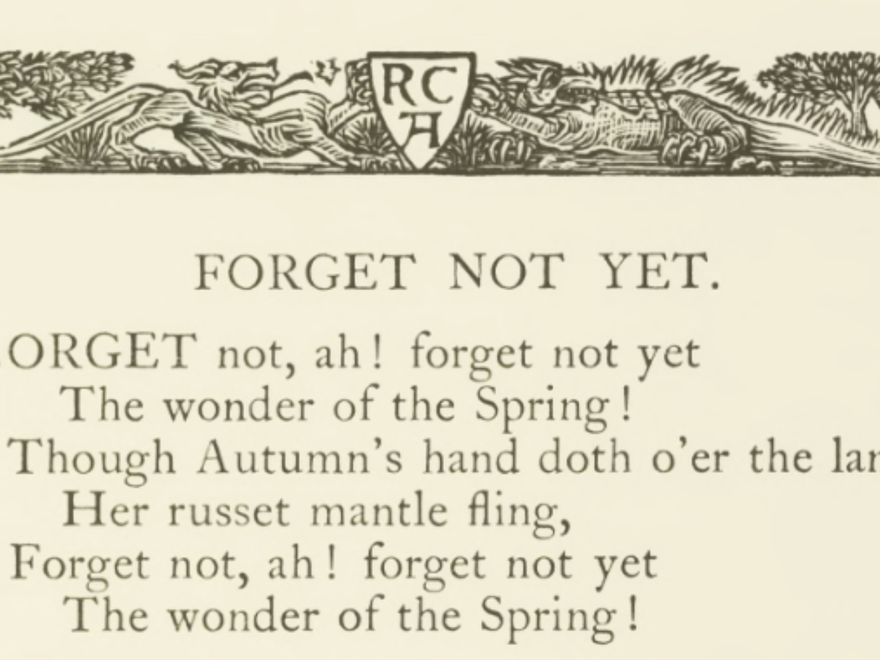
Extract of a poem by Kathleen Mary Easmon, published in the RCA Students Magazine
She is often noted as a close friend and contemporary of the composer Samuel Coleridge-Taylor. Their friendship extended into collaboration: Easmon wrote the Five Fairy Ballads, which Coleridge-Taylor set to music, with one performed at the Royal Albert Hall in 1915. Even in these accounts, her role tends to appear in the margins — a reminder of how easily creative partnerships can obscure women’s authorship.
Three years after graduating, Easmon left London and returned to West Africa, where she helped establish a vocational school for girls in Freetown, Sierra Leone, alongside her aunt. At a time when educational opportunities for women in the region were limited, this was a radical act. She later moved to the United States, married, and continued to advocate for girls’ education.
Easmon died in 1924, aged just 32. Her life was brief, but her story widens our understanding of who occupied the RCA’s studios in the early twentieth century. Her legacy lies not only in her artistic output, but in the educational foundations she helped lay, evidence that influence can take many forms.
Ulla Goodman (Ceramics), 1953
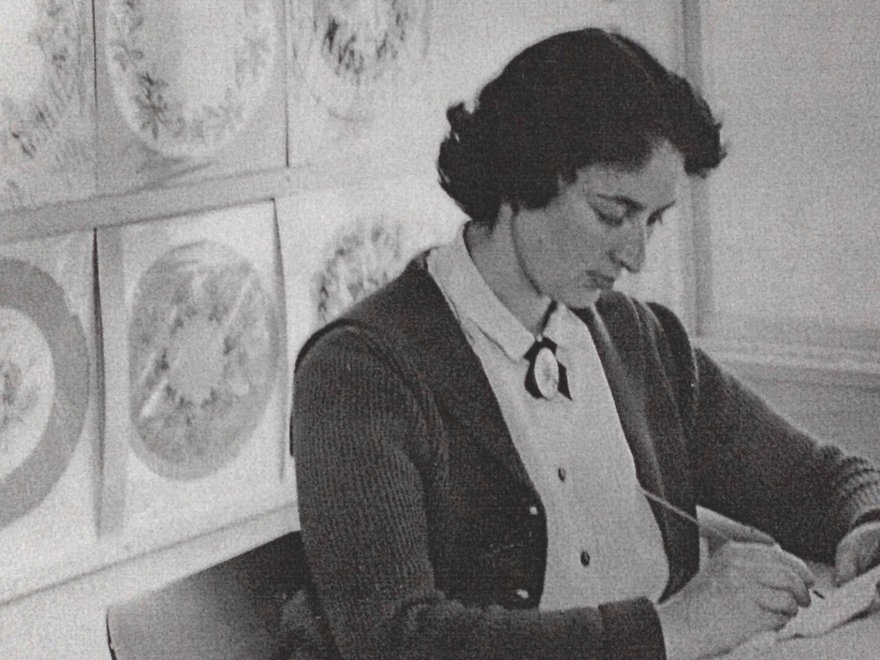
Ulla Goodman working at the Wedgwood Factory at Barlaston, Stoke-on-Trent, England, about 1956. © Wiener Holocaust Library
Ulla Goodman was a gifted ceramicist and designer whose work for Wedgwood, including the popular Tiger Lily pattern, helped shape mid-century British domestic design. She arrived in London in 1939 as a refugee, having secured sponsorship from Colonel Josiah Wedgwood through a family connection, and became a guest at The Ark.
The Ark — Colonel Wedgwood’s bungalow in Staffordshire — was adapted to provide refuge for those fleeing Nazi persecution at a time when official British responses were limited. His son, Josiah Wedgwood V, later assisted refugees in finding employment within the company. A few years after her arrival, Goodman began work at the Wedgwood factory in Stoke-on-Trent as a hand-paintress. She later studied at Derby School of Art and Wimbledon Art School before joining the Royal College of Art in 1949.
“It happens from time to time that my life suddenly gets gathered up, as it were cast into the melting pot of destiny.”
Ceramist and designer
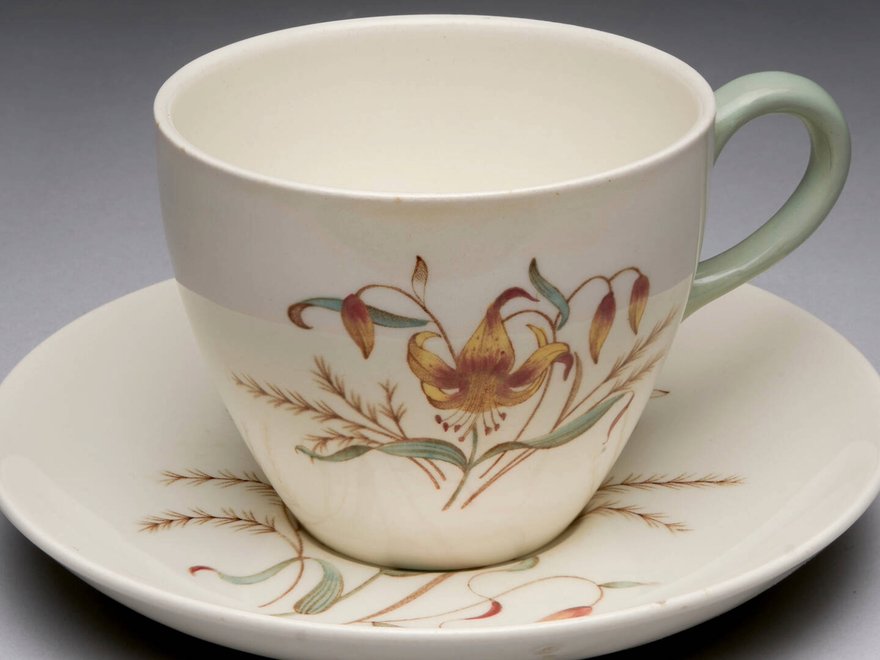
Tiger Lily', cup and saucer, designed by Ulla Goodman, manufactured by Josiah Wedgwood and Sons, 1957, Barlaston, Stoke-on-Trent, England. Museum no. WE.9768:1-2014. © Victoria and Albert Museum, London
Following her graduation in 1953, Goodman became a full-time designer for Wedgwood. Her elegant, nature-inspired designs were commercially successful and widely circulated, though her name rarely travelled as far as the objects themselves.
In recent years, research by V&A Ceramics Curator Michael Ruddy has brought renewed attention to her life and work. “I have always been drawn to stories which involve empathy and empowerment,” Ruddy notes. “Ulla's story is special because both these elements appear, from being rescued by the Wedgwood family, to her bravery and determination to achieve her dream.”
Pauline Boty (Stained Glass), 1961
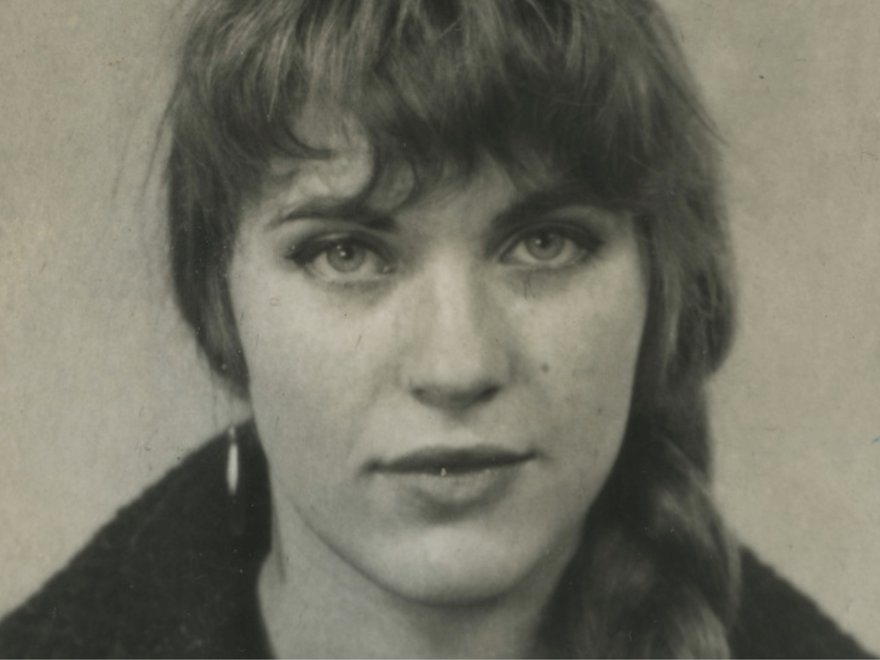
Pauline Boty
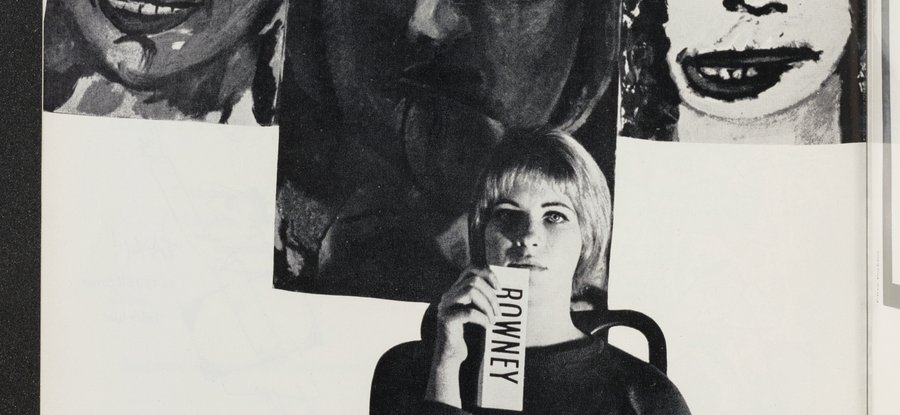
Although Pauline Boty has in recent years gained renewed prominence, for decades she was overshadowed by the dominant — and largely male — figures of the British Pop Art movement. Boty entered the Royal College of Art in 1958 to study stained glass, but soon emerged as one of the most distinctive voices of the early 1960s Pop scene, alongside contemporaries such as Derek Boshier and Peter Blake.
Her bold, often satirical works drew on film, celebrity culture and contemporary politics. Working across collage, painting and stained glass, she explored female sexuality and media imagery with wit and sharp intelligence. At the College, she was also active in film and literature societies and was a prominent organiser within the Anti-Uglies Society, which campaigned against what members saw as the visual austerity of modernist architecture.
“A revolution is on the way, and it's partly because we no longer take our standards from the tweedy top.”
Artist
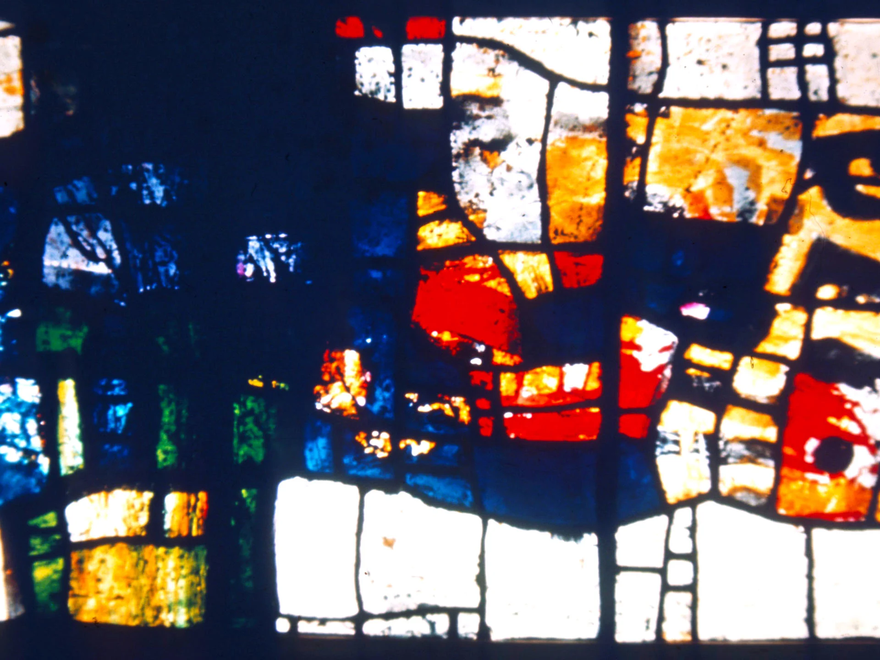
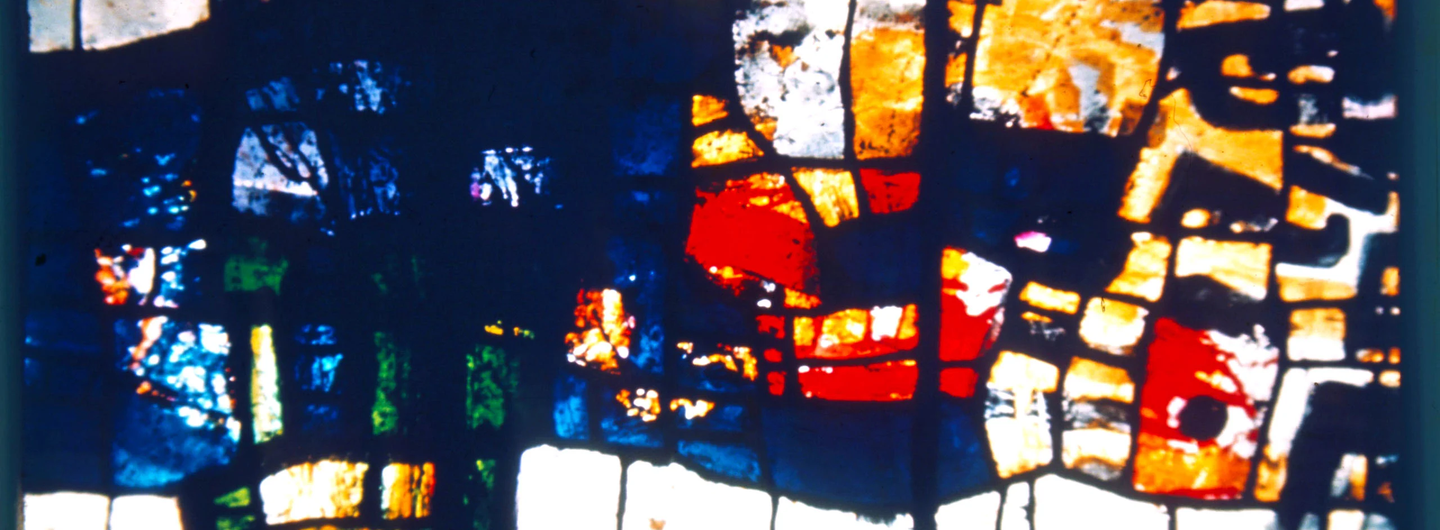
Stained Glass, by Pauline Boty
Boty’s life was cut tragically short in 1966 when she died from cancer at the age of 28, shortly after giving birth to her daughter. Though she exhibited in the landmark 1961 AIA Gallery Pop Art show, her work faded from view in the years that followed.
In recent decades, her contribution has been reassessed through exhibitions, documentaries and scholarship, including Marc Kristal’s Pauline Boty: British Pop Art’s Sole Sister. As Kristal has observed, Boty was “at once central to her historic moment and a figure of importance to the present day.” Her vibrant, defiant imagery now occupies the space it always deserved within British art history.