Key details
Date
- 5 February 2026
Author
- Alexandra Genova
Read time
- 6 minutes
We revisit the student work of RCA alumnae now staging major UK exhibitions, tracing how experimentation, risk and early ideas shaped their practices.
This year sees a wave of culture-defining women artists staging major solo exhibitions across the UK — all of whom studied at the Royal College of Art.
Drawing on material from the College’s archive, we revisit their formative years at the RCA, uncovering early sketches, photographs and experiments made while they were still students. The material ranges from tentative studies and working notes to moments of camaraderie and play — including, in Barbara Hepworth’s case, a photograph of her dressed for a fancy-dress ball alongside her contemporaries at the College.
Seen together, these early works offer a reminder of the RCA as a space for risk and discovery: a place where artists are given permission to test ideas, to fail, to imagine freely, and to begin to understand not only who they are as artists, but what art itself might be for.
Emma Talbot - Arnolfini, Bristol | 8 October 2025 – 8 February 2026
Student work by Emma Talbot, made while at the RCA in 1995
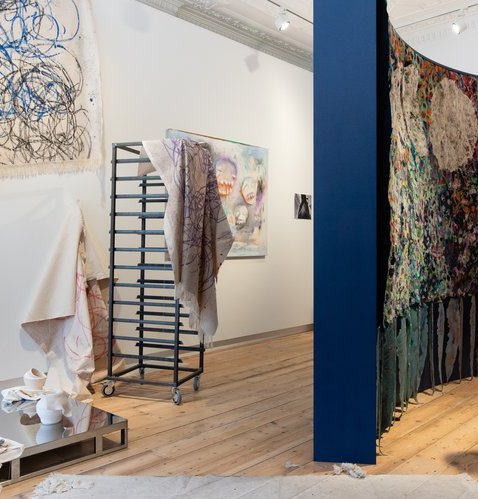
Emma Talbot’s work is in dialogue with the urgent social and political questions of our time, but it is also in conversation with her own inner world. She has described her practice as one of “listening in” — allowing fleeting thoughts, fragments and intuitions to surface before being shaped into drawings, paintings, installations and large-scale textile works.
Her immersive environments have been shown widely in the UK and internationally, often combining hand-drawn imagery with text to explore vulnerability, power and survival. Talbot studied Painting at the RCA, graduating in 1995. Her solo exhibition at Arnolfini runs until February 8 2026.
MA Painting, 1995
Joy Gregory - Whitechapel Gallery, London | 8 October 2025 – 1 March 2026
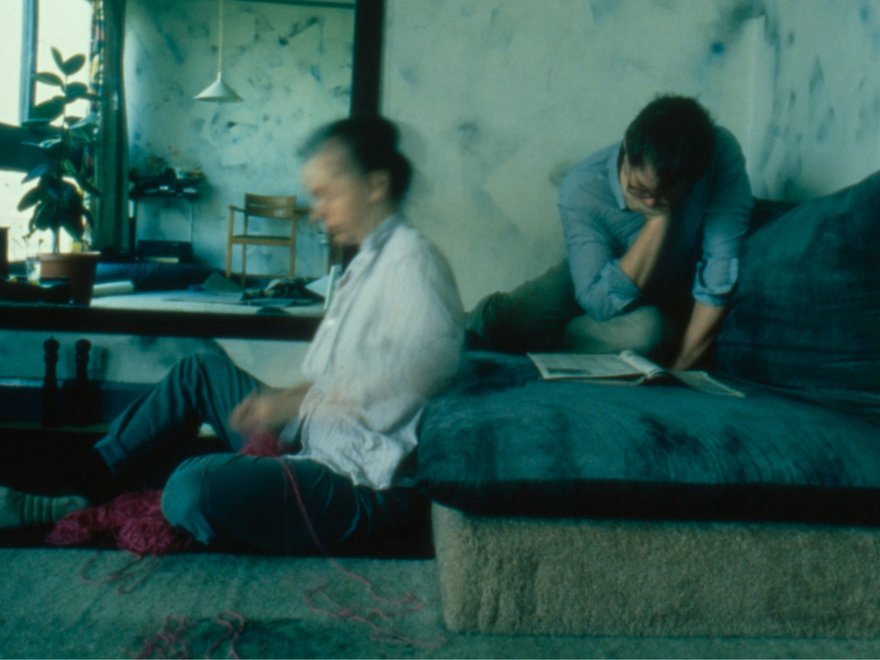
Student work by Joy Gregory, made while at the RCA in 1986.
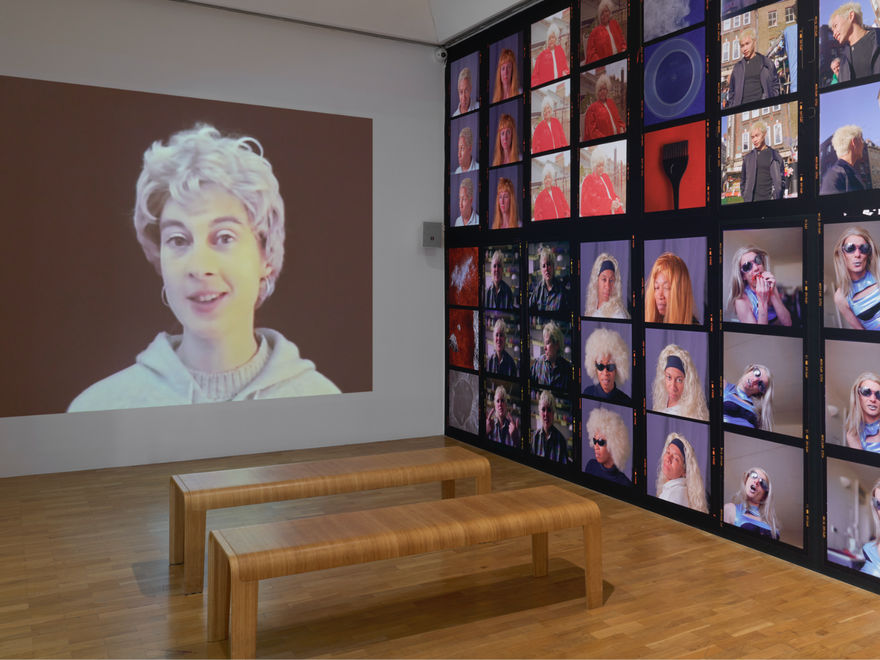
A room in the Joy Gregory survey exhibition at the Whitechapel Gallery
In 1984, artist and educator Joy Gregory arrived in London to pursue an MA in Photography at the Royal College of Art, becoming the first Black woman enrolled on the programme. This absence of representation at the College mirrored a wider lack of visibility for Black women in British cultural life at the time.
Rather than seeking validation from the mainstream, Gregory forged her own communities and developed a practice that has, over four decades, rigorously interrogated history, race, gender and identity. Her first major survey exhibition opens at the Whitechapel Gallery closes in March and marks a landmark moment in the recognition of her work.
MA Photography, RCA, 1986
Tracey Emin - Tate Modern, London | 26 February – 30 August 2026
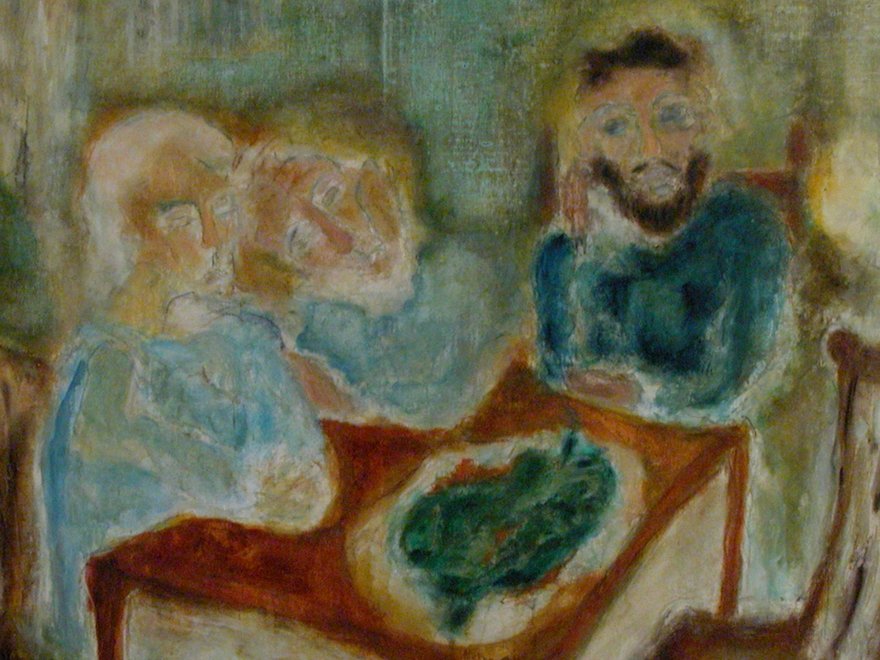
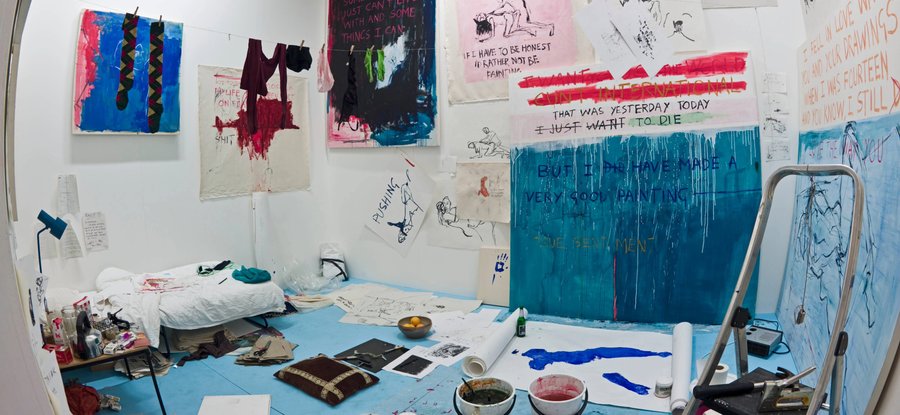
Student work by Tracey Emin, made while at the RCA in 1989.
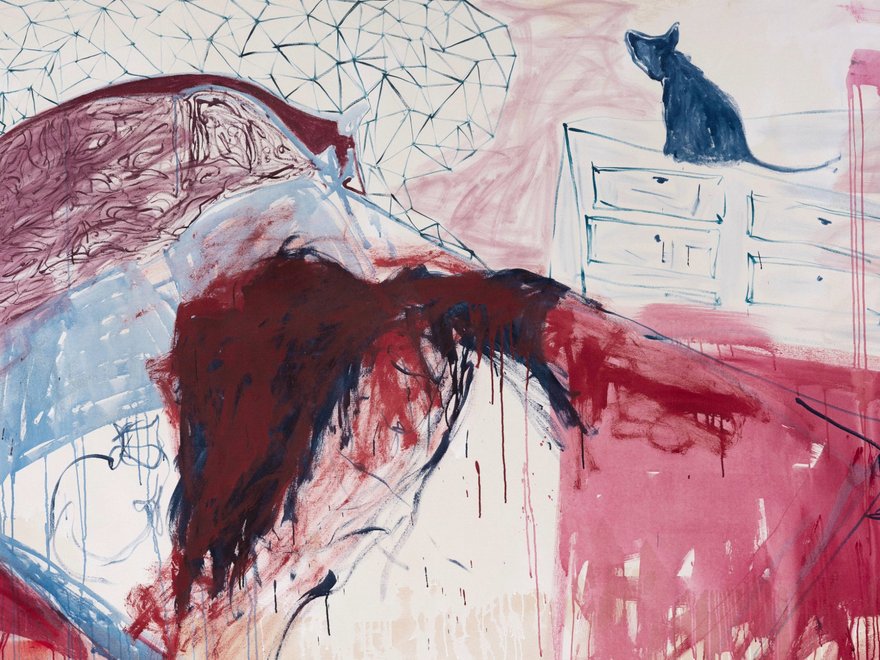
Tracey Emin, The End of Love 2024 © Tracey Emin. Tate.
Tracey Emin has long been regarded as a transformative force in British contemporary art. Her work insists that the personal is not only political, but worthy of public attention — a position articulated most famously in My Bed, shortlisted for the Turner Prize in 1999.
Emin studied Painting at the RCA, graduating in 1989, before forging a career that now spans more than four decades. Recent years have seen her return to Margate, where she founded TKE Studios to support emerging artists. A major exhibition at Tate Modern opening in February 2026 reflects on the breadth and intensity of her output to date.
MA Painting, RCA, 1989
Caroline Walker - Pallant House Gallery, Chichester | 22 November 2025 – 26 April 2026
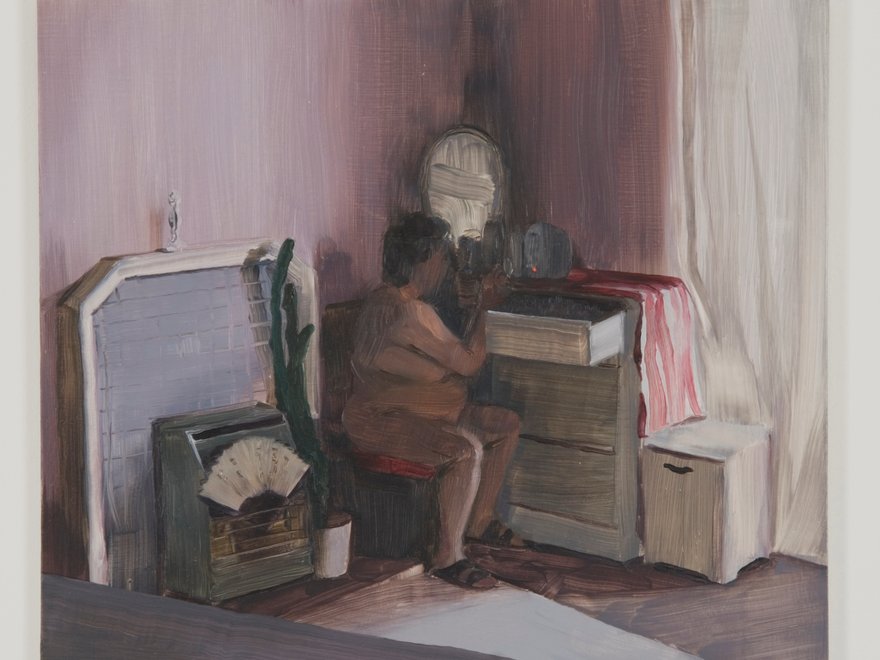
Student work by Caroline Walker, made while at the RCA in 2009.
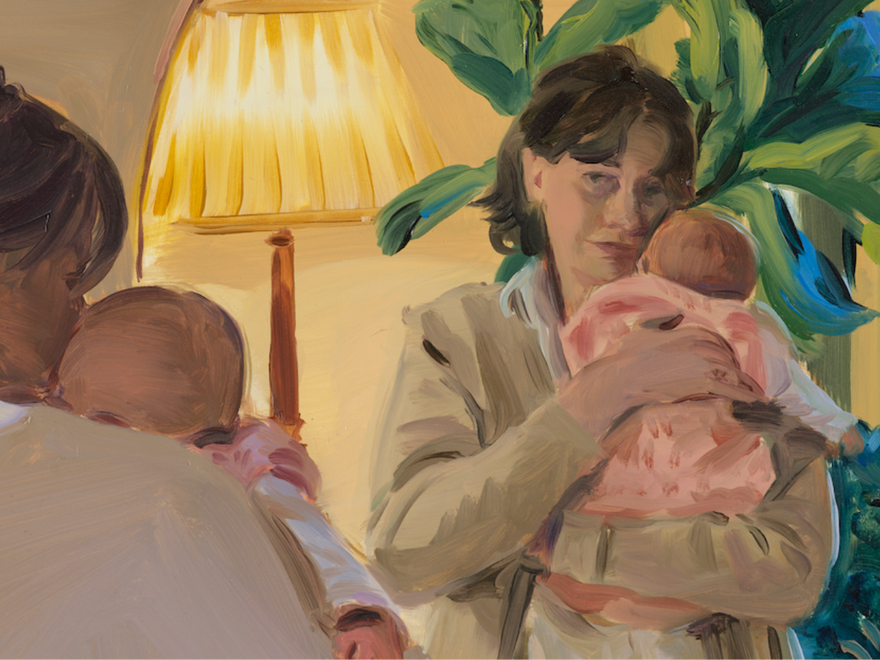
Me and Laurie, Six Weeks Old. Caroline Walker. 2024. Oil on board. 45 x 36. From the 'Mothering' exhibition at Pallant House Gallery
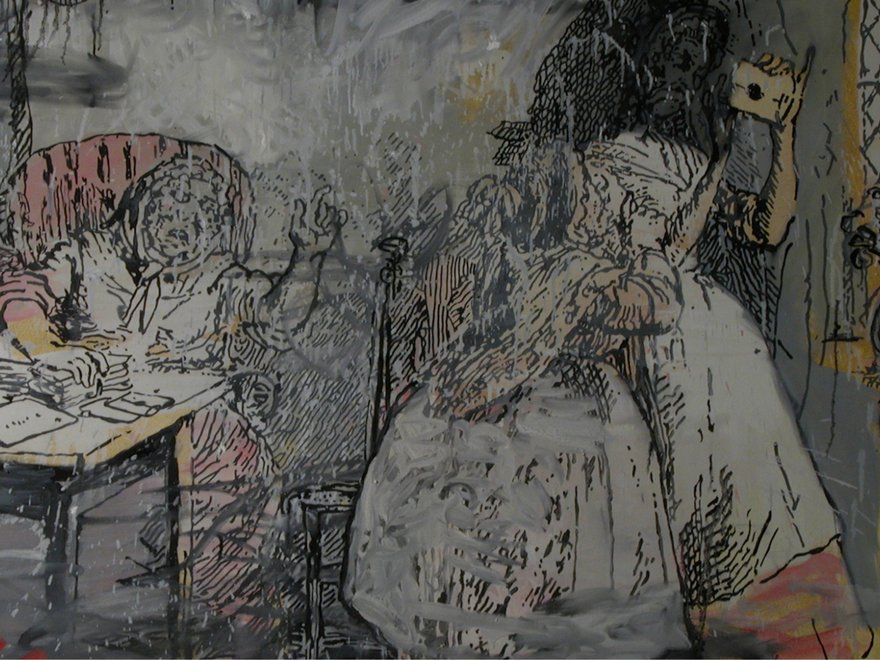
Caroline Walker is known for her psychologically charged paintings of women at work, often depicting overlooked or private spaces such as hotel rooms, care facilities and back-of-house environments. Drawing on photography, film stills and staged observation, her work examines labour, visibility and power through a distinctly feminist lens.
Walker completed her MA in Painting at the RCA in 2009. Her forthcoming solo exhibition, 'Mothering', at Pallant House Gallery brings together key works from the past five years alongside new works.
MA Painting, RCA, 1989
Rose Wylie - Royal Academy of Arts, London | 28 February – 19 April 2026
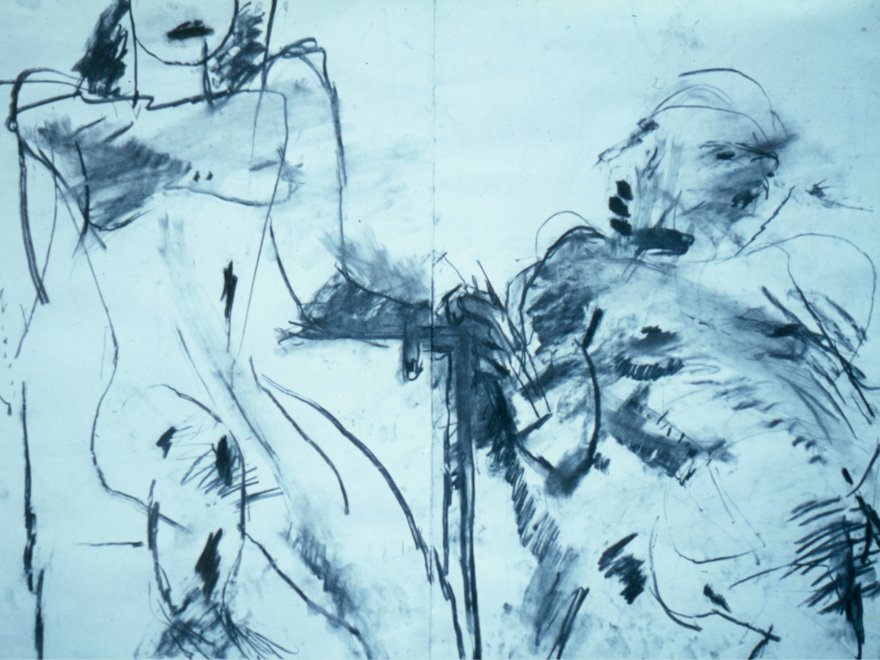
Student work by Rose Wylie, made while at the RCA between 1980-1981.
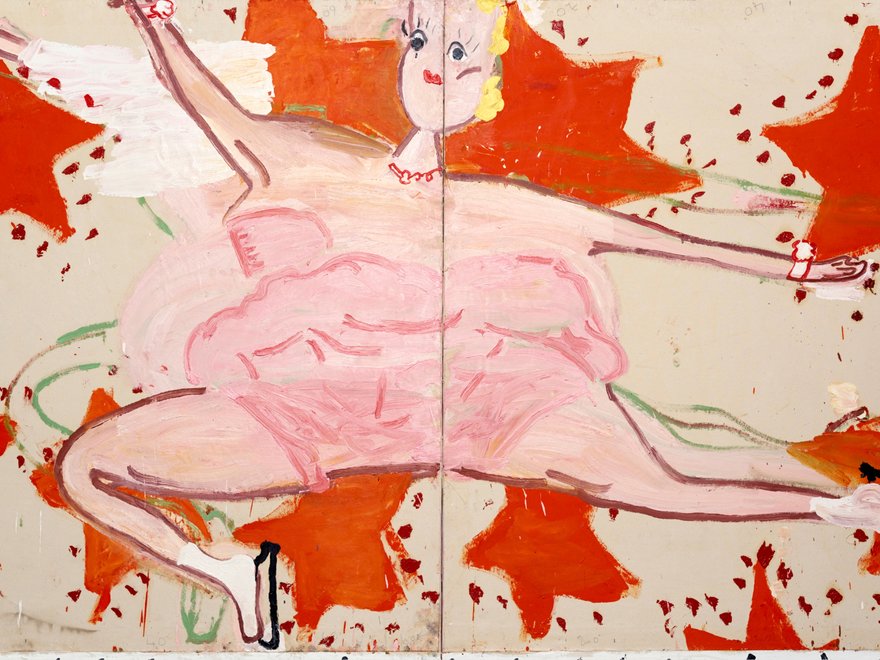
Rose Wylie, Pink Skater (Will I Win, Will I Win), 2015 Oil on canvas, 208 × 329 cm. Courtesy private collection and JARILAGER Gallery. Photograph courtesy Jari Lager. Photo: Soon-Hak Kwon © Rose Wylie
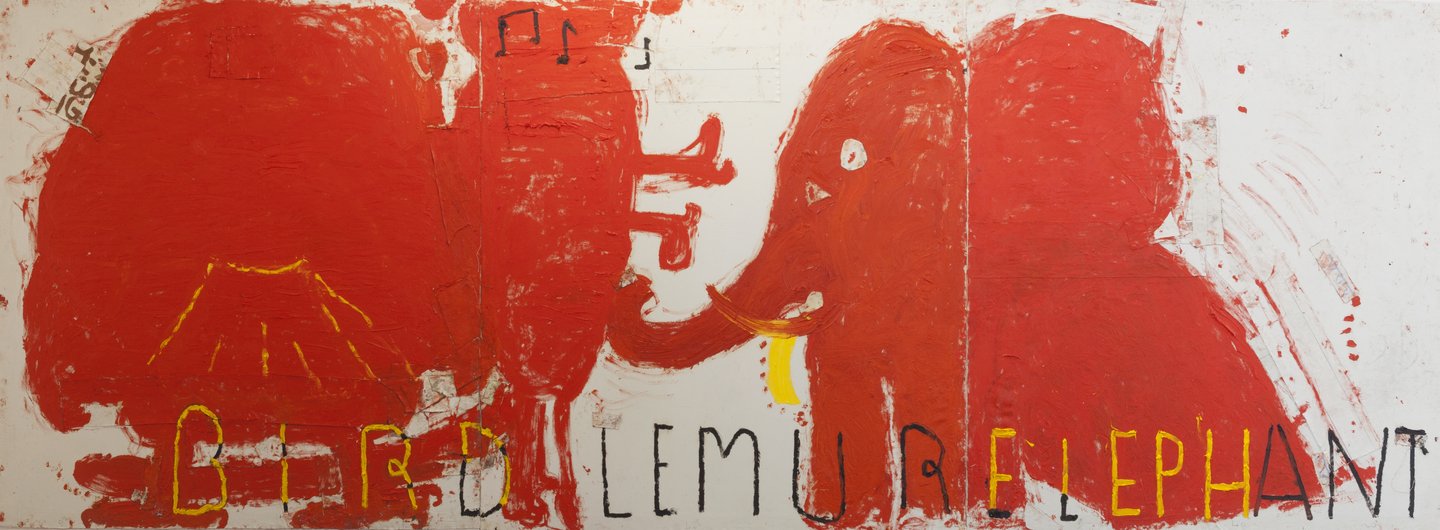
Rose Wylie’s exuberant, large-scale paintings are celebrated for their rawness, humour and apparent refusal of convention. Drawing on memory, popular culture, art history and lived experience, her work challenges ideas of refinement and finish.
Wylie studied Cultural History at the RCA, completing her MA in 1981, and found widespread recognition later in life — a trajectory that has come to symbolise the value of persistence and independence in artistic practice. Her exhibition at the Royal Academy opens in early 2026.
Barbara Hepworth - The Courtauld Gallery, London | 12 June – 6 September 2026
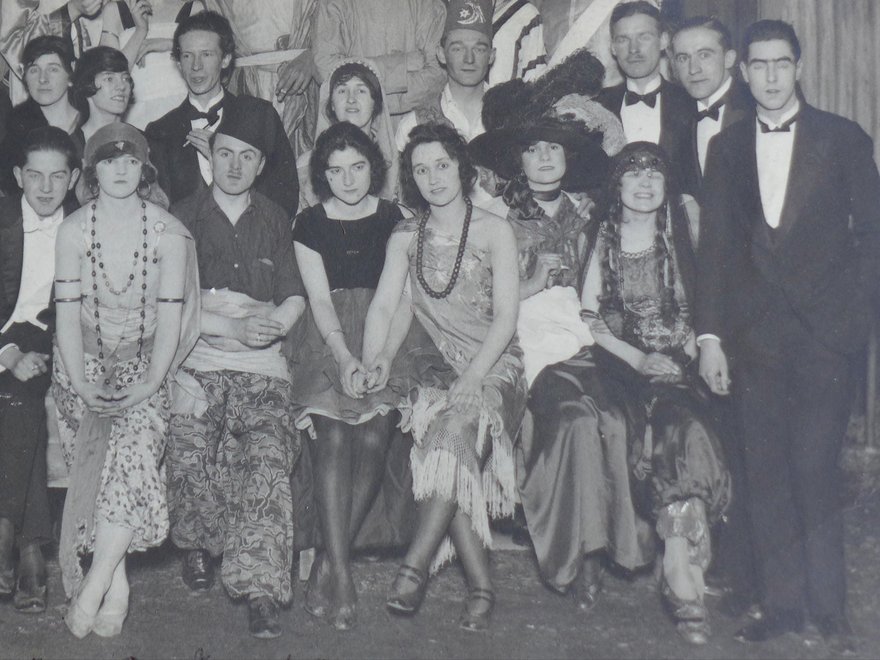
Barbara Hepworth (Front row, second from left) at the Chelsea Arts Ball c.1923, attended during her time at the RCA
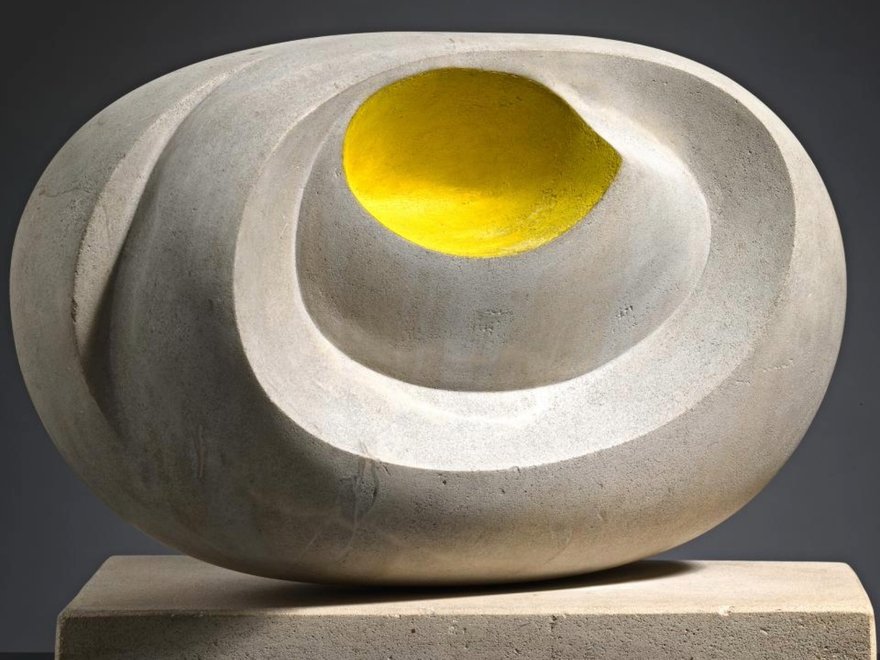
Barbara Hepworth, Eidos, 1947, National Gallery of Victoria, Melbourne
Barbara Hepworth remains one of the most influential artists of the 20th century. She often credited her childhood in Yorkshire as a foundational source of inspiration, while the second half of her life in St Ives shaped her deep engagement with landscape, light and form.
Best known for her hand-carved abstract sculptures, Hepworth’s creativity extended far beyond stone and wood to include drawing, watercolour and, during the Second World War, a remarkable series of surgical drawings made in operating theatres. She studied Sculpture at the RCA, graduating in 1923. Hepworth in Colour at The Courtauld Gallery explores a lesser-known dimension of her practice: her sustained and experimental use of colour.
ARCA Diploma, Sculpture, 1923
Enid Marx - Compton Verney, Warwickshire | 18 July 2026 – 3 January 2027
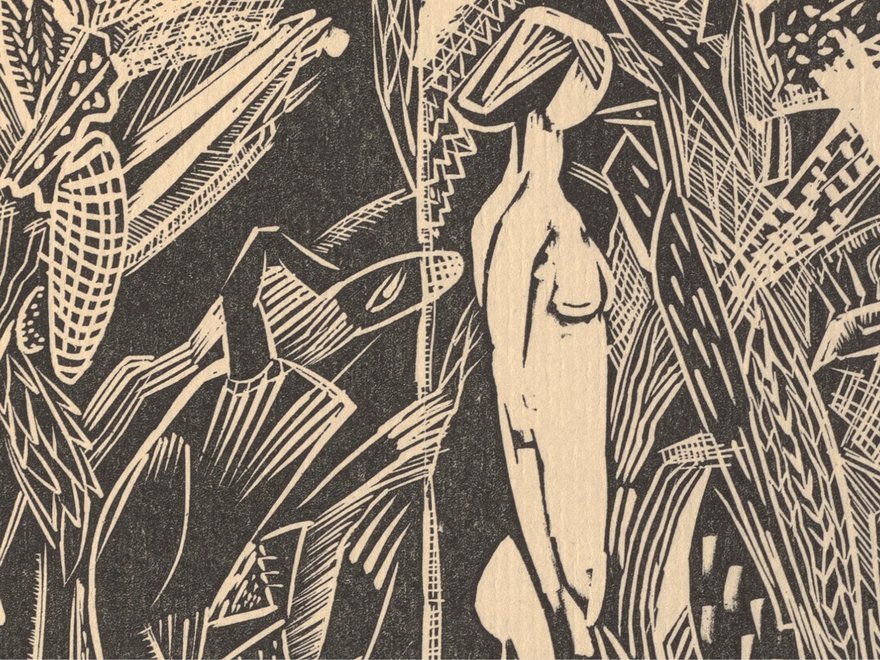
A wood cut illustration by Enid Marx, in the RCA student magazine contribution, 1925
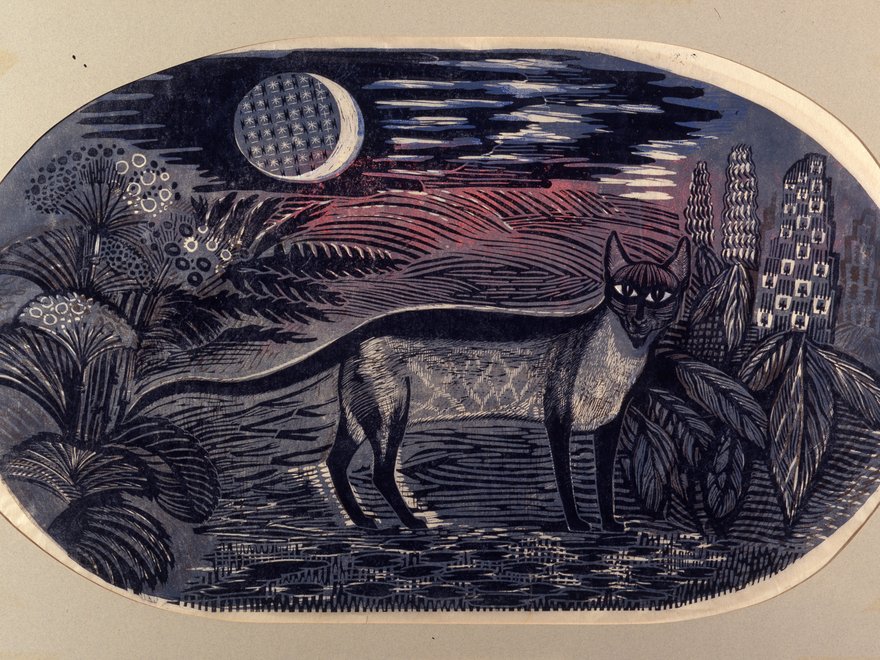
Tyger, Tyger by Enid Marx © Estate of Enid Marx
Enid Marx, often described as the ‘pioneer of pattern’, played a quietly radical role in shaping modern British design. Her work moved fluidly between fine art and everyday life, encompassing textiles, book illustration, printmaking and industrial design.
As was typical of the period, Marx — like many women — was steered towards so-called ‘craft’ disciplines, yet her influence proved enduring. Her moquette seating fabric designs for London Underground trains remain in use decades later, becoming part of the visual fabric of the city itself.
Marx studied at the RCA between 1922 and 1925 but, astonishingly, failed to graduate. History has since corrected that oversight. Her work is now recognised as central to modern British visual culture, a legacy reflected in her major exhibition at Compton Verney opening in summer 2026.
Studied at the RCA, 1922–25