Key details
Date
- 2 June 2026
Author
- Jessie Bond
Read time
- 7 minutes
RCA Fashion MA Alumna Anna Deller-Yee reflects on the intense 40-hour process of transforming a custom Mugler dress into a hand-painted masterpiece for Emma Chamberlain.
Key details
Date
- 2 June 2026
Author
- Jessie Bond
Read time
- 7 minutes
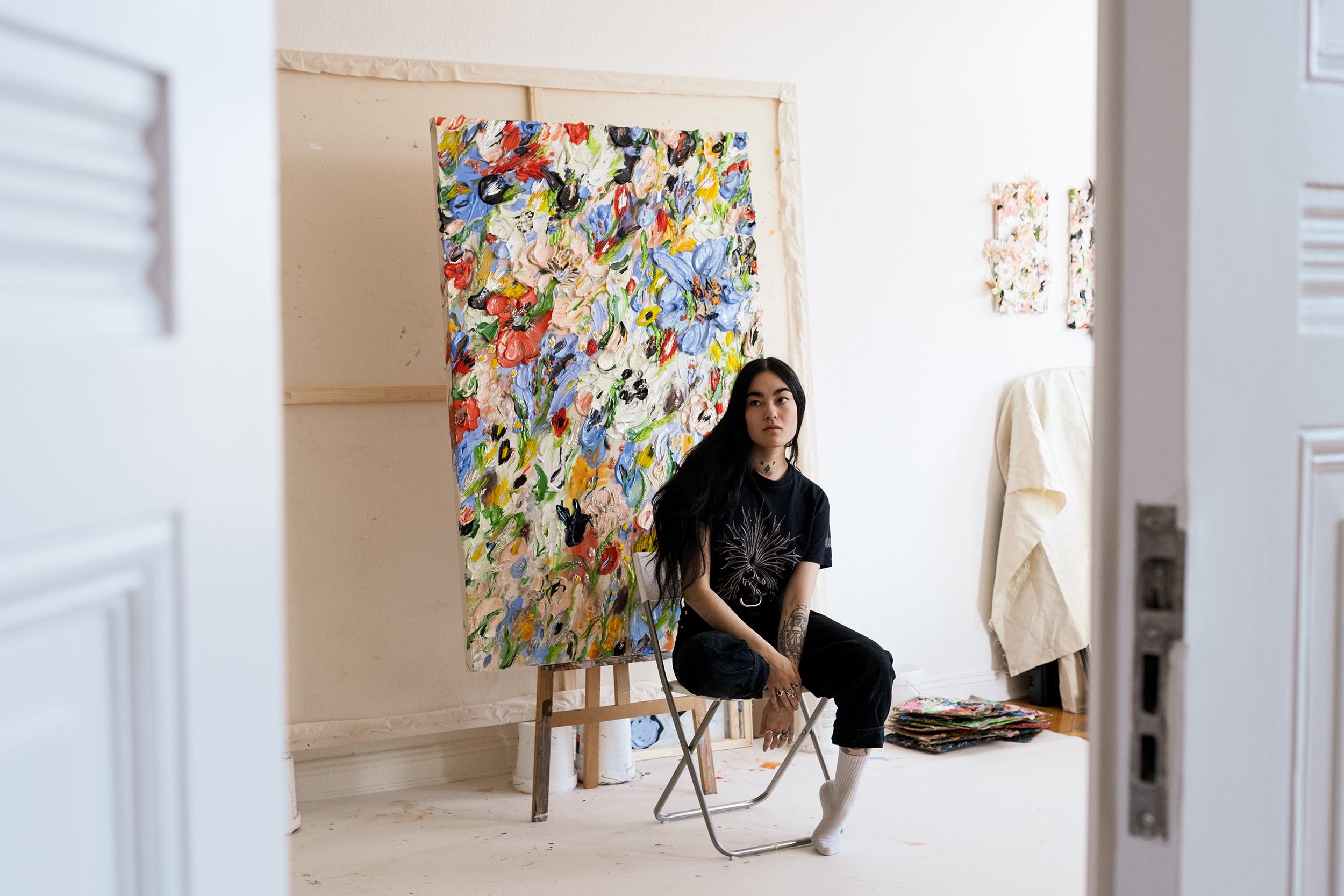
Since graduating from the RCA Fashion MA in 2021, Anna Deller-Yee has collaborated with fashion houses Marni and Schiaparelli; worked with Nike on a capsule collection for the Olympic Games; and created hand-painted garments for Anna Wintour and Nicki Minaj. Yet her most ambitious and visually stunning collaboration to date, and certainly the most viral, was a Mugler gown, created by Miguel Castro Freitas for Emma Chamberlain to wear to the 2026 Met Gala.
The Met Gala is an annual fundraising event for the Metropolitan Museum of Art's Costume Institute, and widely regarded as the world's most prestigious and glamorous fashion event. The influencer, podcaster, businesswoman and model, Chamberlain, was in attendance as Vogue’s special correspondent on the red carpet. Her dress – an organza and georgette cascading gown, featuring a train with a 9 metre circumference, 880 lines of ruffles, 150 meters of fabric, and Deller-Yee’s expressive brush strokes – stuck strictly to this year’s dress code: fashion is art.
The gown was developed by Mugler's creative director, Miguel Castro Freitas, in collaboration with Chamberlain and her stylist, Jared Ellner. It was transformed by the contribution of Deller-Yee, who spent 40 hours painting the garment with fine art materials, to create a moving canvas to be inhabited by a living, breathing body.
We spoke to Deller-Yee about the process of working on the dress and how it relates to broader concerns within her practice. She also reflected on how studying at the RCA helped her to develop an interdisciplinary approach and embrace overlapping disciplines within her work.
“From the beginning, it felt more like building a dialogue between couture and painting, where the garment itself could become a living surface carrying gesture, texture and emotion.”
Fashion MA alumni
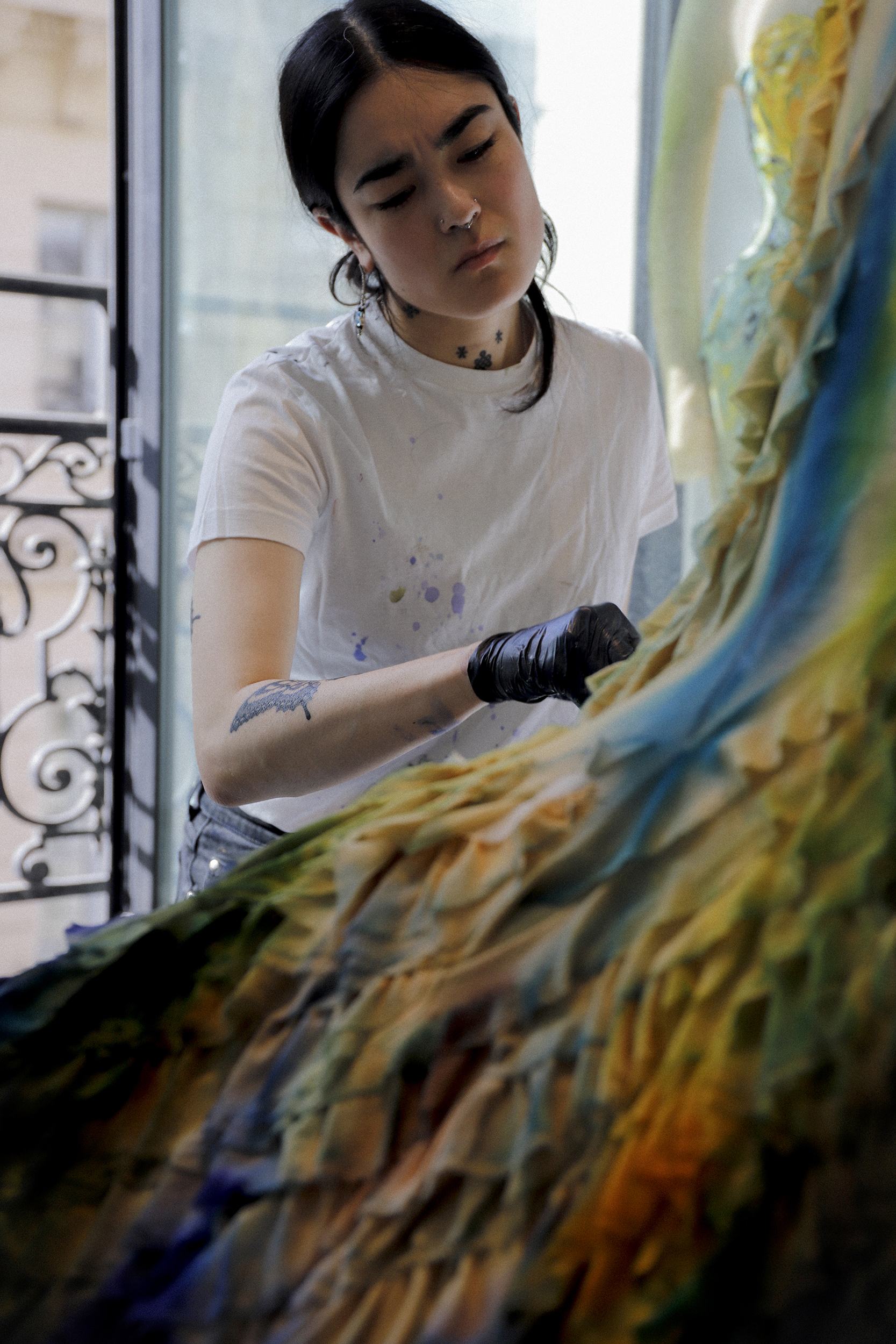
Anna Deller-Yee working on the Mugler dress worn at the Met Gala 2026 by Emma Chamberlain
How did the opportunity to work on the Mugler Met Gala dress come about?
I had already been collaborating with Miguel and the Mugler team for a few seasons before the Met Gala project, so there was already an established creative dialogue and level of trust between us. Over time, our relationship became increasingly collaborative and intuitive, which I think laid the foundation for something as ambitious as this project.
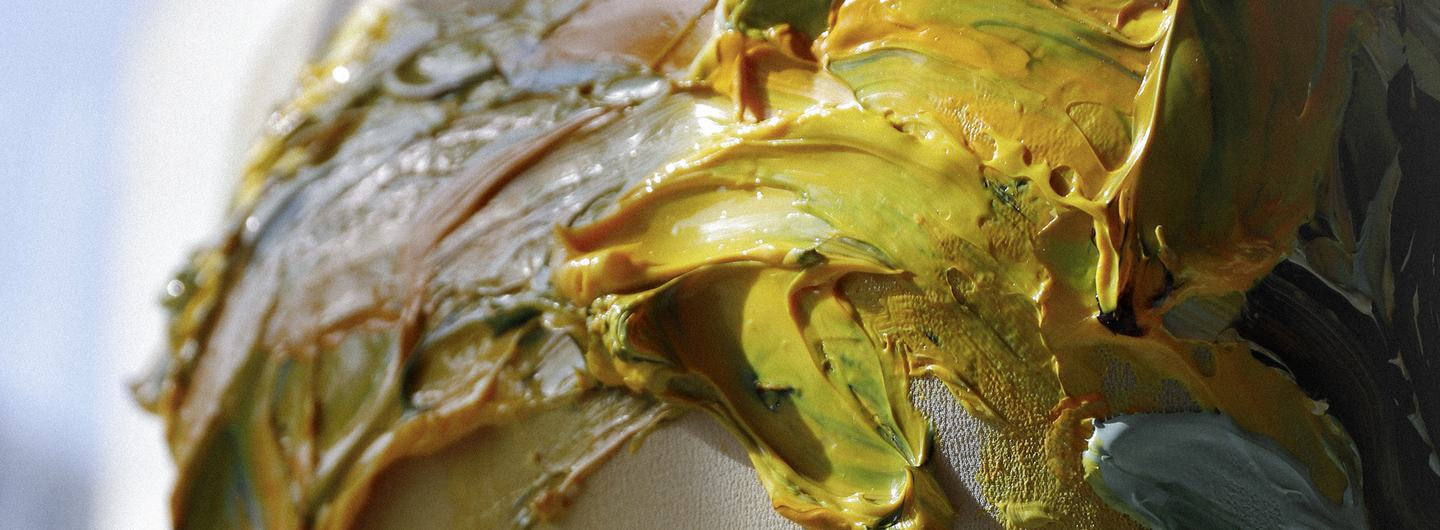
One day Miguel and the team approached me with the idea of hand-painting a dress for the Met Gala and shared the initial moods and emotional direction of the piece. I immediately felt an incredibly natural connection to it. The visual language they were gravitating toward – thick impasto textures, fluid inky drips, emotionally charged surfaces – already felt deeply connected to my own painting practice.
What excited me most was that the project never felt like applying decoration onto fashion. From the beginning, it felt more like building a dialogue between couture and painting, where the garment itself could become a living surface carrying gesture, texture and emotion.
The experience also became incredibly special because of the people involved. Miguel and the wider Mugler team created such an open and trusting creative environment throughout the process, while the craftsmanship and precision of the Mugler atelier was honestly extraordinary to witness up close. There was such a deep level of care, skill and dedication behind every stage of the garments’ construction before I even began painting onto them.
That combination of trust, collaboration and craftsmanship allowed the work to evolve very organically rather than feeling overly controlled, which was incredibly important to me as an artist.
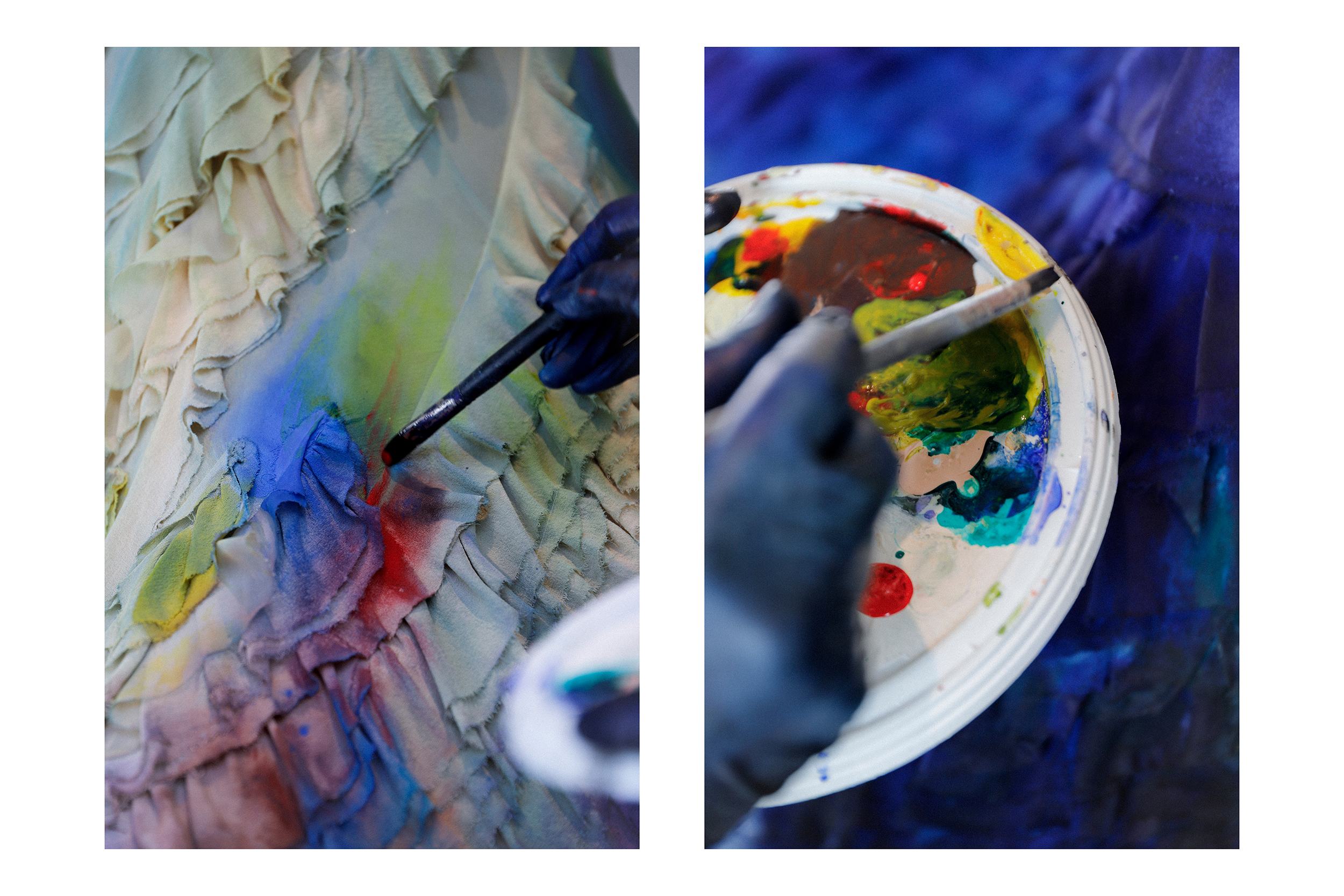
Anna Deller-Yee, hand painting the Mugler dress worn by Emma Chamberlain at the Met Gala 2026
“What I loved most throughout the process was that the work retained a sense of unpredictability and physical presence. Even at that scale and level of visibility, it still felt deeply handmade and emotionally alive.”
Fashion MA alumni
Can you talk us through your creative process for the dress; from the initial brief or concept through to the final painted piece?
The process began with conversations around mood, atmosphere and emotional tone rather than very fixed visual instructions. Miguel, Emma and her stylist Jared Ellner shared references, feelings and ideas around the energy the dress should embody, which gave me a strong emotional starting point while still leaving space for intuition and experimentation.
From there, I moved into an extensive testing phase. I worked on both flat fabric samples and sculptural samples resembling sections of the dress on the body and mannequin to understand how different pigments, textures and paint densities would behave once worn. Because I work with fine art materials rather than conventional fashion paints, there was a huge amount of experimentation involved in balancing fluidity, absorption, drying time and durability.
I became very interested in creating tension within the surface itself – moments of thick impasto texture contrasted with translucent washes and dripping ink-like stains. I wanted the dresses to feel emotionally layered, almost as if they existed somewhere between a painting, a garment and a living organism.
Once the final garments had been constructed by the Mugler atelier in Paris, I began painting directly onto them at Mugler’s headquarters. Emma had two looks designed by Miguel for the occasion – a shorter version for interviews and a longer version for the Met Gala carpet itself.
For the final pieces, I worked with around thirty base colours that I mixed into the full spectrum used across the dresses. The long dress alone required around forty hours of painting time, followed by several days of drying before it was flown to New York for the fitting on Emma.
What I loved most throughout the process was that the work retained a sense of unpredictability and physical presence. Even at that scale and level of visibility, it still felt deeply handmade and emotionally alive.
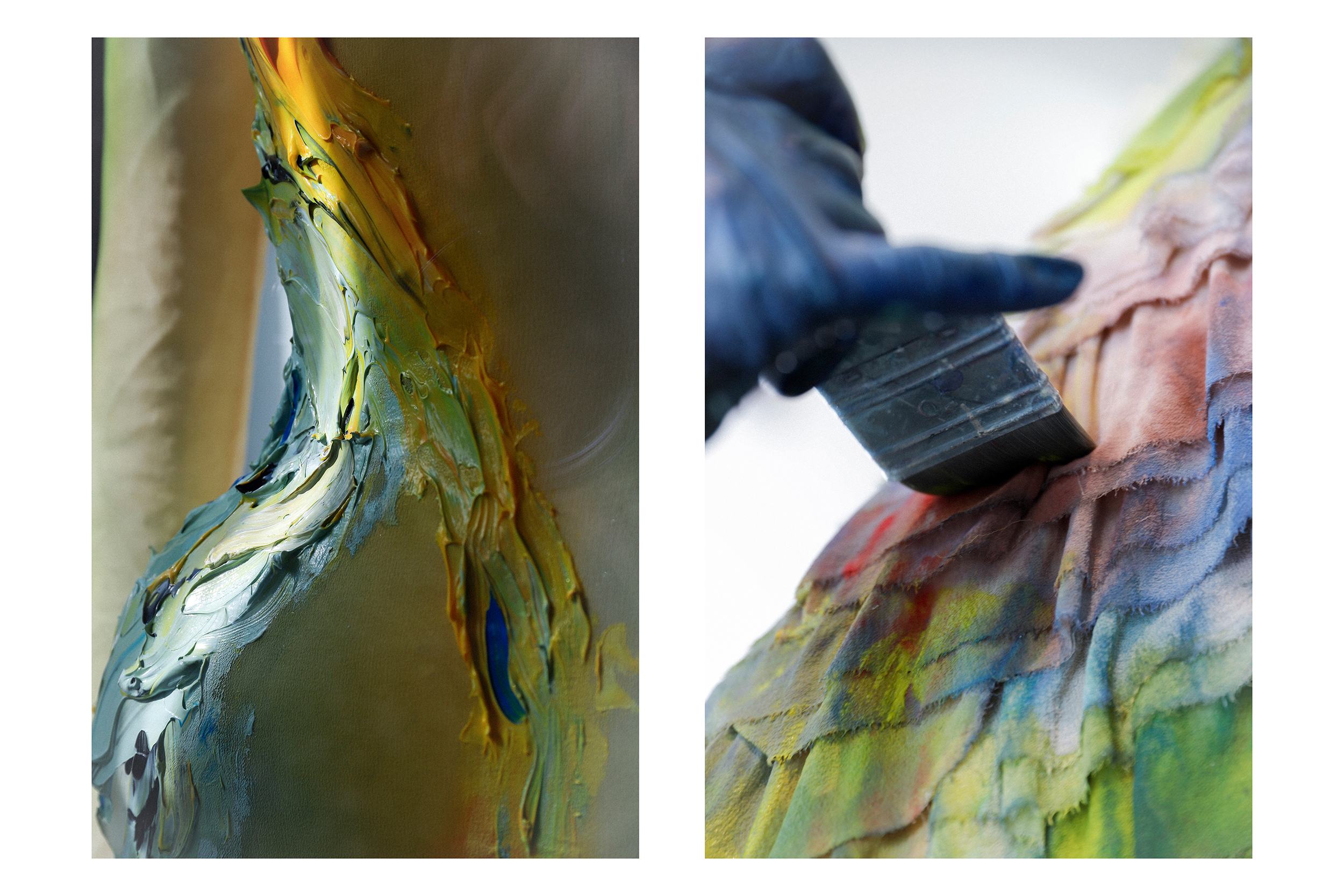
Anna Deller-Yee, hand painting the Mugler dress worn by Emma Chamberlain at the Met Gala 2026
“What fascinated me most was finding a balance between fragility and durability – allowing the dresses to retain softness, fluidity and emotional vulnerability while still surviving the technical demands of couture and the Met Gala itself.”
Fashion MA alumni
No conventional fashion-based paints were used on the dress. Why was that important to you and how did you develop the paint or surface treatment you used?
It was very important to me that the surface retained the honesty and physicality of painting rather than simply imitating it aesthetically. I didn’t want the dresses to look “painted” in a superficial sense – I wanted them to genuinely carry the material language, unpredictability and emotional depth of painting itself.
Using fine art materials allowed me to build textures, transparencies and gestures in a way that felt much closer to my studio practice. Certain pigments absorb, bleed, stain or build density very differently than conventional fashion paints, and I was interested precisely in those uncontrollable qualities.
The development process involved extensive testing across many different fabric samples and sculptural dress fragments. I experimented with layering pigments, mediums and varying paint consistencies in order to understand how the surfaces would react once draped, dried and worn on the body.
What fascinated me most was finding a balance between fragility and durability – allowing the dresses to retain softness, fluidity and emotional vulnerability while still surviving the technical demands of couture and the Met Gala itself.
In many ways, I approached the garments less like fashion pieces and more like moving canvases. The surface treatment became an extension of my painting practice rather than a separate decorative process.
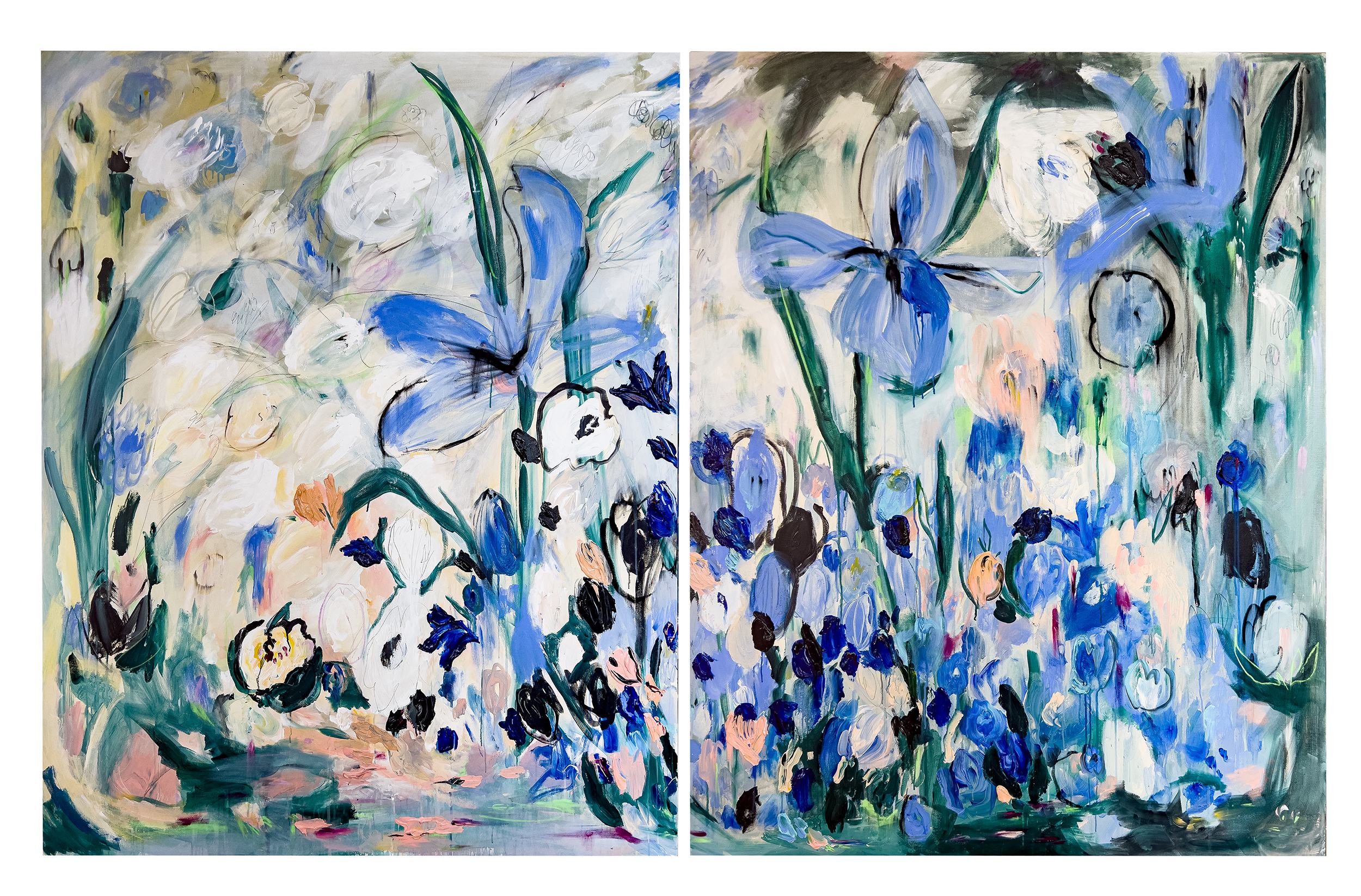
Hymne V, Anna Deller-Yee
At the RCA, you used the body, identity, touch and traditional materials as part of your practice. How did those ideas feed into this project?
Those ideas were present throughout the entire project and are themes I really began investigating deeply during my time studying at the RCA. It was there that I started thinking more consciously about the body, touch, emotional memory and materiality as central parts of my practice rather than separate concepts.
I never approached the dresses as static objects, but as surfaces that would eventually move, breathe and exist in direct relationship with a living body. The body fundamentally changes how a work is perceived – once worn, the painting becomes activated through movement, posture, light and emotion.
Touch is also incredibly important within my practice. Every layer, stain, gesture and texture on the dresses was applied entirely by hand, and I think that physical accumulation of labour creates a kind of emotional memory within the surface itself.
I’m very interested in how materials can hold traces of presence and time. The dresses weren’t about creating something perfectly polished or digitally clean, but about preserving vulnerability, instinct and the visible evidence of making.
Identity also enters the work in quieter ways. A lot of my practice is informed by my own experience of womanhood – the tension between softness and strength, fragility and resistance, visibility and vulnerability. I think those emotional contradictions naturally found their way into the surfaces and atmosphere of the dresses as well.
“I think the RCA fundamentally changed the way I think about creative practice. More than anything, it encouraged me to trust intuition, emotional research and experimentation rather than feeling pressured to arrive at immediate answers.”
Fashion MA alumni
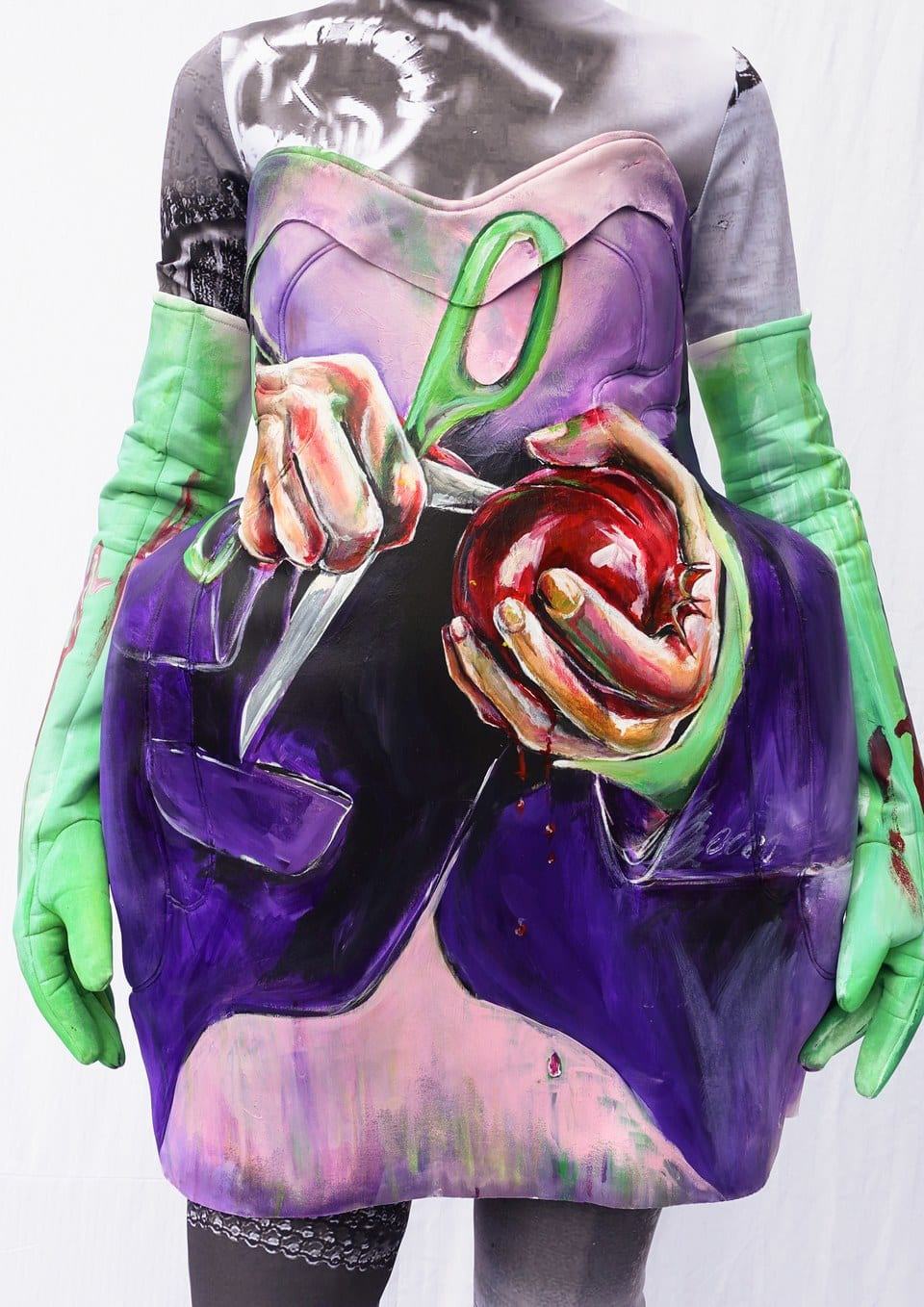
Anna Deller-Yee, hand painted hourglass dress, RCA2021
You studied Fashion MA at the Royal College of Art. Is there anything from your time there – a way of thinking or making – that you still carry with you in projects like this?
Absolutely. I think the RCA fundamentally changed the way I think about creative practice. More than anything, it encouraged me to trust intuition, emotional research and experimentation rather than feeling pressured to arrive at immediate answers.
At the same time, it was also a place of productive tension for me. I encountered very different perspectives from different tutors – some who deeply encouraged being multifaceted and interdisciplinary, and others who didn’t fully understand my relationship to painting and questioned whether I should focus on something more “meaningful.”
In hindsight, that tension propelled me forward. It forced me to become more certain in my instincts and in my belief that painting, emotion and materiality were central to the way I wanted to create and think.
The RCA gave me the space to really investigate and question who I was creatively and personally. I remember feeling challenged from many different perspectives and having a lot of my thinking reshaped during that time. It was truly transformative for me.
It also gave me permission to embrace the fact that my work naturally moves between painting, fashion, textiles, objects and installation without needing to justify those overlaps. I still carry that openness into everything I do now.
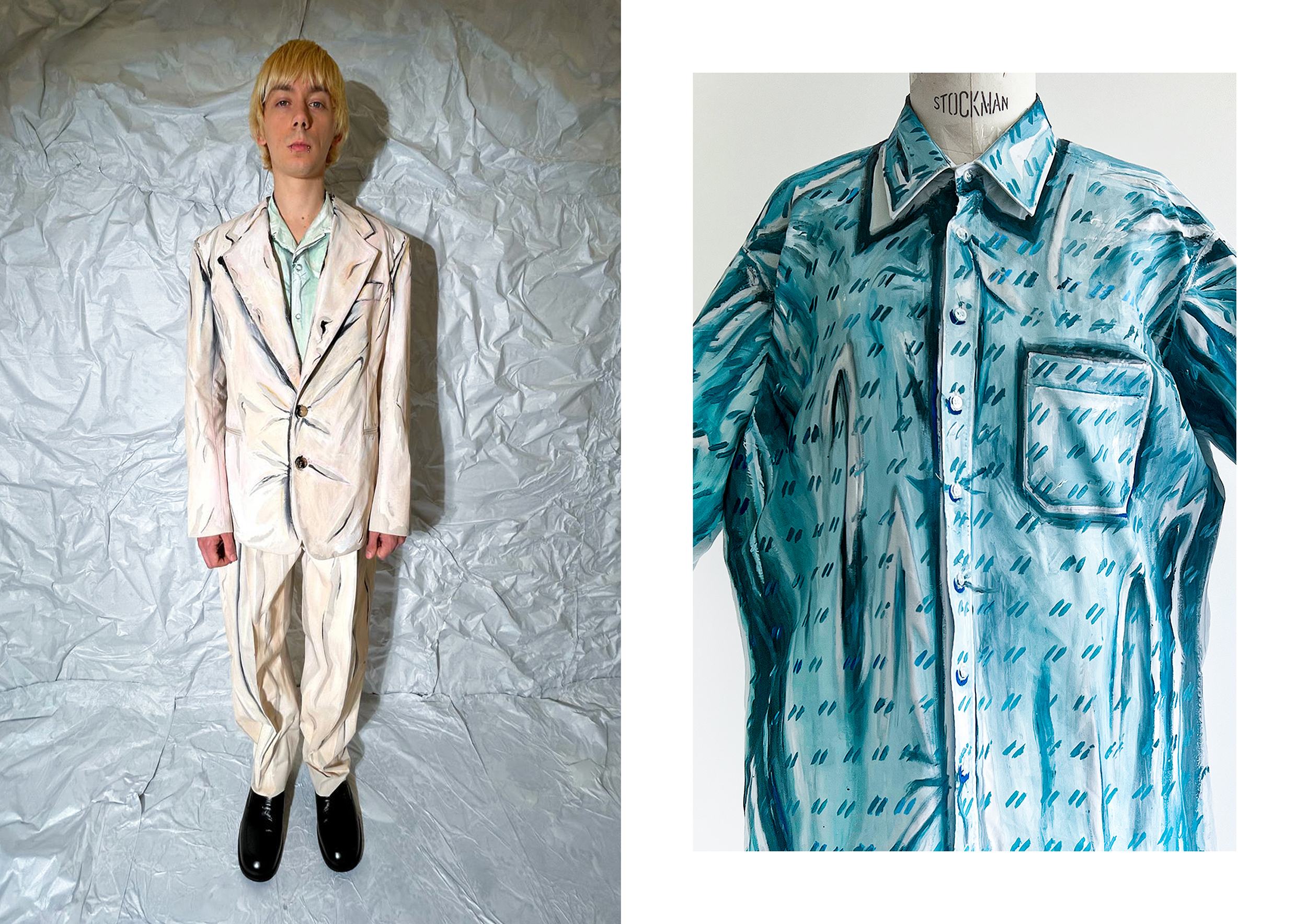
Anna Deller-Yee, Marni SS25
“Working with houses like Marni, Schiaparelli and Mugler has also taught me an enormous amount about collaboration itself: how many people, skills and forms of labour exist behind the final image that the world eventually sees.”
Fashion MA alumni
You’ve also worked on high-profile collaborations with brands including Marni and Schiaparelli. What do opportunities like this mean for you as a young designer and artist?
I feel incredibly grateful for opportunities like these, especially because they’ve allowed me to bring a very personal and emotionally driven artistic language into highly visible cultural spaces.
What has been most meaningful to me is not simply the scale or visibility of the collaborations, but the possibility of creating genuine dialogues between different disciplines – between painting, fashion, craftsmanship and material experimentation.
Working with houses like Marni, Schiaparelli and Mugler has also taught me an enormous amount about collaboration itself: how many people, skills and forms of labour exist behind the final image that the world eventually sees. I have a very deep respect for ateliers, craftspeople and creative teams because of that.
At the same time, I think these experiences have reinforced the importance of protecting the emotional honesty of my own work and continuing to trust my instincts as my practice grows. More than anything, I hope to continue building a practice that can move fluidly between different worlds while still remaining deeply human at its core.
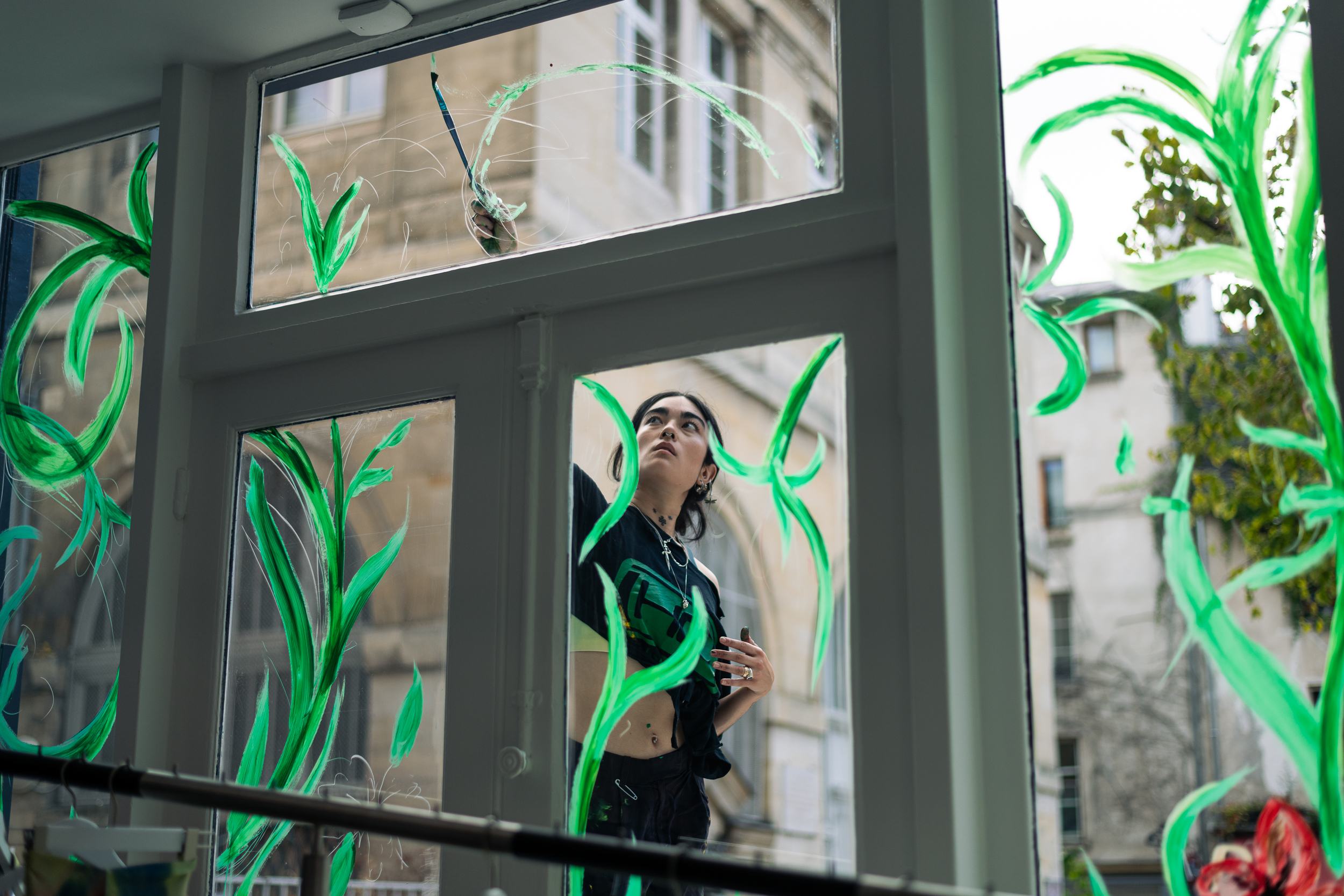
Anna Deller-Yee x NIKE, 2024