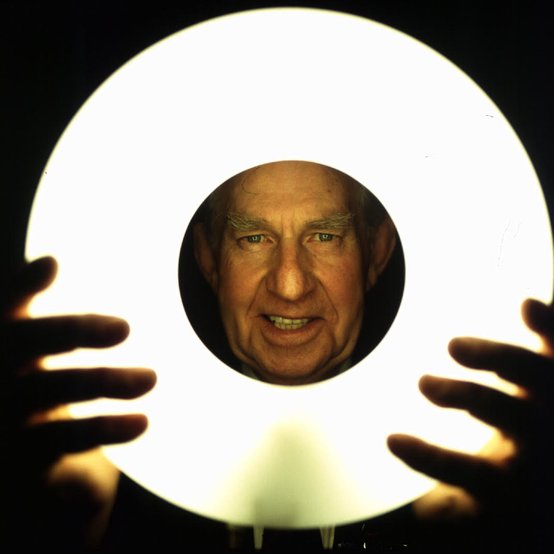
Williams, who spent 18 years at the museum curating 20th-century furniture and product design, is still working on a major summer exhibition looking at design as art and narrative. But his focus has shifted four days a week to the RCA in a move he described as “organic”.
“I’d always felt very connected to this course,” said Williams after holding his first nerve-racking tutorials. “For the last 18 years I have collected work that came out of this course, from people who have come out of it so it was inevitable I would be interested.” His V&A exhibition, entitled Telling Tales, Fantasy and Fear in Contemporary Design, has a strong representation from former students and current staff of the College.
“There’s something passive about curating. I felt like an observer. I had done a lot of observing, and I wanted to get a bit more proactive,” he said. “This feels like the right move – it’s stepping over some kind of invisible line.” Williams has even changed the route he takes to Kensington Gore. “I thought I should change the mindset, psychologically make a break,” he smiled.
Williams will have a tutorial, pastoral and administrative role rather than running a platform or unit. “I’m looking over work coming out of all platforms,” he said. “What I can do is bring a different perspective – a curatorial judgement or a judgement formed by being a curator. Hopefully that might be beneficial to the students who are working in the platforms.”
Williams, who has a first degree in English and Drama from Hull and an MA in Russian studies from Sussex, is full of admiration for the creativity and talent in the department.
“Staff are all very capable, very varied and have an amazing skill-set, and if you ask me why I wanted to come here it was to work with people like that,” he said.
“It’s the same reason the students want to come here – the calibre of the staff.”
Williams has finished the book that accompanies the V&A exhibition, which runs from July 14 to October 18.
It follows his earlier work entitled The Furniture Machine, Furniture since 1990, which gave an overview of the industry, looking at fashion, taste and lifestyle. “Just as I’d finished, this new thing emerged: design as art,” he said.
“Here was this market-driven, journalistically-driven term that did not have any theoretical underpinning. If it’s going to have any validity and longevity, we are going to have to think about it in terms of its content. How do we say something is worth all this money? What are the criteria we use? Where is the quality control?”
The exhibition looks at work which has a narrative purpose, described by Williams as “…very rare, very beautiful, very extraordinary work by leading, cutting-edge designers,” including RCA graduates Tord Boontje, Julia Lohmann and Julian Mayor, as well as staff such as Jurgen Bey and Tony Dunne.
Williams, a particular fan of Dutch conceptual design, will group the show into three themes from creation myths, innocence and childhood, through the material world, opulence and decorative fantasy to psychological aspects of fear, anxiety and intimations of mortality.
He plans a symposium in October when students can get involved.
“I’m well placed to maintain links between the museum and College,” he said.